Honour, villainy, and national tenacity
-
 Makram Khoury-Machool
- 3 Sep 2026 12:39
- 2 Shares
 6 Min Read
How the cleansocide in the Gaza Strip has lifted the curtain on every human being—and on every Palestinian at the core.
-
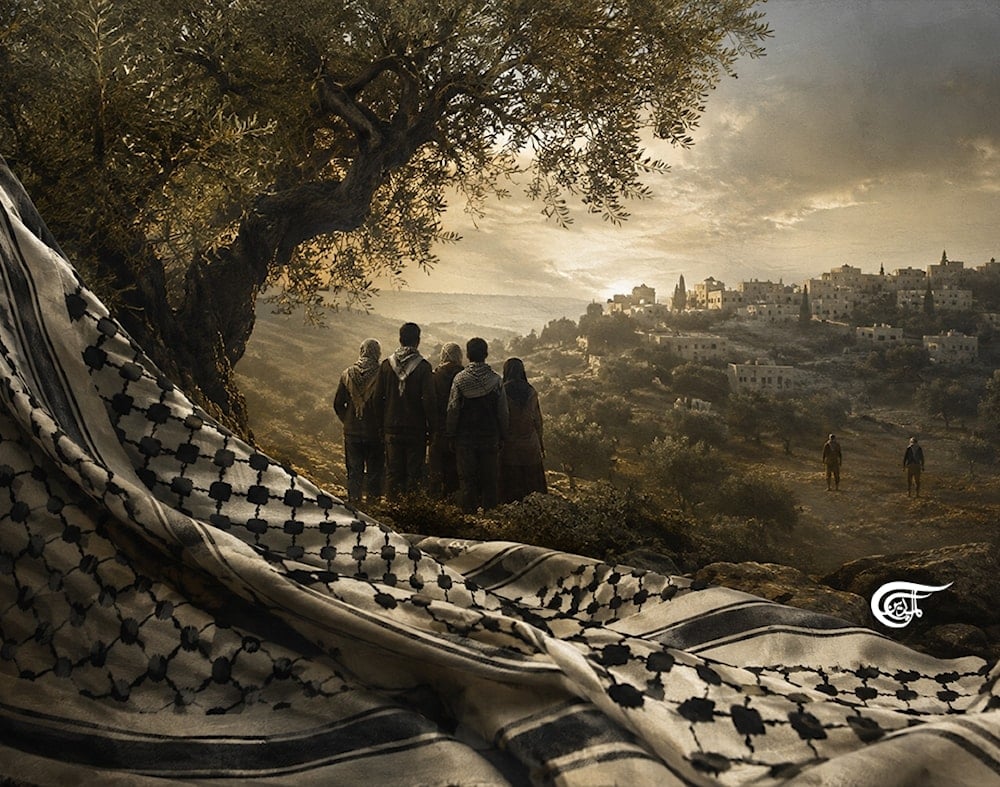
The true face of the Palestinian people is one of steadfastness, sacrifice, and unwavering commitment to their cause (AI-generated for Al Mayadeen English)
Should we begin by saying that in every people on earth you find good and evil, the kind and the wicked, the brave and the coward, the opportunist and the corrupt—alongside those who give and sacrifice? Yes. Because that is true.
But the crimes of the CleansOcide catastrophe (genocide and ethnic cleansing) over the past three years have revealed a great deal, even though the Palestinian people are not an exception to the human rule stated above.
In the absence of a Palestinian nation-state with defined geographical boundaries, a national moral burden has fallen upon the Palestinian collective and individuals across the four main areas of Palestinian population: Western Palestine, occupied in the Nakba of 1948; eastern al-Quds, the West Bank, and the Gaza Strip, occupied in the 1967 Naksa, as well as on those six million Palestinian refugees scattered across the globe.
Whilst Palestinians have been suffering from factionalism and the lack of a unified command, let alone national leadership, during the last three years of the CleansOcide perpetrated by the CleansOcidal Zionist regime, Palestinian national resilience has relied on how various segments in the nation strengthen its social cohesion and collective resolve. To a certain extent, public intellectuals have been playing an influential role in fostering national tenacity, which should be able to act as a breakwater to dilute the real threat because issues such as survival (both physical and psychological), deterrence, and endurance are collective missions.
The division amongst the political leadership has affected Palestinian society, which finds itself struggling politically, economically, and socially. Cohesion is a challenge, especially as Palestinians in the diaspora are trying to be part of the political formula without much success thus far. National cohesion and tenacity must be built around a few conditions to tackle dangers of disunity and lack of trust.
Despite censorship and the blocking of pro-Palestinian content, a reasonably strong body of alternative media has emerged, helping to facilitate the spread of the national Palestinian narrative. The downside, however, lies in the presence of “planted voices” acting as agents of external psychological warfare. In the face of this danger, quantitative analysis indicates that the Palestinians have been enduring immense pressure precisely because of the depth of their belief in their cause.
A link exists between non-state actors seeking to weaken Palestinian morale and agents - individuals who generally operate without revealing who directs or sponsors them. As a result, there are traitors and collaborators, cowards and followers, selfish individuals consumed by a form of psychological betrayal that allows them to see nothing beyond their narrow interests; opportunists who seek personal gain even from our pain in the hardest circumstances; and corrupt individuals who exploit suffering and the cause for their own benefit. Then there are the liars and fabricators – those who fail every test!
These people exist. We know some of them personally and by name. Some make no attempt to hide their identity. They are a repulsive breed from whom sound souls instinctively recoil. Their kind exists everywhere and in every society, even though the Palestinian people find themselves living under uniquely distinctive conditions.
They must not be denied, but neither should they be allowed to become the only - or dominant - image of the Palestinian people’s daily struggle.
On the other side—and in the overwhelming majority—the Palestinian people remain patriotic, honourable, and distinguished by their unwavering devotion to their cause.
You find those who give their time without reward, who support the needy, help the weak, and follow people’s affairs with patience, loyalty, and discretion.
You find those who sacrifice their comfort, health, money, time, and future; those who give whatever they can even when they have little; those who endure, stand firm, and keep giving despite their wounds.
These are the ones who keep the covenant, cling to the land and to the ultimate right, and show courage—indeed, in their heart, in patience and steadfastness—in truth and in reality.
The majority are struggling and sacrificing, and many do so in silence and secrecy. They know the price of sacrifice and pay it day after day in total discretion—in the camp, the city, the village, the homeland, and especially in exile—because the price is heavy and the choices are many.
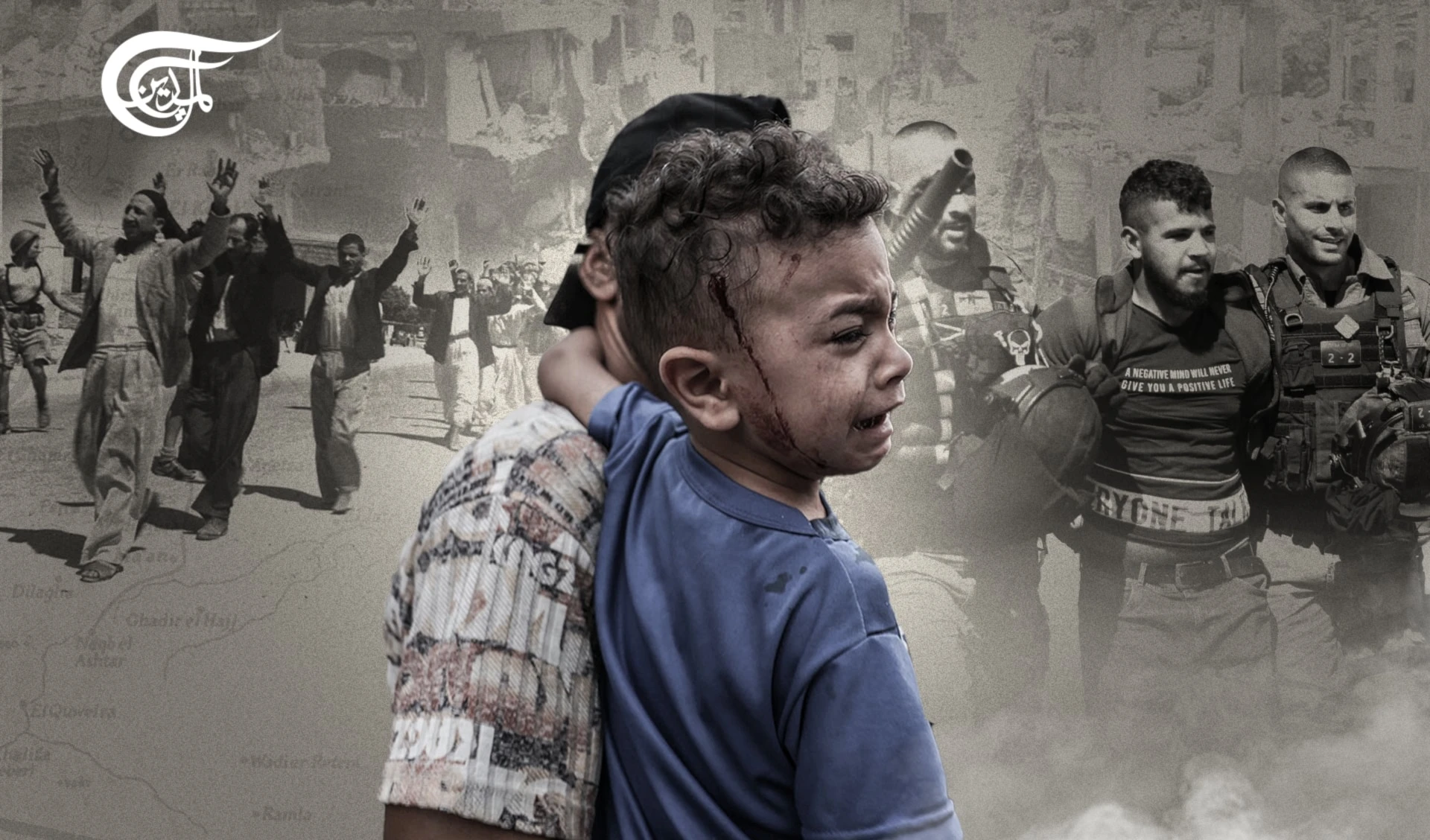
These are the true face of the Palestinian people: a patient, persevering, steadfast, generous people who do not tire or break despite the CleansOcide and who do not sell their cause, no matter how much time passes or how hard the trials become.
The traitors, opportunists, and corrupt are a repulsive minority. The majority is a living homeland that pulses with giving and sacrifice.
As the first Palestinian martyr, Jesus Christ, said in al-Quds: “Greater love hath no man than this, that a man lay down his life for his friends.”
And as it is stated in Surat Ar-Ra’d (the Noble Qur’an): “As for the foam, it vanishes, cast away; but that which benefits the people remains upon the earth. Thus does Allah set forth examples.”
And in contemporary history, in the darkest circumstances of revolution, Lenin said: “This discipline [of the revolutionary patriot] is maintained, tested, and reinforced first by the class consciousness of the vanguard of the proletariat, and by its devotion to the revolution, its perseverance, self-sacrifice, and heroism.”
And in Buddhism, the emphasis was placed on the moral, spiritual, and psychological dimensions: the voluntary relinquishing of the self and its attachments, motivated by compassion and wisdom, with the aim of alleviating suffering and attaining liberation for oneself and others.
Letting go of the ego and attachments entails recognizing that the “self” is illusory (anatta). True sacrifice consists in the continuous relinquishment of attachment to the body, possessions, and status, as well as the rejection of anger, envy, and ignorance.
The adoption of all or some of the above four sets of values should help generate an unofficial but visible moral intellectual who is able to rally the nation if only symbolically.
If official national leadership competence is insufficient to handle negative internal elements, then an organic segment of society should also act to expose and counter the narratives and mechanisms of the “fifth column”, thereby protecting Palestinian national identity through clear and unequivocal messages. Such an effort could serve as a healthy antidote in these crucial circumstances.