Media frenzy against Green Party marks shift in narrative, plight of long-term Zionist control
-
 Makram Khoury-Machool
- 11 Oct 2026 22:42
- 2 Shares
 4 Min Read
What is already clear is that a major British party has formally rejected the previous consensus. The frenzy is the sound of a long-held narrative losing its grip.
-

A deeper change in British public narrative, mood, and discourse (Illustrated by Mahdi Rtail for Al Mayadeen English)
The intense media reaction to the Green Party of England and Wales’ October 2026 conference decision reveals a deeper change in British public narrative, mood, and discourse—and the plight of long-term Zionist control over mainstream British media—following three years of Israeli perpetration of the crimes of CleansOcide in Palestine, above all in Gaza.
This is not a street demonstration. It is official policy of a British political party.
Members voted 1,022 to 813 to declare the party anti-Zionist, treat Zionism as a form of racism, and endorse a single democratic state across historic Palestine with equal rights and the right of return. The motion, advanced by members including Greens for Palestine, marked a clear break from the party’s previous stance and from that of any other major UK party. It was passed by those present at conference (out of a membership of roughly 230,000) and was later (due to the negative campaigning by Zionist lobbies) opposed by most of the party’s MPs. Leader Zack Polanski, who is Jewish, did not vote; he has described the displacement and destruction of Palestinians as racist while signalling unease with aspects of the wording of the motion.
Coverage across British mainstream outlets—from the BBC and the Guardian to the Jewish Chronicle, Jewish News, and international Israeli media—has been overwhelmingly critical, in disbelief and angry.
Despite the fact that the decision concerns Zionism rather than Judaism, the headlines emphasize “antisemitism” accusations under the IHRA bias definition, risks to Jewish members, internal “entryism” concerns, "Israel’s" ban on Polanski, and the European Greens’ distancing.
Chants of “Zionists are not welcome here” and the rejection of protective amendments have been widely highlighted.
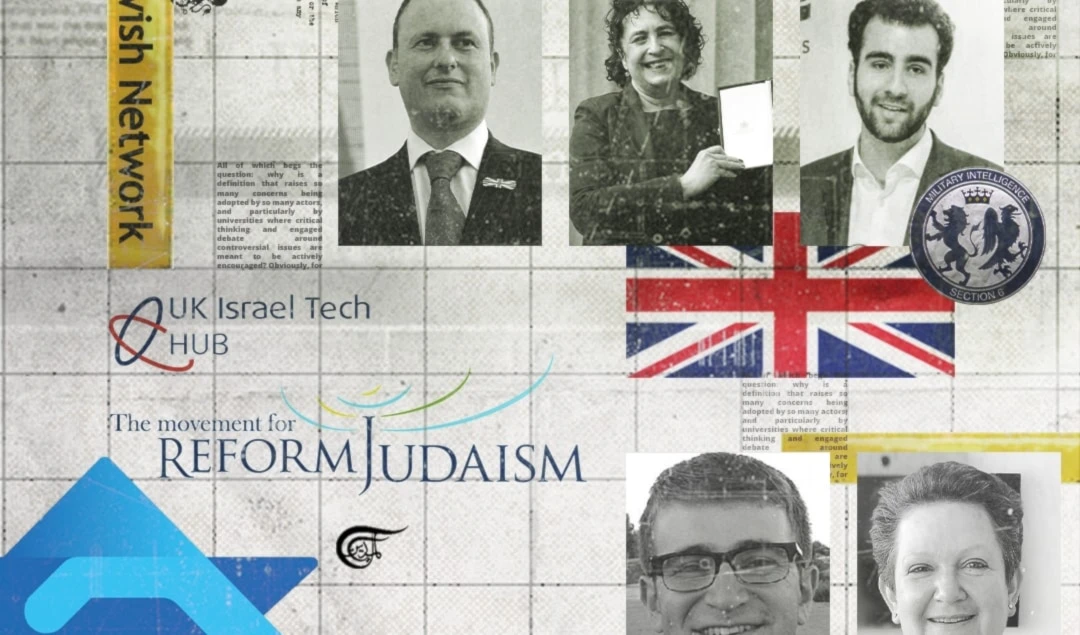

This volume and tone are not routine scrutiny. For decades, mainstream British media treated support for "Israel’s" existence as a "Jewish state", (at times a "two-state" framework), and the misleading equation of convoluting anti-Zionism with antisemitism as settled consensus.
The Zionist consent that once existed across much of pro-"Israel" UK has been lost. The mainstream media adopted a strategy of political marketing that presents itself as a stand against antisemitism and, along the way, delivers two further goods that were not the question asked: legitimacy for "Israel" and for Zionism as the political ideology of a "nationalist" movement established in Europe in 1897, and cover for "Israel’s" crimes of CleansOcide (genocide and ethnic cleansing) in Gaza. Buy one, get two free.
That framework has steadily lost ground. Public narrative, mood, and discourse—especially among younger voters and parts of the left—have shifted in response to the scale of the genocide, destruction, and ethnic cleansing in Gaza since October 2023, the long occupation, and Netanyahu’s blockade of a credible political horizon.
The Green Party’s membership growth, success, and its willingness to adopt language once confined to activist margins signal that this change is now reaching organized politics.
The British media response functions less as neutral reporting and more as an attempt to reassert a narrative that no longer commands automatic deference.
By focusing on procedural thinness, internal division, and antisemitism charges while giving less space to the substantive arguments of the motion’s supporters—who distinguish anti-Zionism from hostility to Jews and frame the vote as solidarity with Palestinians—the coverage seeks to contain the political meaning of the result.
This motion, position, and the ensuing debate mark the plight of long-term Zionist control over the media: a hegemony that once shaped the boundaries of acceptable discussion is now under sustained pressure as public mood and discourse move beyond it, following three years of Israeli perpetration of the crimes of CleansOcide in Palestine.
What is already clear is that a major British party has formally rejected the previous consensus, and significant sections of the media (in what is supposed to be a Western democracy) are treating that rejection as an emergency rather than a legitimate political development. The frenzy is the sound of a long-held narrative losing its grip.