Palestine… and Posturing Steps in and From London
-
 Makram Khoury-Machool
- 1 Oct 2026 14:59
- 5 Shares
 6 Min Read
Britain’s measures against West Bank settlers target the margins while sparing Netanyahu and the Israeli system directing CleansOcide in Gaza, reducing accountability to political image management.
-
Palestine… and Posturing Steps in and From London
At times of immense political tension and watershed historical events such as the CleansOcide (the conjunction of genocide and ethnic cleansing), which has been perpetrated in particular in the Gaza Strip and beyond, one needs to come with clean hands and provide the readers with a short background.
I have met the British Labour politician twice in my life, one of them when he was leader of the Labour Party, and it was then that he told me in person that if he became Prime Minister he would immediately recognise the state of Palestine. Secondly, I have no personal issues with him whatsoever. In fact, I find him on a personal level a likeable and pleasant character.
With this in mind, it is important to emphasise that I write as an academic (with mastery of both Arabic and Hebrew) who happens to be a particular kind of Palestinian: a Nakba Survivor (those who miraculously managed to remain in their homeland under Zionist occupation, which, after 29.11.1947 and the ethnic cleansing and massacres, became "Israel") and who has been living in England for over a quarter of a century and is a British citizen.
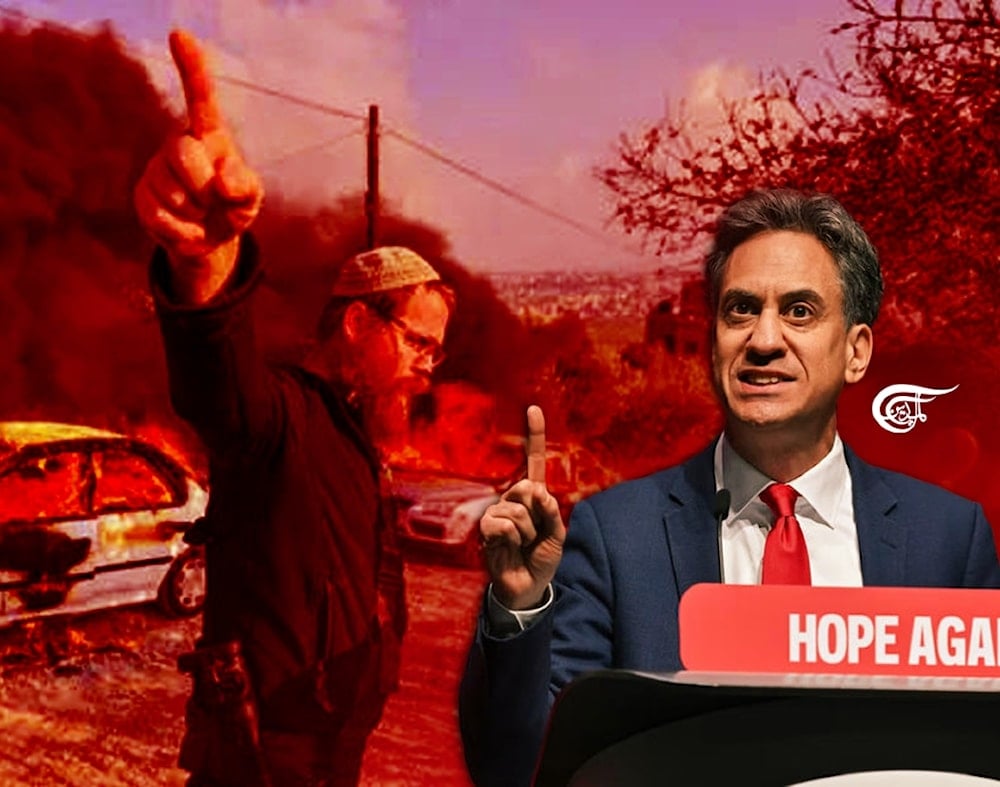
Now that British Foreign Secretary Ed Miliband has appeared for the second time in an international forum (on 24.09.2026), and a third time nationally at the Labour conference, it is hugely important to re-explain to readers the meaning of the measures announced by the United Kingdom against the illegal settlement networks in the occupied West Bank — from sanctions on individuals and entities funding violence, to a ban on importing settlement goods, and restrictions on construction services, financing, and real-estate advertising.
Despite the symbolic verbal power and a kind of legitimacy it grants the British public. And beyond that, to criminalise the Israeli occupation, they remain, in the balance of responsibility, incomplete and lacking in seriousness so long as criminal Benjamin Netanyahu’s system stands outside the circle of direct punishment (he is wanted by the ICC as well).
In his most recent message, Ed Miliband by and large repeated and reinforced the 8 September Commons statement; it was not a new policy shift. The UN remarks on 24 September were much shorter and aimed at an international audience.
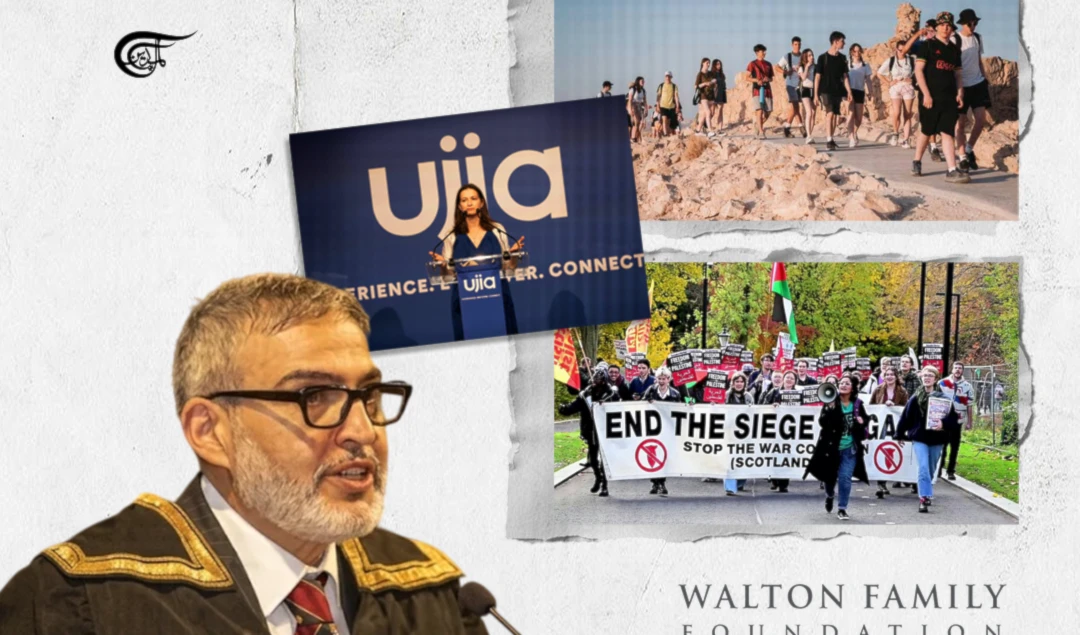
During his Labour conference speech on 28 September, he largely repeated the September 8 positions and language. New or amplified elements were political: an explicit “reset” under Prime Minister Andy Burnham, the line “we hear you. You were right” directed at campaigners and party members who had criticised the previous approach, and emphasis that UK action had helped mobilise other countries. He again listed the settlement measures and pledged not to allow the two-state solution to be destroyed.
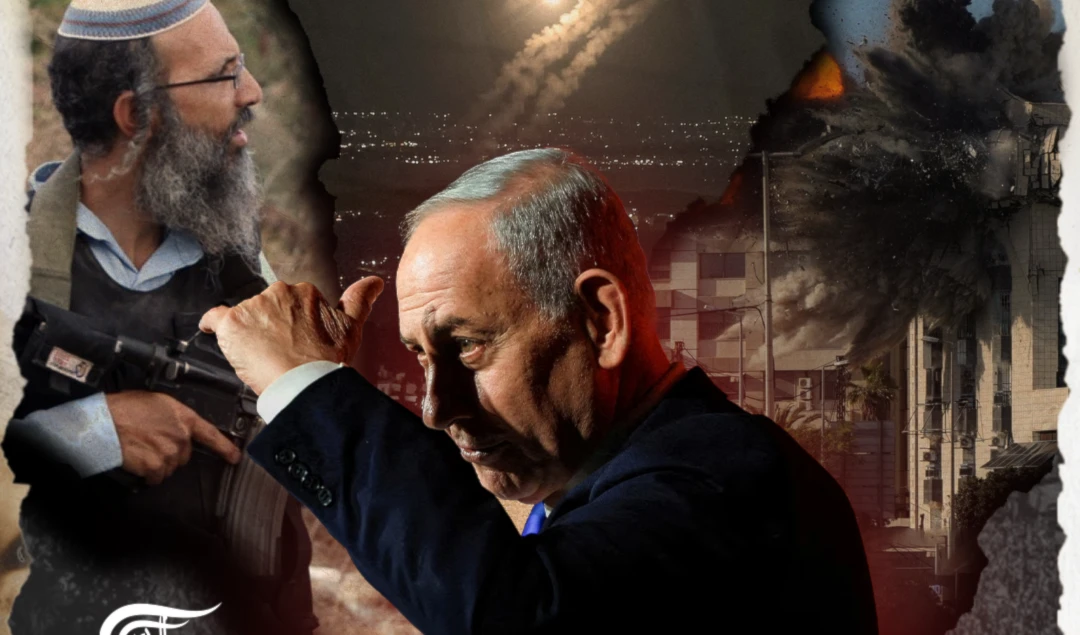
It has been made public that the fascist settlers in the occupied West Bank commit documented assaults on land, trees, homes, and people, often under the protection of the occupation army, or with its collusion or silence.Yet those who decide to commit the crimes of CleansOcide (genocide coupled with ethnic cleansing) against the Gaza Strip, who define its objectives, who finance its machinery, and who administer the siege, starvation, and wholesale destruction, are the authority of the occupying Israeli regime: the government, the war cabinet, the General Staff, and the security agencies.
To punish the settlement outpost for what it perpetrates in the West Bank, while retaining the head of the system as a political, security, and economic partner as it commits CleansOcide, is to strike the institutionally weakest link and leave the centre of decision intact. That is not honest legal graduation so much as a political choice that stages movement before public opinion and spares London the cost of confronting an ally. Furthermore, the distinction between “settlers’ crimes in the West Bank” and “the government’s CleansOcide in Gaza” does not withstand the structure of power and seems to be a mental manipulation poured on the audience. The army that guards the settler in Nablus, Hebron, and Jenin is the same instrument of rule in Rafah, Khan Younis, and Gaza City.
The ministries that expand settlements, legalise outposts, and sever the West Bank are part of the coalition that conducts CleansOcide against the Strip. It is not a civilian act outside the state, but a policy executed by orders, aircraft, targeting systems, and decisions to close crossings and withhold food and medicine.If the British government has gone so far as to accuse settlers of “ethnic cleansing” in the West Bank, to declare the continuation of the occupation unlawful, and to speak of protecting a two-state solution, then its refusal to hold to account those who command the wider and deadlier CleansOcide in Gaza reveals the limits of seriousness, not the limits of law. Seriousness is not measured by a ministerial statement or by banning a consignment that passes through a settlement, but by who is placed on the sanctions list: the head of government, the war apparatus, arms licences, and channels of finance.
Anything short of that leaves the crime, at its peak, beyond accountability. Worse, keeping the Israeli system — the criminal Netanyahu (Butcheryahu) — as a partner state, while targeting the margins of the coalition or settlers’ farms, reproduces a convenient narrative for Western capitals: a “legitimate Israel” set against excesses that can be excised without disturbing the alliance. In reality, Netanyahu is not outside those excesses.
He holds the coalition, shields the IOF / army, sets the objectives, and invests escalation for electoral gain. Whoever seeks to halt the crime where killing, destruction, and displacement reach their fullest extent cannot content himself with freezing the assets of an activist in an outpost or blocking the marketing of a housing unit in a settlement. He must punish the system that commits CleansOcide in Gaza, for it is that system which decides and persists, and which protects the perpetrators in the West Bank as in the Strip. Otherwise, British measures remain an exercise in reputation/image management, alliance maintenance, party calculation, and electoral advantage — not accountability of those who bear primary responsibility for the continuation of the Nakba in its present form.
Evidence of this is that the government statement delivered by Foreign Secretary Ed Miliband made no mention of the Zionist occupation of the occupied Syrian Golan, nor of the settlements there, nor of sanctions upon them.