
Canada hits back with tariffs on US goods as trade war escalates
 4 Min Read
Ottawa’s retaliatory tariffs on $27.6 billion in US goods take effect as trade tensions deepen and Trump threatens further pressure on Canadian businesses.
-
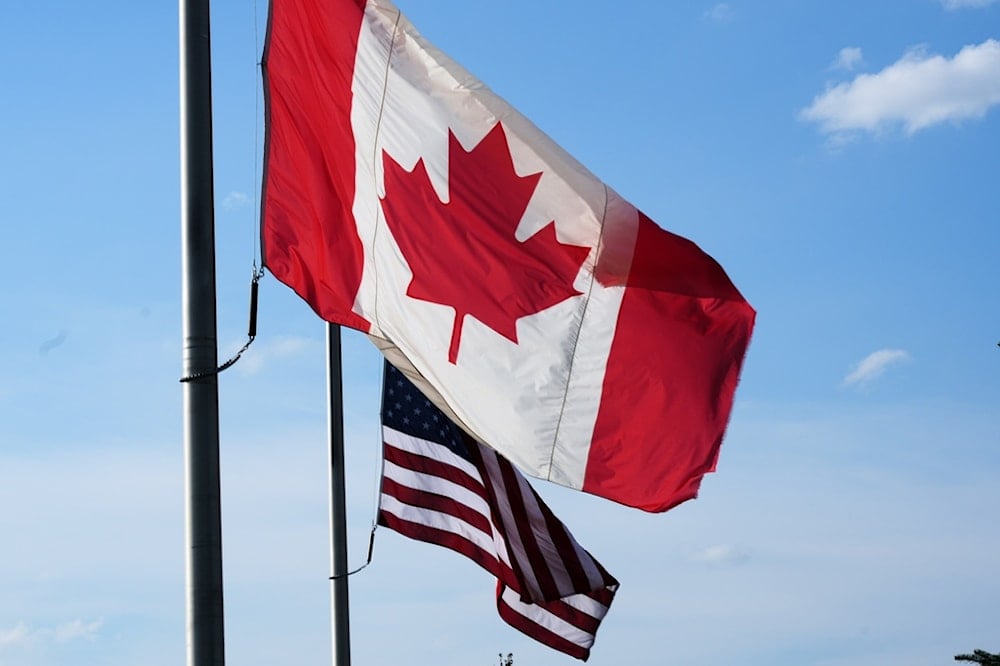
The flags of Canada, top, and the United States fly outside the Galleria Mall in Buffalo, Wednesday, Aug. 26, 2026. (AP Photo/Gene J. Puskar)
Canada’s retaliatory tariffs on billions of dollars worth of US goods took effect Tuesday, escalating the trade confrontation between the two North American neighbors.
The counter-tariffs, ranging from 15% to 50%, apply to $27.6 billion in US imports, according to Canadian authorities. The measures target a range of products, including steel and aluminum as well as dairy products such as cheese. Ottawa removed several seafood products from the initial tariff list.
Canada’s response comes weeks after US President Donald Trump imposed 50% tariffs on a comparable value of Canadian goods, citing what Washington described as “discriminatory treatment” of US alcohol, automobile, and dairy industries.
The US measures have affected products including hockey sticks and cement and cover approximately 5.5% of Canadian exports to the United States.
Ottawa’s latest move underscores the growing economic pressure between the two countries as negotiations over trade remain stalled.
Read more: Canada ready to strike trade deal when US is prepared, Carney says
Trump escalates pressure on Bombardier
On Monday, Trump threatened to block sales of Canadian aircraft manufacturer Bombardier Aviation in the United States unless the Quebec-based company moves manufacturing operations to US soil.
“No more selling Bombardier in the United States!” Trump wrote in an all-caps post on Truth Social, without specifying how his administration would enforce such a measure.
Thousands of Bombardier aircraft currently operate in US airline fleets. The company responded by emphasizing its economic footprint in the United States, saying it supports “tens of thousands of jobs across the United States” through direct employment in more than 20 states, including Kansas, Texas, Arizona, and California.
Bombardier also said it spends more than $2.5 billion annually with suppliers and maintains a supply chain involving approximately 2,800 US companies across 47 states.
“Bombardier values its great partnership with American companies and its US employees,” the company said.
The episode highlights the extent to which Washington’s tariff policy has expanded beyond conventional trade measures, with Trump also using the threat of restrictions against individual companies as leverage.
Trade talks remain stalled
Negotiations between Ottawa and Washington broke down on August 21 following several days of meetings in Washington.
Canadian Prime Minister Mark Carney said he suspended the talks after concluding that the terms put forward by the Trump administration were unacceptable. He also accused US negotiators of introducing restrictions on Canada’s trade agreements with other countries at the last minute.
Carney further said US officials had made unacceptable “threats” concerning the French language and Quebec culture.
US Trade Representative Jamieson Greer later said Washington understood the sensitivity of French-language protections in Canada.
“This is not something where we push hard, or condition, or red-line,” he told CBC last month.
The negotiations have not resumed since, leaving Ottawa and Washington locked in an increasingly public dispute.
Read more: Canada 'foolish' if it thinks it can win trade war, US official says
Washington-Ottawa tensions deepen
The confrontation has increasingly spilled into political rhetoric and personal attacks.
US Treasury Secretary Scott Bessent dismissed the characterization of the dispute as a trade war last week, arguing that the United States is far larger than Canada.
“We’re not at war with Canada,” Bessent said, while mocking Canada’s military capabilities.
Pentagon chief Pete Hegseth separately drew criticism after appearing to mock the physical appearance of a Canadian soldier on social media.
Carney called the remarks “beneath their office,” saying they were “not constructive.”
He said negotiations could resume “when the Americans stop doing memes” and begin taking the discussions seriously.
Trump has also escalated the symbolic dimension of the dispute. In August, he signed an order to rename Lake Ontario as “Lake America,” following his earlier move to rename the Gulf of Mexico the “Gulf of America.”
Trump has repeatedly suggested that Canada should become the 51st US state, adding a territorial dimension to tensions that have traditionally centered on trade.
Despite Ottawa’s retaliation, Canada remains deeply economically dependent on its southern neighbor. Nearly 60% of Canadian imports come from the United States, while around 70% of Canadian exports are destined for the US market.
To support Canadian businesses and workers facing the impact of the trade confrontation, Ottawa has unveiled an aid package worth C$7.5 billion (US$5.4 billion).


