
Oil prices to end week above 100$
 5 Min Read
Oil prices climbed sharply as supply disruptions pushed Brent and WTI above $100 a barrel, raising fears of prolonged shortages.
-
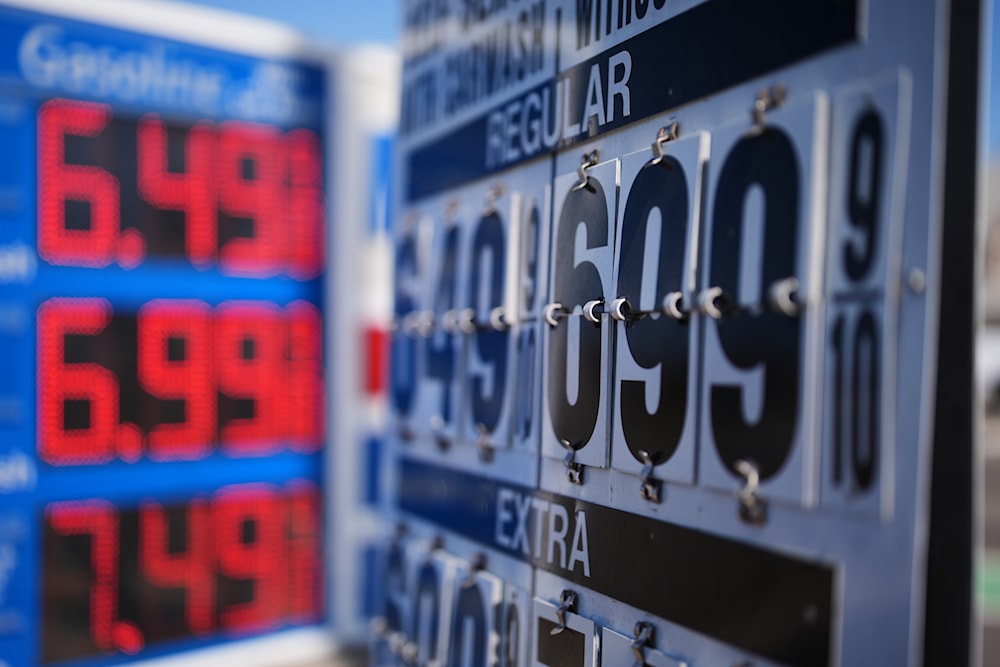
Gas prices are displayed in front of a gas station, Thursday, Sept. 10, 2026, in Carlsbad, California. (AP)
Oil prices rose on Friday, with both major benchmarks on track to end the week above $100 a barrel for the first time since mid-May, as the increasing tensions in West Asia continue to disrupt shipping in the Strait of Hormuz
Brent crude futures rose 81 cents, or 0.8%, to $108.44 a barrel by 0345 GMT. US West Texas Intermediate crude rose 69 cents, or 0.7%, to $103.17 a barrel. Both benchmarks rose more than 6% on Thursday.
Weekly, the benchmarks were trading nearly 13% higher, the steepest gain since the week ended July 17. "While meaningful volumes are still moving through the Strait of Hormuz, flows remain well below pre-war levels, underscoring how fragile the situation has become," ING analysts said in a note.
US diesel price tops $6 a gallon for first time
Oil supply disruptions due to the US war on Iran, along with Ukrainian attacks on Russia's refineries, pushed the US national average diesel price past $6 a gallon for the first time on Thursday, according to price tracker GasBuddy.
Still, US President Donald Trump has not shown any signs of easing the aggression on Iran, warning the US may hit Iran's Pickaxe Mountain near the Natanz uranium enrichment facility, but said he thought the war would end immediately after the November midterm elections.
Iran said it had targeted 10 ships near the Strait of Hormuz on Wednesday in retaliation to the US hitting five Iranian oil tankers. Iran's Islamic Revolution Guard Corps said it would escalate its response to any further attacks. "With events spiralling and Iran showing it is willing to stretch this conflict as wide and as long as it can, it is becoming increasingly likely that WTI crude will retest the $119.48 high from early March," IG analyst Tony Sycamore said.
Analysts point to China demand, OPEC revisions as key factors
Analysts said the rally's durability will hinge on China, the world's largest crude importer. If China continues to buy, it could amplify the impact of supply disruptions and drive prices higher.
OPEC lowered its forecast for world oil demand growth in 2026 to 380,000 barrels per day, a copy of its monthly report showed, marking the fifth straight downward revision. OPEC oil output fell by 640,000 bpd in August, a Reuters survey found.
"The next leg in oil will depend less on headlines and more on whether physical flows improve or deteriorate further," said Phillip Nova analyst Priyanka Sachdeva. "The question now is whether the market can stabilise below $120, or whether another wave of supply disruption pushes crude into a completely new price regime."
Iran condemns US strikes on oil tankers
Iran has strongly condemned the latest US attacks targeting Iranian commercial oil tankers in the Gulf and the Sea of Oman, warning that its Armed Forces will respond decisively to any further military attack against the country.
In a statement issued September 9, the Iranian Foreign Ministry denounced the attack “carried out by the terrorist US military against several Iranian oil tankers” on Tuesday evening, September 8. The Ministry stressed that the attacks came as part of Washington’s broader military aggression, naval blockade, and economic war against the Islamic Republic.
“The US military attack on Iranian commercial vessels in the Persian Gulf and the Sea of Oman, as a continuation of the US military aggression, naval blockade, and economic war waged by the US regime against Iran, constitutes a clear violation of the United Nations Charter and international law,” the statement read.
Iran affirms its right to self-defense
Tehran warned that US strikes on Iranian commercial vessels are a dangerous escalation threatening regional and international security, and said the Iranian Armed Forces responded in self-defense by attacking US military positions in Jordan and several US naval vessels involved in the aggression.
Iran reaffirmed its determination to defend its sovereignty and said its Armed Forces will respond firmly to any further military aggression.
Tehran also called on the UN Security Council and the UN Secretary-General to take immediate action against what it described as grave violations of international peace and security resulting from US acts of aggression.
US attacks Iranian tankers near Jask, Kharg Islands
Earlier on September 9, Iranian television reported that the US military attacked an Iranian oil tanker near the waters off Jask, forcing its crew to evacuate aboard a lifeboat. Iran’s Tasnim news agency separately reported that a small Iranian oil tanker was subjected to a US missile attack around four miles from Kharg Island. According to the report, the tanker was struck by a US projectile while in the anchorage area off the island. Iranian television later reported that US forces had once again targeted a commercial vessel in the coastal waters off Jask.
In response to the attacks on Iranian oil tankers, the Islamic Revolution Guard Corps announced intensive and decisive missile strikes against the US al-Azraq base in Jordan. The IRGC said the operation was carried out using both solid- and liquid-fueled ballistic missiles.
In a separate statement, the IRGC announced that it had also targeted the US destroyers “DDG-119” and “DDG-53,” both of which carry cruise missiles and are equipped with the Aegis combat system. The IRGC said the strikes inflicted significant damage on both US vessels.


