
OPEC+ holds oil output steady amid internal turmoil, Venezuelan crisis
 3 Min Read
The OPEC+ alliance navigates internal rifts and market pressures following last year's steepest oil price decline since 2020.
-
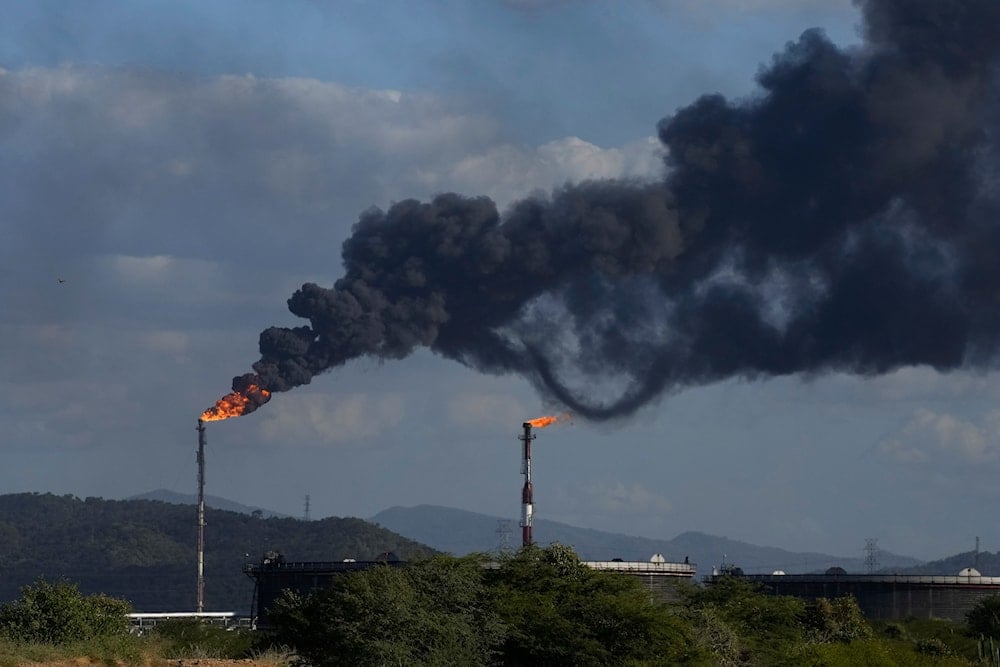
Gas is flared at the Jose Antonio Anzoategui oil complex in Barcelona, Anzoategui state, Venezuela, Jan. 9, 2024. (AP Photo/Matias Delacroix)
OPEC+ decided to maintain its oil production levels following a brief online meeting on Sunday, even as the alliance confronts mounting political tensions between key members and fallout from Washington's assault on Venezuela.
The gathering of eight major producers, Saudi Arabia, Russia, UAE, Kazakhstan, Kuwait, Iraq, Algeria, and Oman, reaffirmed the group's decision to pause output increases through March, extending the November agreement as oil markets struggle under the weight of oversupply concerns.
The meeting comes against a backdrop of steep price declines, with crude losing more than 18% in 2025, marking the sharpest annual drop since 2020.
Despite these market pressures, the alliance opted to hold course rather than adjust production targets, which were raised by around 2.9 million barrels per day from April through December 2025, equivalent to nearly 3% of global demand.
Venezuela in crisis
The brief session did not address developments in Venezuela, where US President Donald Trump ordered a military operation Saturday that resulted in the abduction of President Nicolas Maduro.
Trump subsequently announced Washington would take control of the OPEC member until a transition government could be established, though he offered no details on how such a handover would occur.
Venezuela holds the world's largest proven oil reserves at roughly 303 billion barrels, surpassing even Saudi Arabia's vast deposits. However, years of unilateral sanctions and operational mismanagement have devastated the country's production capacity.
Analysts say any meaningful recovery in Venezuelan crude output remains years away, even if US oil majors invest the billions Trump has pledged.
Saudi-UAE rift deepens over Yemen
Beyond Venezuela, OPEC+ is navigating one of its most serious internal divisions in decades as Saudi Arabia and the UAE clash over influence in Yemen. Tensions erupted in late December when UAE-backed southern separatists seized territory from the Saudi-supported government, prompting Riyadh to issue a 24-hour ultimatum for Emirati forces to withdraw.
The confrontation further escalated on January 1 when Saudi warplanes struck positions held by the UAE-aligned Southern Transitional Council, forcing the temporary closure of Aden's airport. While the UAE subsequently announced its forces had "voluntarily" ended their Yemen mission, the dispute marks the sharpest public fallout between the two Gulf powers in years.
Despite these tensions, OPEC+ delegates indicated the disagreement would not derail Sunday's coordination. Historically, the alliance has managed to prioritize market management over political conflicts, maintaining cohesion even during brutal conflicts like the Iran–Iraq War.
Multiple pressure points
The group faces additional strain as Russian oil exports remain under pressure from US sanctions over the Ukraine war, while Iran confronts domestic protests and threats of Western intervention. Meanwhile, Ukrainian drone strikes have repeatedly targeted Russian energy infrastructure in recent months, disrupting refining capacity even as crude output holds relatively steady.
OPEC+ members are scheduled to reconvene on February 1 to reassess market conditions and production strategy as they navigate an increasingly complex geopolitical and economic landscape.


