
Qatar deficit hits decade high as war on Iran disrupts LNG exports
 3 Min Read
Qatar posted its widest quarterly budget deficit in nearly a decade as the war on Iran and disruption in the Strait of Hormuz sharply curtailed LNG exports and energy revenues.
-
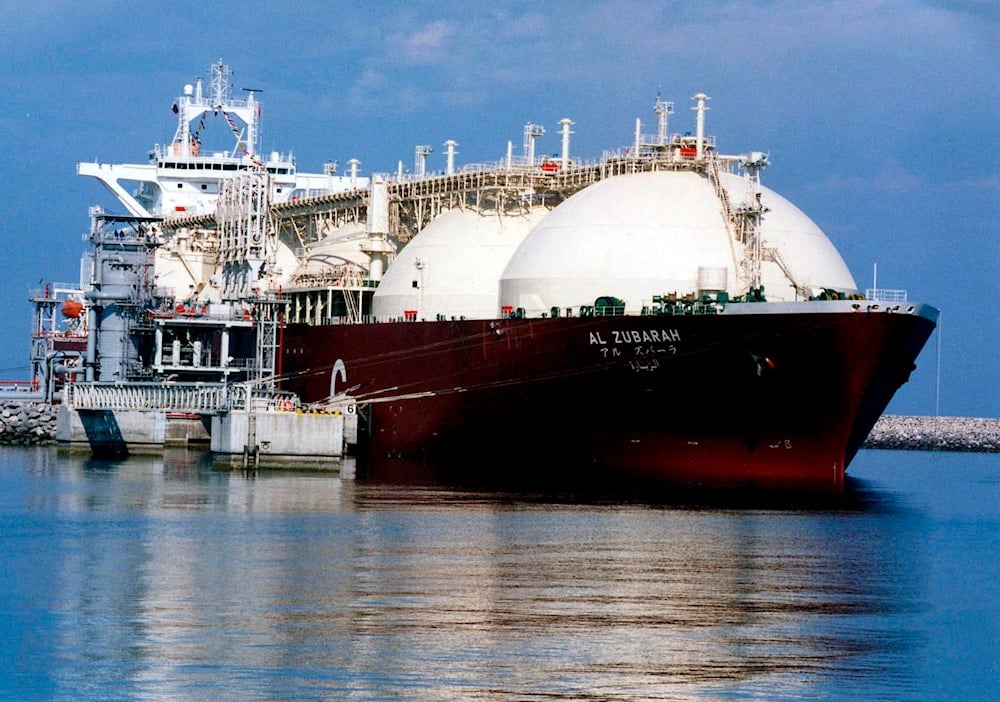
This undated file photo shows a Qatari liquid natural gas (LNG) tanker ship being loaded with LNG, made up mainly of methane, at Raslaffans Sea Port, northern Qatar (AP)
Qatar recorded its widest quarterly budget deficit in nearly a decade as the US-Israeli war on Iran and the resulting disruption of navigation through the Strait of Hormuz dealt a severe blow to the Gulf state's liquefied natural gas exports, Bloomberg reported.
Figures released by Qatar's Finance Ministry showed that the budget shortfall reached 21.2 billion riyals, or roughly $5.8 billion, during the second quarter of 2026.
The deficit was the largest recorded since the final quarter of 2016 and more than double the 10.3 billion-riyal shortfall registered between January and March.
Hormuz disruption sends Qatar LNG exports plunging
Qatar's fiscal deterioration has been driven largely by the collapse in energy revenues since the US-Israeli war on Iran began in late February and maritime traffic through the Strait of Hormuz was sharply restricted.
Before the war, Qatar accounted for around one-fifth of global LNG exports, making gas sales one of the main pillars of state revenue.
Its LNG shipments, however, fell dramatically from around 20 million tonnes per quarter during 2025 to less than 2 million tonnes between April and June this year.
Qatar’s LNG trade hinges on Hormuz
The impact of the disruption has been particularly pronounced because Qatar lacks an alternative route through which it can move LNG exports around the Strait of Hormuz.
Unlike Saudi Arabia and the United Arab Emirates, which possess infrastructure allowing at least part of their energy exports to circumvent the waterway, Qatar remains dependent on Hormuz for access to international markets.
Most of its LNG customers are located in Asia, further underscoring the importance of uninterrupted maritime access through the strait.
Ras Laffan shutdown adds pressure on gas sector
The disruption to shipping has coincided with attacks that have also affected Qatar's energy infrastructure.
According to Bloomberg, Qatar has been repeatedly targeted by Iranian drones and missiles during the war, inflicting damage estimated in the billions of dollars.
A drone strike in March forced QatarEnergy to halt operations at the Ras Laffan industrial complex, the country's principal LNG export hub.
The shutdown marked the first time in nearly three decades that operations at the major facility had been suspended and compounded the difficulties facing Qatar's gas export sector.
Energy revenue collapse widens budget shortfall
The loss of petroleum and gas income sharply reduced government receipts during the second quarter.
Overall revenue fell by around 30% to 25.6 billion riyals, while government expenditure declined by a far smaller 2.6% to 46.9 billion riyals.
Doha managed to partially offset the decline through non-energy revenue, which surged almost five-fold from the first quarter to approximately 25 billion riyals.
The increase, however, was not enough to compensate for the sharp contraction in hydrocarbon earnings.
Qatar economy faces sharp contraction
Qatar, long ranked among the world's wealthiest states on the strength of its vast natural gas exports, is now facing a significant economic downturn as the war and prolonged restrictions on Hormuz continue to weigh on its principal source of foreign income.
The International Monetary Fund expects the Qatari economy to contract by more than 8% in 2026, according to the report.
Read more: Baghaei: Qatar document proves Iran's target precision


