
Strait of Hormuz crisis could delay QatarEnergy LNG expansion projects
 3 Min Read
QatarEnergy CEO Saad al-Kaabi says the Strait of Hormuz crisis could delay key LNG expansion projects as equipment shortages affect North Field developments.
-
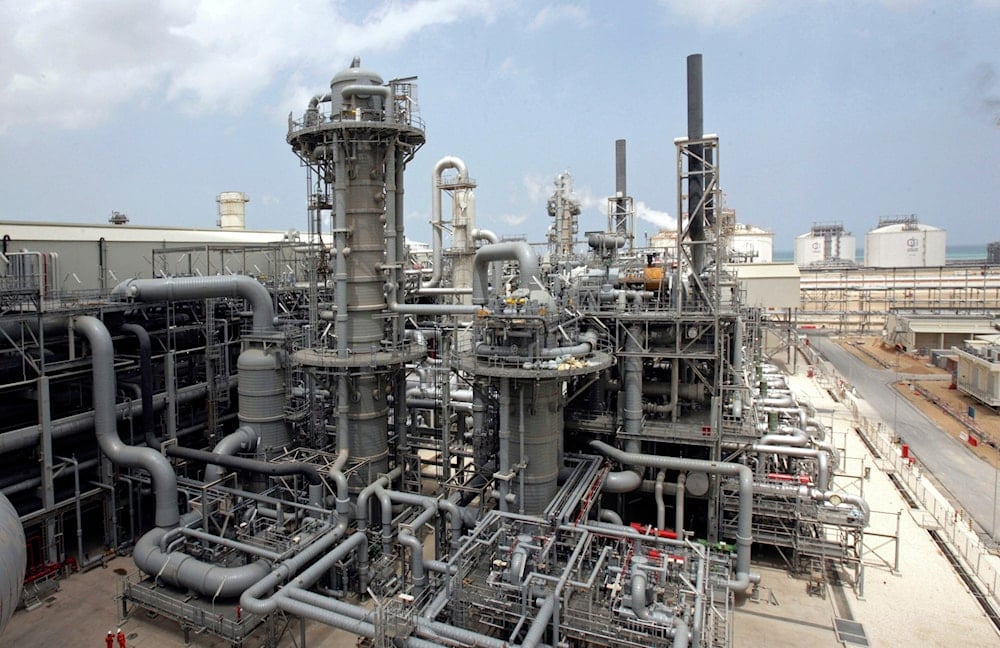
This April 4, 2009, file photo shows a gas production facility at Ras Laffan, Qatar (AP)
The crisis over the Strait of Hormuz could delay some QatarEnergy expansion projects because critical equipment is unable to reach Qatar, the company's CEO Saad al-Kaabi said on Sunday.
Al-Kaabi said QatarEnergy was currently producing only a "very minute" volume of liquefied natural gas.
Speaking at the Qatar Economic Forum in New York, al-Kaabi said a few LNG trains under QatarEnergy's North Field East (NFE) expansion are due to start up in 2027, with the North Field South (NFS) expansion set to begin production in 2028.
This comes as the crisis in the Strait of Hormuz continues to affect Qatar's economy negatively, in light of the US war on Iran, which prompted Tehran to close the Strait in retaliation.
Qatar records largest deficit since 2016
Qatar recorded its widest quarterly budget deficit in nearly a decade as the US-Israeli war on Iran and the resulting disruption of navigation through the Strait of Hormuz dealt a severe blow to the Gulf state's liquefied natural gas exports, Bloomberg reported on September 9.
Figures released by Qatar's Finance Ministry showed that the budget shortfall reached 21.2 billion riyals, or roughly $5.8 billion, during the second quarter of 2026, the largest recorded since the final quarter of 2016 and more than double the 10.3 billion-riyal shortfall registered between January and March.
The fiscal deterioration was driven largely by the collapse in energy revenues after the war began in late February and maritime traffic through the Strait of Hormuz was sharply restricted. Before the war, Qatar accounted for around one-fifth of global LNG exports, but its shipments fell from around 20 million tonnes per quarter during 2025 to less than 2 million tonnes between April and June this year.
Lack of alternative route adds to Qatari woes
The impact was particularly pronounced because Qatar lacks an alternative route around the Strait of Hormuz, unlike Saudi Arabia and the United Arab Emirates, and most of its LNG customers are located in Asia.
According to Bloomberg, US bases and energy facilities in Qatar were repeatedly targeted in Iranian retaliatory strikes, with a drone strike in March forcing QatarEnergy to halt operations at the Ras Laffan industrial complex, the first such suspension in nearly three decades.
Overall revenue fell by around 30% to 25.6 billion riyals, while government expenditure declined by 2.6% to 46.9 billion riyals. Doha partially offset the decline through non-energy revenue, which surged almost fivefold from the first quarter to approximately 25 billion riyals, though the increase was not enough to compensate for the contraction in hydrocarbon earnings.
The International Monetary Fund expects the Qatari economy to contract by more than 8% in 2026, according to the report.


