
US, Qatari firms sign deal to develop Syria's first offshore oil field
 3 Min Read
Damascus signs memorandum with Chevron and Power International Holding as post-Assad government seeks to rebuild energy sector.
-
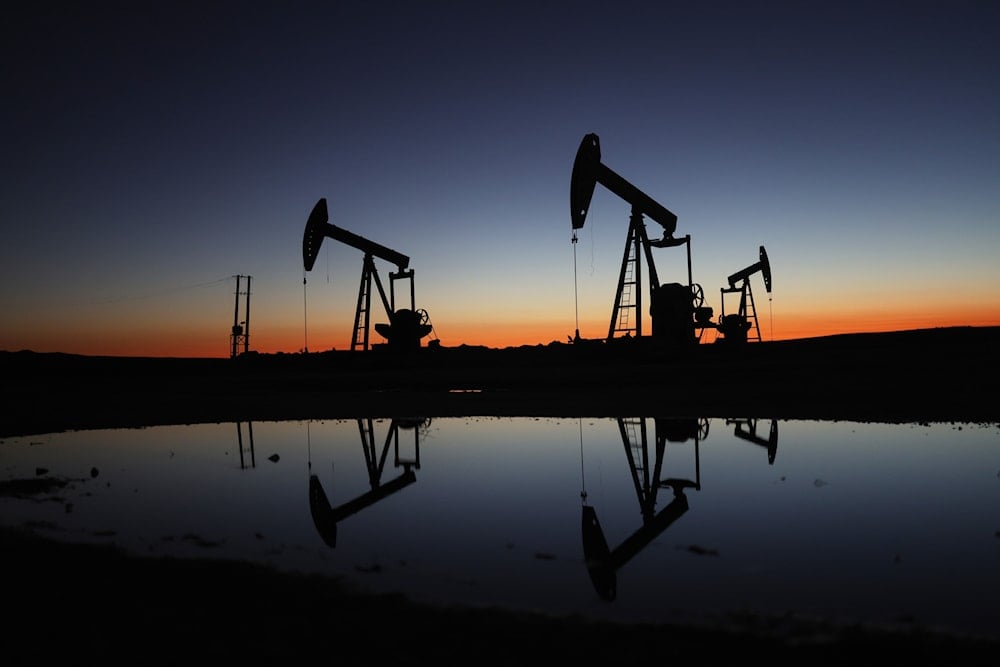
The sunsets behind the Tishrin oil field in the eastern Hassakeh countryside, northeastern Syria, Wednesday, Feb. 4, 2026 (AP Photo/Ghaith Alsayed)
US oil giant Chevron and Qatar's Power International Holding signed a memorandum of understanding with Syria's state-owned petroleum company on Wednesday to develop the country's first offshore oil and gas field, marking a significant milestone in the country's energy sector reconstruction.
The agreement, signed in Damascus in the presence of US Special Envoy to Syria Tom Barrack, aims to strengthen strategic partnerships in the energy sector and support offshore exploration in Syria's territorial waters, according to the Syrian state news agency SANA.
Syrian Petroleum Company CEO Youssef Qablawi described the deal as "the most important" offshore energy exploration agreement in Syria's history, announcing that mobilization and drilling operations could begin "before the summer, God willing." He estimated it could take up to four years to reach the gas reserves.
Before the onset of the civil war in 2001, Syria's oil sector was a pillar of the economy, producing approximately 380,000 barrels per day with exports, mostly to Europe, generating over $3 billion in 2010 and providing roughly a quarter of government budget funds.
Sanctions removal opens door
The deal became possible only after comprehensive US sanctions were lifted. US President Donald Trump formally terminated the Syria Sanctions Program on June 30, 2025, followed by Congress repealing the Caesar Act on December 18, 2025. These sanctions had specifically prohibited foreign investment in Syrian oil and gas for over five years.
Syria attempted offshore exploration once before. In 2013, Russian firm Soyuzneftegaz signed a deal to explore Syrian waters, but the project was abandoned two years later amid the raging civil war.
Control of northeastern oil fields
The agreement's timing is particularly significant given recent territorial developments. On January 19, Syrian Petroleum Company CEO Qablawi told journalists that US companies expressed readiness to begin operations in northeastern Syria as fields came under interim government control.
He specified that Chevron would operate offshore, ConocoPhillips would continue activities in Deir Ezzor, and another Texas-based company would cooperate in Hasakah province, which came fully under Syrian interim government control on February 2.
These northeastern fields were controlled by the US-backed Syrian Democratic Forces (SDF) for nearly a decade, during which US forces maintained a military presence at major oil installations. The SDF ceded control to Damascus following a January 2026 offensive and subsequent integration agreement.
Production collapse, recovery
According to official Syrian Ministry of Energy data, the country's oil production has plummeted from 350-380,000 barrels per day before 2011 to approximately 120,000 barrels currently, a decline of roughly 68 percent.
Gas production similarly dropped from about 30 million cubic meters daily to roughly 7 million cubic meters.
Qatar's Power International Holding has emerged as a major investor in post-Assad Syria, with multiple billion-dollar deals including real estate, electricity sector development, and Damascus International Airport.


