
US bond market pressure likely behind Trump strike delay
 4 Min Read
Mounting instability in US financial markets and fears of regional escalation appear to have compelled Donald Trump to delay threatened military action against Iran.
-
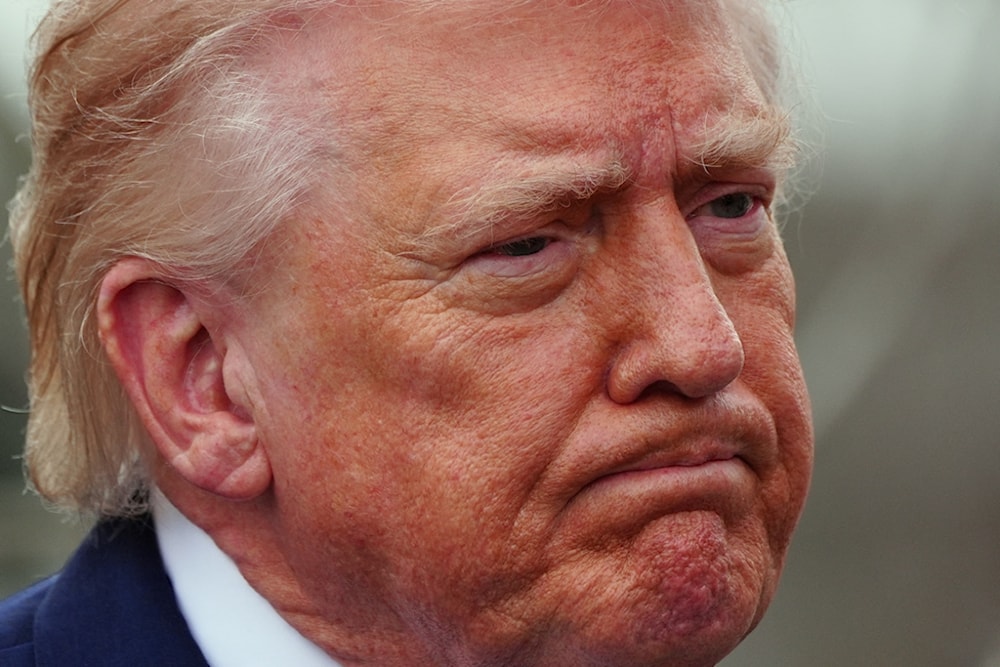
US President Donald Trump speaks with reporters before departing on Marine One from the South Lawn of the White House, Friday, March 20, 2026, in Washington (AP Photo/Alex Brandon)
Iranian officials swiftly dismissed assertions by US President Donald Trump regarding ongoing productive negotiations between Tehran and Washington, underscoring the absence of formal diplomatic engagement.
The country’s official FARS News Agency stated unequivocally that there had been “no direct communication with the US nor intermediaries,” contradicting claims of behind-the-scenes progress.
While speculation persists over possible informal contacts, reportedly involving Iranian Foreign Minister Abbas Araghchi and US envoy Steve Witkoff, Tehran has offered no confirmation. The absence of official acknowledgment suggests that any such exchanges, if they occurred, remain exploratory and politically sensitive.
Drop Site News reported last week that the US was the one asking for talks. Citing Iranian officials, the outlet stated that Witkoff personally sent messages to Iranian politicians in Tehran, including Araghchi.
Read more: Iran has 'no air defense whatsoever' but scored world's first F-35 hit
Escalation threats center on Strait of Hormuz
At the core of the current tensions lies the strategic Strait of Hormuz, a vital artery for global energy flows. Trump had issued a stark ultimatum: Iran must ensure the passage of shipping through the strait or face potential strikes targeting its power infrastructure.
Such rhetoric has been widely viewed as escalatory. Any move to target Iranian infrastructure would likely trigger reciprocal actions by Tehran, particularly against exposed energy installations across Gulf states. The resulting chain reaction could destabilize not only regional security but also global energy markets.
Analysts warn that a confrontation in this arena risks spiraling into a broader conflict, with severe consequences for oil supply routes and international economic stability.
Financial markets signal alarm in Washington
A critical factor shaping Washington’s recalibration appears to be mounting stress within the US bond market. Following Trump’s threats of escalation, market indicators reportedly shifted into what observers describe as “precipitously alarming territory.”
The bond market, often viewed as a barometer of investor confidence, reacted sharply to the prospect of a widening conflict in the Gulf. Rising yields and volatility signaled concerns over inflationary pressures, energy price shocks, and broader economic disruption.
This financial backdrop likely constrained policy options. Escalation in the Gulf, particularly one involving disruption to oil flows, could amplify global economic fragility, placing additional strain on already sensitive markets.
Strategic constraints shape US calculations
The apparent delay in military action suggests that Washington is navigating a narrow strategic corridor. On one hand, the United States and its allies seek to prevent Iran from consolidating de facto control over the Strait of Hormuz. On the other hand, the costs of direct confrontation remain prohibitively high.
Any sustained disruption in the strait would have immediate global repercussions, given its role as a conduit for a significant share of the world’s oil exports. Gulf energy infrastructure, described by analysts as the region’s “crown jewels,” would likely become primary targets in any escalation scenario.
This dynamic has effectively boxed in US decision-makers, forcing a reassessment of immediate military options in favor of de-escalation or delay.
Political optics and the 'TACO' narrative
Trump’s decision to postpone action has also fueled political interpretations, including renewed references to the phrase “Trump Always Chickens Out” (TACO), used by critics to characterize perceived retreats under pressure.
Whether the delay represents a tactical pause or a broader climbdown remains unclear. However, the interplay between military signaling and financial market reactions highlights the extent to which economic realities can shape geopolitical decision-making.


