
War on Iran drives energy shock in Europe, growth outlook collapses
 5 Min Read
Europe faces a deepening energy shock as the war on Iran further disrupts gas flows, pushing prices higher, weakening growth, and exposing structural vulnerabilities, according to Bloomberg Economics.
-
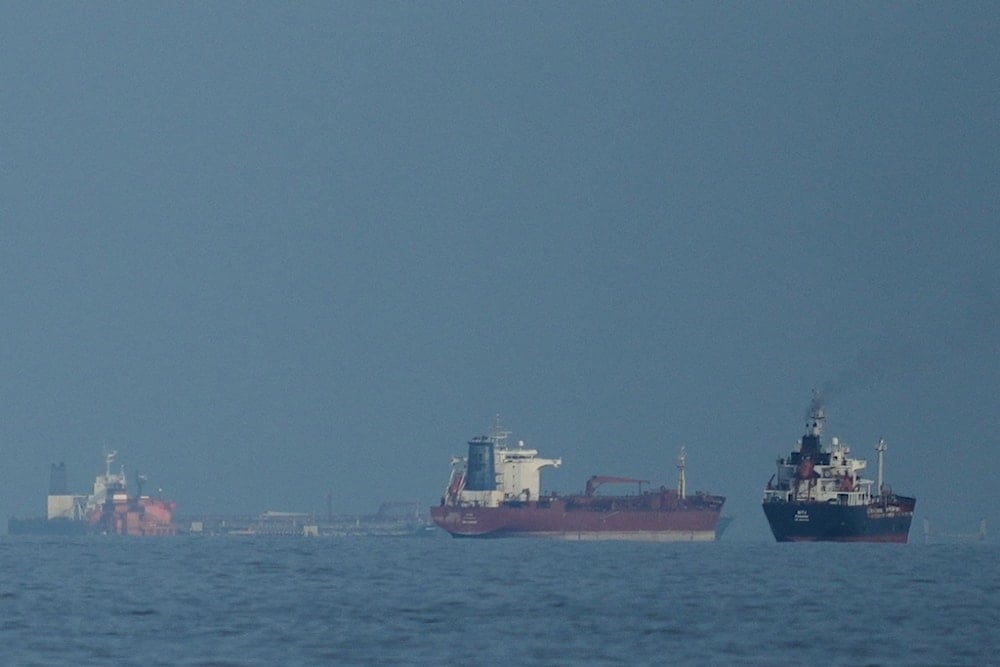
Oil tankers and cargo ships line up in the Strait of Hormuz as seen from Khor Fakkan, United Arab Emirates, Wednesday, March 11, 2026. (AP Photo/Altaf Qadri)
The US-Israeli war on Iran, initially seen by European allies of the United States as a humanitarian crisis and a geopolitical test, is now evolving into a major energy shock with clear parallels to the fallout from the 2022 Ukraine conflict. According to Bloomberg Economics, the economic consequences are becoming increasingly difficult to avoid as the war disrupts global energy flows.
Uncertainty surrounding the duration and intensity of the war, described as unpredictable even by US President Donald Trump, is adding to market instability. At the same time, the European Union’s economic growth is trending downward, while inflation is rising and competition for energy resources is intensifying, undermining earlier expectations of a competitiveness boost.
Disruption of key energy routes and supply chains
A central factor in the crisis is Iran’s effective closure of the Strait of Hormuz, a critical global energy route through which roughly 20% of the world’s natural gas supply passes. This disruption has highlighted what analysts describe as strategic complacency by the United States, while the broader impact is being felt most acutely in Europe.
European economies and consumers, heavily reliant on natural gas, are particularly exposed to these disruptions. The situation worsened following a reported retaliatory Iranian strike on the US-linked Ras Laffan liquefied natural gas plant in Qatar, which accounts for about one-fifth of Qatar’s LNG output, after the US targeted Iran's energy infrastructure.
In response, European Union leaders are seeking alternative suppliers, including Algeria, while introducing multi-billion euro consumer support measures to offset rising costs. The situation closely mirrors Europe’s energy response following the conflict in Ukraine four years ago.
Rising prices, inflation, and weaker growth outlook
Although European gas prices have surged in recent weeks, they remain below the peaks seen in 2022. Europe is also less dependent on Middle Eastern gas than it was on Russian energy. However, Bloomberg Economics notes that Asia now faces even tighter competition for energy supplies, further intensifying global pressure.
Europe’s economic position is also weaker than it was in 2022. Core economies such as France were already under strain before the latest energy shock, and sovereign bond yields across the EU and the United Kingdom are rising in anticipation of higher inflation and interest rate hikes.
Gas storage levels across the EU have also been depleted following a harsh winter and a less stringent storage policy. Bloomberg estimated that a prolonged war could add roughly €6 billion ($7 billion) in energy import costs for Europe, increasing pressure on consumers and financial markets.
Economic forecasts deteriorate sharply
Bloomberg Economics’ real-time tracker shows euro-area growth forecasts for the first quarter falling sharply. The outlook suggests that inflation could rise from around 2% to 3%, while growth declines from approximately 1% to near stagnation.
Investors and analysts are offering a wide range of scenarios, from a swift resolution if political pressure mounts, to a prolonged war involving regional actors. However, the prevailing assumption is that inflation will rise while growth weakens further if the war continues.
If Qatari supplies are disrupted long-term and Europe loses preferential access to US liquefied natural gas, global energy markets will face significant adjustment. Energy expert Phuc-Vinh Nguyen of the Jacques Delors Institute warned that even a rapid end to fighting would still leave prolonged disruptions to LNG flows.
He noted that Europe would face stiff competition for supplies from countries such as Japan, South Korea, and China, further tightening global markets and limiting Europe’s access to affordable energy.
Push toward energy independence
The key question now is how policymakers will respond. Ideally, central banks and governments would align their strategies, avoiding aggressive interest rate hikes that could further suppress growth, while focusing on long-term investments in energy transition.
European Central Bank President Christine Lagarde emphasized that fiscal responses to energy shocks should be “temporary, targeted and tailored,” but market expectations suggest central banks may still pursue multiple rate hikes due to concerns about inflation and credibility.
At the same time, governments may expand fiscal support to offset rising energy costs, as political pressure increases to protect households from higher living expenses.
In the long term, Europe’s exposure to external energy shocks underscores the need for greater energy independence. European Council President Antonio Costa described this as the “only way to be secure,” pointing toward renewables and nuclear energy as key pathways.
European Commission President Ursula von der Leyen has also described Europe’s retreat from nuclear power as a “strategic error,” while countries like Spain and France are seen as potential models for energy transition. However, this shift will require sustained political leadership, investment, and time.
Strategic uncertainty and geopolitical risks
Efforts to stabilize the region also face geopolitical constraints. French President Emmanuel Macron has suggested building a coalition to secure the Strait of Hormuz following a ceasefire, though such plans would still depend on US cooperation.
Meanwhile, China appears better positioned to weather the crisis due to its energy reserves and advances in renewable technologies. This raises concerns in Brussels about potentially replacing one form of dependency with another.
Ultimately, the analysis suggests that Europe’s greatest challenge is its limited ability to define an independent and resilient energy strategy amid ongoing global instability.
Read more: Iran retaliation shakes helium, global tech supply chains


