
US formally withdraws from Paris Climate Agreement for 2nd time
 4 Min Read
The US exits the Paris Agreement again under Trump, raising concerns over global climate action and renewable energy momentum.
-
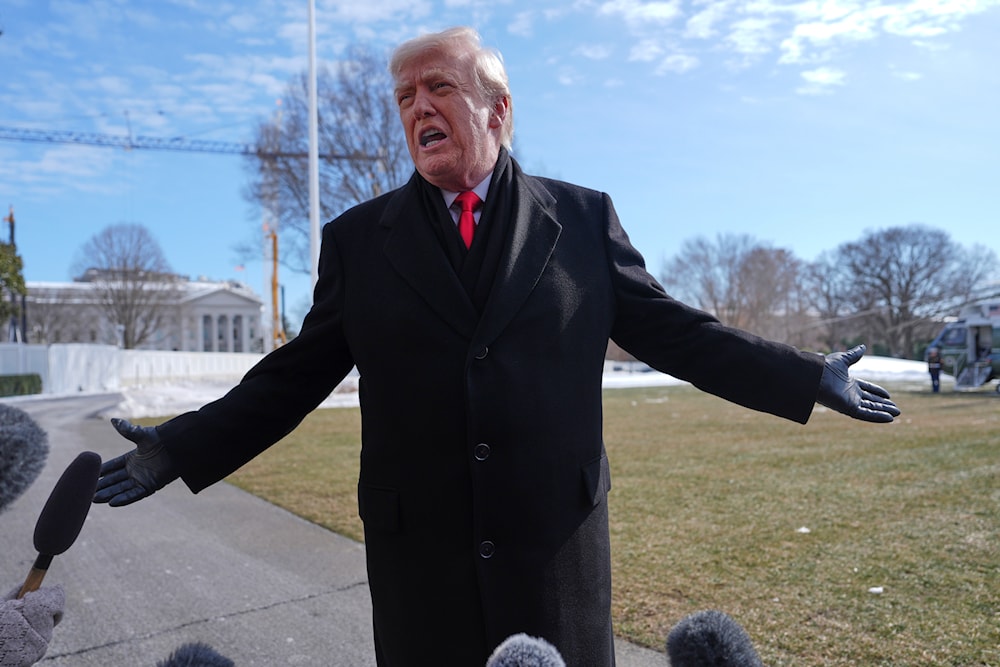
US President Donald Trump speaks with reporters before boarding Marine One on the South Lawn of the White House, Tuesday, Jan. 27, 2026, in Washington. (AP)
The United States has officially exited the Paris climate agreement for the second time, marking a renewed break by President Donald Trump from the primary global framework designed to tackle climate change.
“It’s almost like they’re saying, we don’t care what you want from us, we will be the bad guys, and you cannot challenge us on it, because that’s exactly what we said you should expect from us,” Basav Sen, climate justice project director at the progressive thinktank Institute for Policy Studies, told The Guardian.
While the US retreat raises concerns about global climate efforts, investment in low-carbon energy continues to grow. Renewable energy sources accounted for more than 90% of new power generation capacity last year, and in many parts of the world, they are now the cheapest source of new electricity.
US policies set climate ambitions behind
Experts warn, however, that Trump’s policies risk pushing the US to the margins of international climate efforts and slowing momentum elsewhere.
“Yes, the real economy is moving in the direction of renewables, clean energy, etc, but there’s still a role for the global regime in terms of sending political signals and nudging that real economy along,” Sue Biniaz, a former deputy climate envoy under Joe Biden, told The Guardian. “Now, that ambition is going to fall behind.”
“The US abdication on climate allows fossil advocates in China more voice to slow down the energy transition,” Jeremy Wallace, professor of China studies at Johns Hopkins University, said to The Guardian. “A pro-climate president in the White House would push China to be more ambitious.”
“I think other countries are looking at the fact that the US is departing … from the international climate regime and using that as a reason to do less,” Biniaz added. Some may follow the US’ lead, with "Israel" reportedly considering a similar move.
Yet, US disengagement is also prompting some nations to take bolder climate action. Sen noted that at last year’s COP30 talks in Brazil, Colombia and the Netherlands announced plans to host the first-ever international discussions focused on phasing out fossil fuels, alongside Pacific Island nations.
“I have to believe that the reactionary position of the US acted as further impetus for those countries to step up,” Sen told The Guardian.
Trump's fossil fuel expansion to affect entire globe
Still, any increase in emissions driven by Trump’s fossil fuel expansion is likely to be felt worldwide, making Paris targets harder to achieve even for ambitious nations. “If the domestic market in the US continues to be dominated by fossil fuels through the fiat of an authoritarian government, that will continue to have an impact on the rest of the world,” Sen said, noting that the administration is fast-tracking production to meet rising energy demand from artificial intelligence data centers.
By leaving Paris, the US, the world’s richest country, has also removed itself from global efforts to help poorer nations transition away from fossil fuels. “It will be that much harder for low-income countries, who are very dependent on fossil fuel production and exports, to be able to make their transitions with the US saying that we won’t fund any of it,” Sen added to The Guardian.
The withdrawal also reinforces perceptions of the US as an unreliable partner on global policy. “I’m not sure if the United States has any credibility left to lose in the eyes of the world, but withdrawing from Paris for a second time does not help,” Wallace told The Guardian.
Trump’s formal exit from the agreement comes as the planet experiences record heat, worsening disasters, and mounting economic losses tied to the climate crisis. “Every scientific report tells us things are worse than we previously thought and that more action needs to be taken,” Biniaz said to The Guardian. “It’s the wrong time to be pulling out of the key agreement that’s dealing with the issue.”


