
'Not our war': Germany calls out war on Iran as economic 'catastrophe'
 3 Min Read
German Defense Minister Boris Pistorius describes the US-Israeli war on Iran as a catastrophe for the world economy and stresses Germany is ready to help secure peace once fighting ends.
-
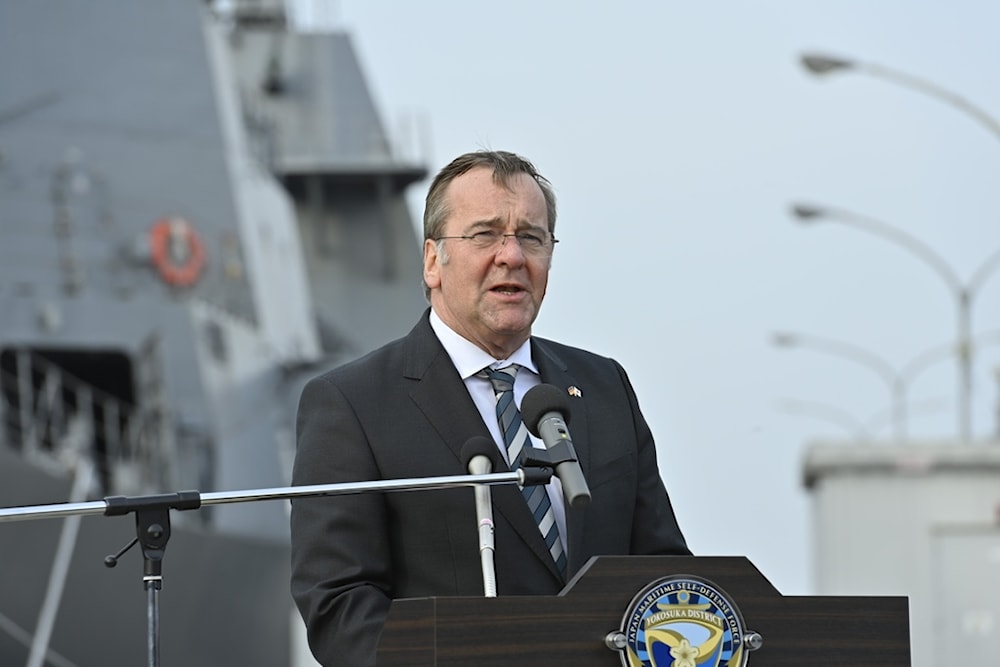
German Defense Minister Boris Pistorius speaks, along with Japanese Defense Minister Shinjiro Koizumi, during the joint press statement at the Japan Maritime Self-Defense Force (JMSDF) Yokosuka Naval Base on Sunday, March 22, 2026, in Yokosuka, near Tokyo (Pool Photo via AP)
The ongoing US-Israeli war on Iran is an economic "catastrophe" for the world, as described by German Defense Minister Boris Pistorius, highlighting the global financial risks posed by the war.
“To make it crystal clear, this war is a catastrophe for the world's economies,” Pistorius told reporters in Australia on Thursday.
He emphasized that Germany had not been consulted before the war began and insisted that “it’s not our war and therefore we don’t want to get sucked into that war.”
Pistorius also stressed that Germany is ready to assist in securing peace once a ceasefire is achieved, urging all parties to end the war as soon as possible.
The remarks were made during Pistorius’s week-long visit to the Indo-Pacific region, which includes stops in Australia.
War on Iran drives energy shock in Europe, growth outlook collapses
Initially seen by European allies of the United States as a humanitarian crisis and a geopolitical test, the US-Israeli-initiated war on Iran is now evolving into a major energy shock with clear parallels to the fallout from the 2022 Ukraine war. According to Bloomberg Economics, the economic consequences are becoming increasingly difficult to avoid as the war disrupts global energy flows.
Uncertainty surrounding the duration and intensity of the war, described as unpredictable even by US President Donald Trump, is adding to market instability. At the same time, the European Union’s economic growth is trending downward, while inflation is rising and competition for energy resources is intensifying, undermining earlier expectations of a competitiveness boost.
Disruption of key energy routes and supply chains
A central factor in the crisis is Iran’s effective closure of the Strait of Hormuz, a critical global energy route through which roughly 20% of the world’s natural gas supply passes. This disruption has highlighted what analysts describe as strategic complacency by the United States, while the broader impact is being felt most acutely in Europe.
European economies and consumers, heavily reliant on natural gas, are particularly exposed to these disruptions. The situation worsened following a reported retaliatory Iranian strike on the US-linked Ras Laffan liquefied natural gas plant in Qatar, which accounts for about one-fifth of Qatar’s LNG output, after the US targeted Iran's energy infrastructure.
In response, European Union leaders are seeking alternative suppliers, including Algeria, while introducing multi-billion euro consumer support measures to offset rising costs. The situation closely mirrors Europe’s energy response following the conflict in Ukraine four years ago.
Read more: USPS introduces first-ever 8% fuel surcharge as energy prices surge


