
'The answer is no': Greece rejects Trump's aid plea in Hormuz Strait
 3 Min Read
Greece and European nations reject US President Trump’s call to send naval forces to the Strait of Hormuz. Leaders focus on economic impacts and global oil supply risks amid rising tensions with Iran.
-
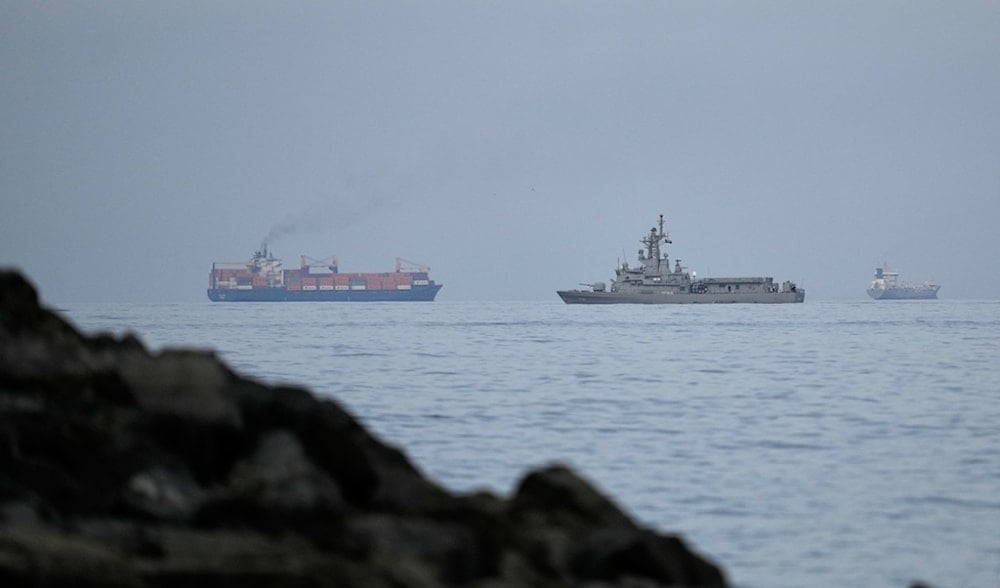
A UAE navy ship sails next to a cargo ship in the Strait of Hormuz as seen from Khor Fakkan, United Arab Emirates, Wednesday, March 11, 2026. (AP)
Greece and Europe will not participate in any military operations near Iran, Greek Prime Minister, Kyriakos Mitsotakis, confirmed, after US President Donald Trump requested allies to send ships to “help restore navigation through the Strait of Hormuz.”
Speaking at an event organized by Bloomberg in Athens, Mitsotakis plainly said, “The answer is simply no. Greece will not participate in any operation in the current operational zone.” He added, “I doubt there is strong European willingness for such a mission at this time.”
The Greek leader emphasized that European leaders must address the war’s impact on the continent, including rising energy prices.
In this context, he announced that EU leaders will meet in Brussels this Thursday “to consider short-term measures to reduce electricity prices,” noting that Europe will prioritize economic consequences over military engagement.
A series of rejections: Allies say no
Trump had called on several countries to deploy naval forces to escort oil tankers through the Strait of Hormuz, a vital passage handling nearly 20% of global fuel supplies.
In response, Japanese Prime Minister, Sanae Takaichi, stated that Tokyo has no current plans to send warships to the region. A Japanese government source confirmed that ships will not be deployed simply because of Trump’s request.
Similarly, Australian Transport Minister, Catherine King, rejected sending warships to the strait, affirming that Australia will not participate in a mission to “secure” navigation.
Yesterday, Trump warned that NATO would face a “very bad future” if allies failed to help reopen the strait, urging European countries to join his war against Iran.
US miscalculation shatters energy market
CNN reported that the Pentagon and National Security Council underestimated Iran’s readiness to close the Strait of Hormuz in response to the US-Israeli military aggression. Some officials said the situation was the “worst-case scenario facing the administration,” as they had doubted Iran would make that move.
Even if the war ended today, navigation could take one to three months to fully resume, CNN added.
Financial Times noted that US allies are within their rights to avoid a war they did not seek, meaning they are not obliged to respond to Trump’s requests. Analysts highlighted that the US–Israeli aggression against Iran and any closure of the strait would shock the global oil market, disrupting nearly one-fifth of supply and triggering price volatility and global inflationary pressures.
Bloomberg also reported that Europe and Gulf states remain unconvinced by the White House’s escort plan, suggesting Washington may need to act independently.
Read more: US should prepare troops coffins before approaching Hormuz: MP - Exc.


