
Araghchi: Iran diplomatically confident due to military power
 3 Min Read
Iran FM Araghchi outlines Iran's dual-track approach of diplomacy and defense as Muscat talks with the US gain regional support.
-
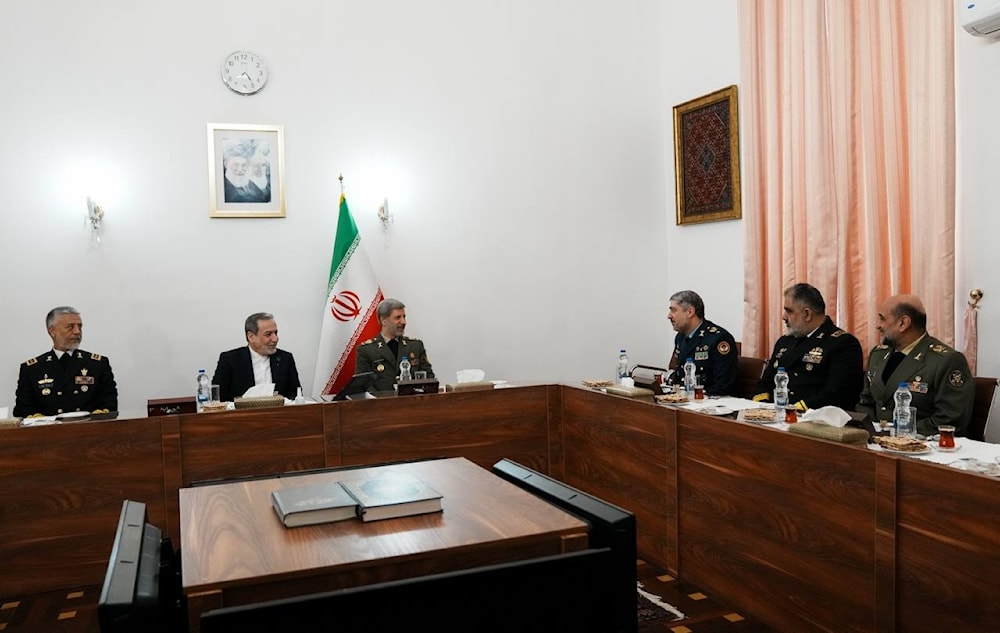
Iranian Foreign Minister Abbas Araghchi meets with senior military commanders from the Iranian Armed Forces, Tuesday, February 10, 2025. (PressTV)
Iranian Foreign Minister Abbas Araghchi affirmed Tuesday that Iran is entering diplomatic negotiations with the United States from a position of strength, crediting the capabilities and readiness of the country's armed forces for bolstering Tehran's confidence at the negotiating table.
The statement came during a high-level meeting with a military delegation led by Iranian Army Commander Major General Amir Hatami, along with Army Coordination Assistant Admiral Habibullah Sayari and Navy Commander Admiral Shahram Irani.
During the meeting, Hatami emphasized the inseparability of military defense and diplomatic efforts, describing them as "one arena in which the country's independence, territorial integrity, the interests of our people, and regional peace and security are defended."
"We in the armed forces are moving forward with all our strength on this path, and Iran's diplomats are also moving forward with their tools on the same path," Hatami said, stressing full coordination between the two domains.
The army commander warned that the Iranian forces remain on high alert, asserting that "enemies only understand the language of force. If they make any mistake, we will respond with a force they have never seen before."
Muscat talks gain regional support
This example of military-diplomatic coordination comes as Iran pursues indirect negotiations with the United States in Muscat, Oman; the first such engagement since the June 2025 Israeli-US aggression against Iran.
On Monday, Araghchi briefed his Turkish, Egyptian, and Saudi counterparts, Hakan Fidan, Badr Abdelatty, and Prince Faisal bin Farhan, on the progress of the Muscat talks, which he described as "a constructive beginning." He emphasized the importance of clarifying US intentions and objectives in the negotiations.
The regional foreign ministers welcomed the resumption of dialogue and stressed the need for continued talks to prevent further escalation and promote regional stability.
Dual-track approach
Speaking on Sunday at Tehran's National Conference on Policy and History of Foreign Relations, Araghchi articulated Iran's dual-track strategy. "We are a people of diplomacy, and of war, though we do not seek [war]," he declared, warning that pressure or military threats will not force Iranian concessions.
He reiterated Iran's firm position on uranium enrichment, stating that "no party has the right to demand that we zero out uranium enrichment."
The first round of indirect talks was held on February 6 in Muscat, with participation from US Special Envoy Steve Witkoff and Trump's son-in-law Jared Kushner.
Iranian state media, including IRNA, reported that a political statement resulting from the talks could be a step toward easing regional tensions and laying the groundwork for resolving the nuclear file. According to IRNA, both sides appear more aware of the costs of escalation and the mutual interest in crisis management.


