
Cuba unveils major reforms amid escalating US economic siege
 3 Min Read
Havana frames the measures as a response to decades of US economic aggression and escalating sanctions.
-
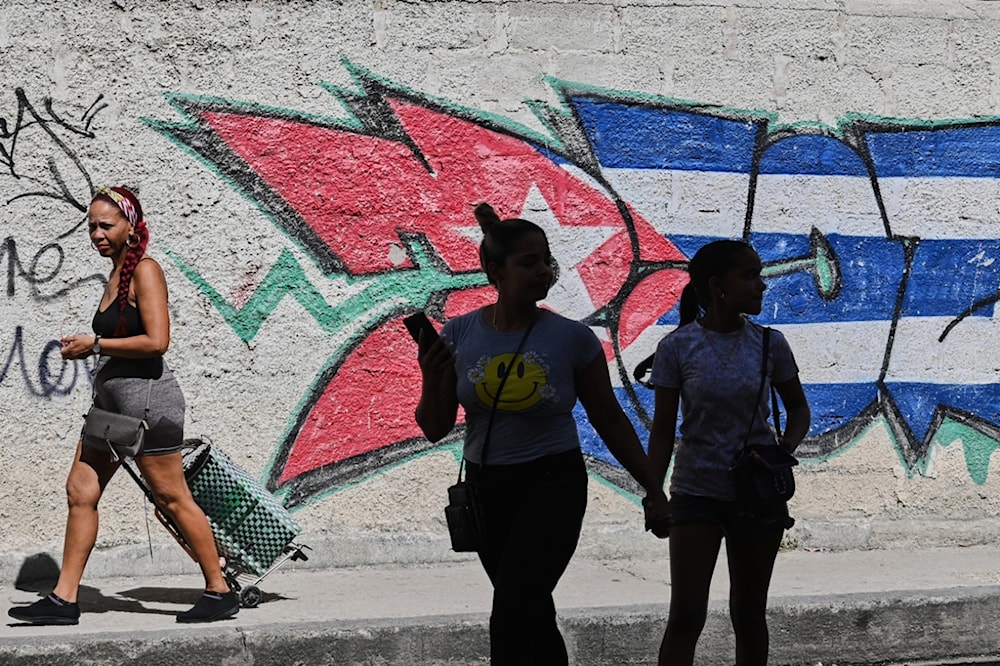
People walk past graffiti in the colors of the Cuban flag in Havana, Cuba, Wednesday, June 17, 2026 (AP)
Cuba's Communist Party has approved a sweeping package of economic reforms aimed at expanding investment opportunities and strengthening the country's economy as Havana seeks to confront mounting hardships caused by decades of US sanctions and the latest escalation of economic pressure from Washington.
The measures were approved on Wednesday during an extraordinary plenary session of the Communist Party's Central Committee, where around 20 proposals for economic and social transformation were reviewed. The package was presented as one of the most significant economic updates in years and comes as Cuba continues to endure shortages of fuel, food, medicine, drinking water, and prolonged nationwide power outages.
President Miguel Díaz-Canel has argued that the reforms are intended to modernize the country's economic model while preserving its socialist foundations, as the island faces increasingly restrictive US measures targeting its economy and energy sector.
Former president Raúl Castro also endorsed the proposals, describing them in a letter to party members as "the most beneficial to the revolution at this time."
Rather than presenting the reforms as a departure from socialism, Cuban authorities have framed them as a necessary response to sustained US economic aggression. Havana has long argued that Washington's blockade and sanctions are the principal drivers of the country's economic difficulties, limiting access to fuel, investment, international financing, and essential imports.
Revolution through reform
The latest reforms seek to mobilize domestic resources by expanding opportunities for private investment, encouraging greater participation by Cubans living abroad, and granting Cuban investors the same conditions afforded to foreign investors. Officials have also announced plans to streamline parts of the state by reducing ministries and public sector positions while giving greater autonomy to state-owned enterprises, which continue to account for roughly 80 percent of the country's economic activity.
Private businesses, legalized in 2021 and permitted to employ up to 100 workers, are expected to assume a broader role within the economy under the new framework.
Prime Minister Manuel Marrero Cruz stressed that the measures should not be interpreted as a retreat from the state's social commitments.
"The reforms in no way imply relinquishing the social responsibility of the state," Marrero wrote on X.
From Havana's perspective, the reforms are intended to reinforce the Revolution rather than weaken it by generating new sources of investment capable of sustaining Cuba's public healthcare, education, and social welfare systems despite continued external pressure.
Defying US pressure
The announcement follows months of intensified US measures targeting Cuba's economy, including restrictions affecting the island's energy supplies, which Cuban officials say have compounded fuel shortages and contributed to prolonged electricity outages across the country.
A private supermarket owner in Havana, speaking anonymously to AFP, welcomed the changes.
"I welcome any change that helps revive the dying patient," the shop owner said, referring to Cuba's struggling economy.
While Washington has repeatedly called for changes to Cuba's economic model, Cuban leaders maintain that the objective of the latest reforms is not to dismantle socialism but to preserve national sovereignty and strengthen the country's resilience in the face of decades of US-led economic warfare.
Read more: Cuba warns of US aggression, reveals pressure campaign scenarios


