
Democratic primary turnout outpaces Republican's ahead of 2026 midterm
 2 Min Read
A Washington Post report says Democratic primary turnout is outpacing Republicans ahead of the 2026 US midterms, with gains even in Republican-leaning states.
-
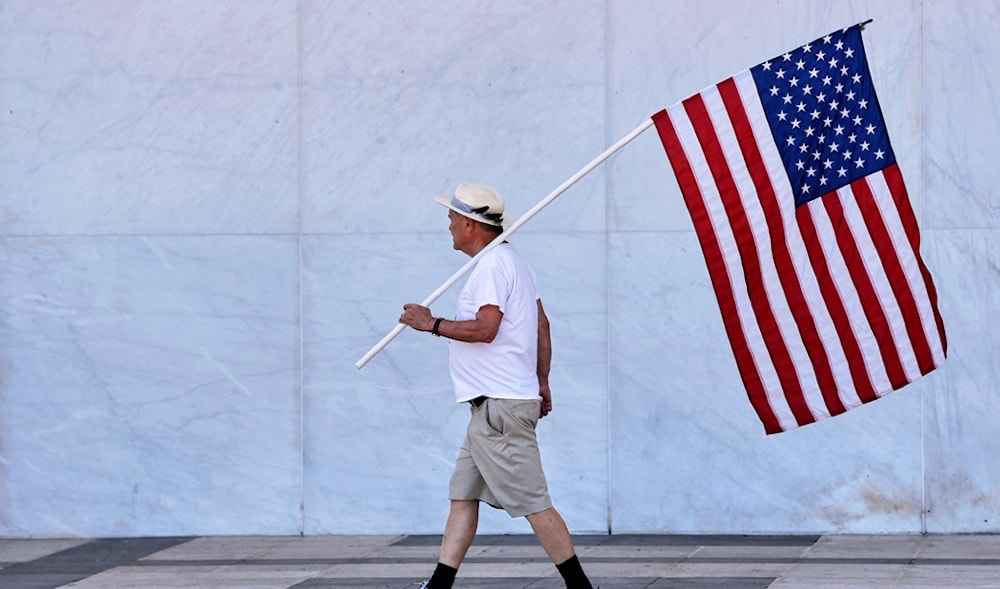
A man holds American flag as the wall of the John F. Kennedy Center for the Performing Arts is covered in tarp after President Donald Trump's name was removed, in Washington, Saturday, June 13, 2026. (AP)
Voter turnout among Democratic Party supporters in US House primaries has significantly outpaced that of Republicans, a Washington Post report revealed on Monday.
According to the report, the current pattern marks a shift from the previous two years, when participation between Democratic and Republican voters was broadly comparable.
It added that Democratic participation has increased even in traditionally Republican-leaning states. In Georgia, for example, the number of Democratic primary voters reportedly rose by around 70% compared with 2022.
The report comes as attention builds toward the 2026 midterm elections, scheduled for November 3, when control of the House of Representatives will be contested.
Analysts cited by the Washington Post suggest Republicans could face challenges in retaining their majority, pointing to factors including declining approval ratings for the administration, ongoing military developments involving Iran, and rising energy costs as potential political pressures.
War on Iran drives hesitation among Americans
The US-led war on Iran has become a growing point of political pressure inside Washington. While Democratic voters have overwhelmingly opposed the operation, the Republican base has continued to back the administration, even as broader public support has weakened and concerns over costs and energy prices have intensified.
At the same time, there are signs of softening among independent and Republican-leaning voters, with analysts pointing to economic strain and uncertainty over the long-term objectives of the war as factors shaping broader dissatisfaction rather than a clear partisan realignment.
Against this backdrop, attention has increasingly shifted to President Donald Trump’s political standing. His approval ratings have continued to slide through June, with 60 percent of Americans disapproving of his performance and only 35 percent expressing approval, as voters increasingly blame the US-Israeli war on Iran for economic hardship and a majority now consider the decision to launch aggression on Tehran a "mistake," according to an Economist/YouGov poll.
The poll reveals that the economy is Trump's real vulnerability, with three‑quarters of respondents describing the country's financial situation as either "bad" or "mediocre at best."
Read more: War on Iran will crush US working class with $5 gas, job losses


