
Erdogan urges stability and ceasefire in Sudan during Burhan talks
 4 Min Read
Turkish President Erdogan called for stability and a comprehensive ceasefire in Sudan during talks with Sovereignty Council chief Abdel Fattah al-Burhan in Ankara.
-
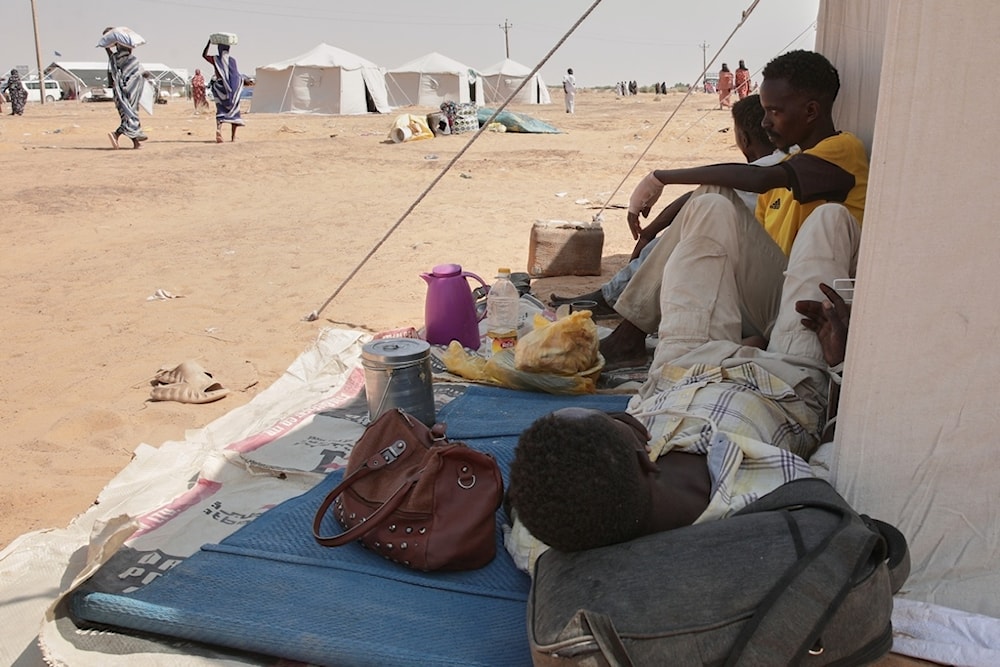
People displaced from North Darfur's capital, el-Fasher, and other conflict-affected areas settle in the newly established El-Afadh camp in Al Dabbah, in Sudan's Northern State, Thursday, November 13, 2025 (AP)
Turkish President Recep Tayyip Erdogan stressed the importance of restoring stability in Sudan and preserving the country’s territorial unity during talks in Ankara with Abdel Fattah al-Burhan, head of Sudan’s Sovereignty Council.
According to the Turkish presidency, Erdogan underlined the need to lay the foundations for lasting peace in Sudan and to reach a comprehensive ceasefire, as the country continues to grapple with a devastating conflict that has entered its third year.
Erdogan said Turkiye would continue to strengthen cooperation with Sudan across several sectors, particularly defense industries and mining, in addition to trade and broader economic ties.
He also reaffirmed Ankara’s commitment to providing humanitarian assistance to the Sudanese people, amid what international agencies have described as one of the world’s worst humanitarian crises. Erdogan drew particular attention to the dire situation in the city of El Fasher, in Sudan’s North Darfur state, where fighting and displacement have intensified.
Sudan has been engulfed in widespread violence since April 2023, following the outbreak of clashes between the Sudanese army and the Rapid Support Forces over control of key state institutions and strategic locations.
Despite sustained Arab, African, and international mediation efforts, the conflict has yet to produce a lasting ceasefire. The war has killed tens of thousands of people and displaced around 13 million, including refugees who have fled to neighboring countries, while exacerbating a humanitarian emergency described by the United Nations and the African Union as among the most severe globally.
War crimes reported in El Fasher
The United Nations has warned that following the fall of El Fasher on October 26, 2025, after a 540-day siege, RSF and allied forces reportedly committed atrocities and ethnically motivated violations, including:
- Killings, torture, and summary executions
- Arbitrary detention of civilians
- Widespread and systematic use of rape and sexual violence as weapons of war
- Attacks on healthcare facilities, including the killing of patients and the denial of medical care
- Direct assaults on humanitarian workers and aid blockades
- Violence Expands in Kordofan Region
Read more: 234 medical workers killed since April 2023: Sudan Doctors Network
Aid access blocked as food supplies run out
Speaking to journalists in Geneva, Ross Smith, WFP’s director of emergency preparedness and response, said widespread network outages have largely cut off communications with the North Darfur city, leaving humanitarian agencies with only limited information about the situation on the ground.
The WFP renewed calls for unrestricted humanitarian access to El Fasher in order to assess urgent needs. Smith said Rapid Support Forces authorities have given preliminary approval to minimum UN conditions for entry, stressing that the agency is ready to move immediately if a safe corridor is secured.
“Food supplies and trucks are available to reach all civilians without delay if safe passage is guaranteed,” he said.
Smith also highlighted the situation in Tawila, where more than 650,000 displaced people are living in overcrowded, temporary conditions amid a cholera outbreak and severe shortages of basic services. He warned that without urgent funding, the WFP will be forced to reduce food rations in 2026, further worsening the humanitarian crisis.
To maintain current assistance levels, Smith said the agency has already begun rationing supplies. Starting in January, food rations will be reduced to 70% for communities experiencing famine and 50% for those at risk, which he described as “the absolute minimum needed to survive.”
Even with these measures, Smith warned that WFP resources are sufficient to sustain current operations for only four months. “If another mass displacement occurs, the WFP will have no choice but to cut assistance elsewhere in Sudan,” he said, calling the situation “catastrophic” as the agency struggles to respond to what it describes as the world’s largest humanitarian crisis.


