
Federal judge blocks Trump Mail-in voting executive order, again
 4 Min Read
A federal judge again blocks Trump’s mail-in voting executive order as 24 states challenge the restrictions and the US Postal Service warns of technical hurdles.
-
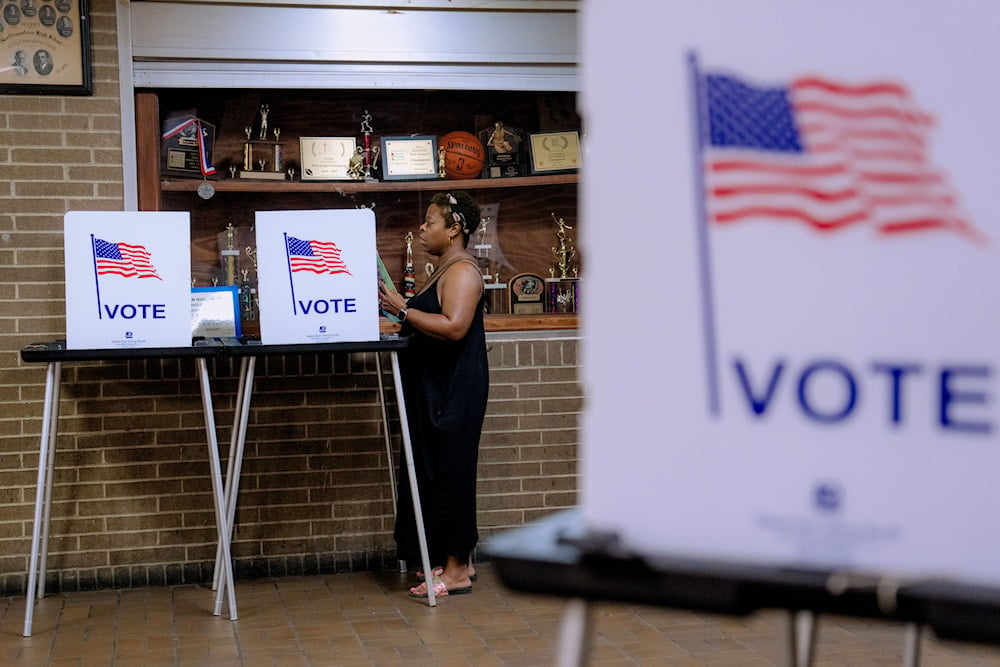
A person votes in the primary election at Northwestern High School in Detroit, Tuesday, Aug. 4, 2026. (AP)
A federal judge on Friday again blocked US President Donald Trump's executive order that sought to impose sweeping restrictions on mail-in voting, marking the latest development in ongoing legal proceedings less than two months before Election Day.
US District Court Judge Indira Talwani, who had initially placed a temporary order blocking the mandate, extended that prohibition with a stronger preliminary injunction. The ruling came hours after North Carolina became the first state to begin sending out mail-in ballots for the November 3 midterm elections.
In her ruling, Judge Talwani cited the tight election timeline. "Plaintiff States are required under state law to mail millions of ballots to voters on a prescribed timeframe," the judge wrote. "As detailed below, they are unable to pivot this late in the election cycle, nearly guaranteeing significant disenfranchisement for eligible voters."
White House quickly appeals as postal service warns of technical hurdles
Trump signed the executive order in March, which would create a nationwide list of verified eligible voters and compel the US Postal Service to work with states in establishing lists of mail-in voters before elections. The order would result in limited ballot delivery only to voters on those lists.
The Trump administration had already appealed the temporary block to the Supreme Court, and it appeared justices were likely to have a final say on the matter. The White House did not immediately respond to a request for comment, but the administration quickly appealed against Friday's ruling.
The US Postal Service has stated in recent court filings that the technology necessary to administer the order is not currently available. Earlier this week, a USPS whistleblower came forward and warned of "potentially catastrophic problems" if the agency were to attempt to carry out the order.
24 states unite to challenge order
Following the signing of the order, a coalition of 24 state attorneys general jointly sued the US Postal Service to challenge the rule. The coalition also filed a motion for a temporary restraining order and preliminary injunction as litigation proceeded, with oral argument on the request for a preliminary injunction held on Thursday.
"We've now secured longer-term relief that will keep the USPS changes blocked while our case moves forward," said Rob Bonta, the attorney general of California, who co-led the state coalition. "We will continue to take all steps to stop the Trump Administration from trampling on voting rights and restricting mail voting."
President Trump has long sought to limit mail voting, despite regularly using that method to cast his own ballot. He has falsely blamed mail balloting for his 2020 election loss and spread baseless claims of fraud, but has so far been unable to change the longstanding voting procedure.
An initial executive order Trump issued last year to change election rules, including a requirement for documentary proof of citizenship to register to vote, was halted by federal judges. They ruled that the Constitution gives states and, in some cases, Congress the power to set voting procedures, not the president.
After Trump issued the mail voting executive order in March, Democrats and voting rights groups filed several lawsuits. Two cases ended up before Judge Talwani, who placed an initial hold on the order in June, prohibiting implementation until after November.
The Supreme Court late last month overturned that order. Its conservative majority pointedly did not rule that Trump's move was legal but found the lawsuits had been filed prematurely, before the US Postal Service issued its rule on implementation. The rule was released just before the Supreme Court issued its ruling, and plaintiffs subsequently refiled their suits.


