
G7 concerned over Russia, China nuclear build-up ahead of NPT talks
 4 Min Read
G7 countries raise concern over expanding Russian and Chinese nuclear arsenals before a key UN treaty review conference.
-
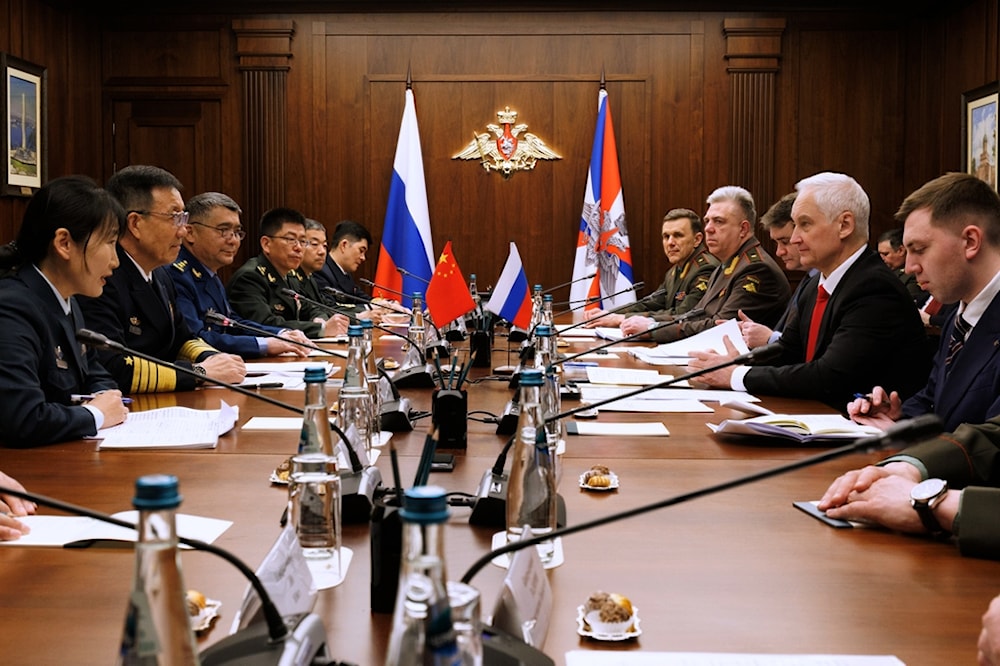
In this photo provided by the Russian Defense Ministry Press Service, Chinese Defense Minister Dong Jun, second left, and Russian Defense Minister Andrei Belousov, second right, attend the talks in Moscow, on Friday, April 24, 2026 (Russian Defense Ministry Press Service via AP)
The Group of Seven countries have voiced concern over what they describe as a growing nuclear weapons build-up by Russia and China, reaffirming their support for the Treaty on the Non-Proliferation of Nuclear Weapons ahead of a key review conference.
In a statement published by the French Foreign Ministry, the G7 Non-Proliferation Directors Group said it is “concerned with China’s and Russia’s significant nuclear weapons build-up and modernisation,” highlighting rising risks to global stability.
The group, which includes diplomats from Britain, Canada, France, Germany, Italy, Japan, and the United States, made the remarks ahead of a month-long conference in New York set to begin Monday to review the treaty.
The meeting comes amid heightened geopolitical tensions and ongoing wars with nuclear implications, including the wars in Iran and Ukraine, adding pressure on efforts to maintain international arms control frameworks.
G7 officials said they are committed to working with all treaty members to secure a successful outcome in 2026 and to strengthen the NPT across its core pillars: disarmament, non-proliferation, and the peaceful use of nuclear energy.
The group also expressed support for US efforts to pursue “multilateral strategic stability,” despite skepticism from President Donald Trump toward major international agreements. Trump has previously advocated for a three-way nuclear arrangement involving the US, Russia, and China, while also raising the possibility of resuming nuclear testing and accusing Beijing of conducting undisclosed trials.
The upcoming conference aims to preserve consensus around the treaty, though previous review meetings have ended without agreement among its 191 signatories, raising concerns about the prospects for this year’s negotiations.
Rubio, EU's Kallas go head-to-head over Russia policy at G7 meeting
But even as the G7 presents a united front in warning about Russia and China’s nuclear ambitions, that cohesion masks growing internal disagreements over how to confront Moscow in practice. The tensions became visible weeks earlier, when US Secretary of State Marco Rubio and EU foreign policy chief Kaja Kallas clashed over Washington’s approach to the war in Ukraine.
In late March, US Secretary of State Marco Rubio clashed openly with European Union foreign policy chief Kaja Kallas during a G7 foreign ministers' meeting in France on Friday, in a confrontation that underscored the deepening rift between Washington and its European allies over the war in Ukraine.
The heated exchange, which unfolded in front of assembled foreign ministers at a 12th-century abbey outside Paris, was triggered when Kallas, a longtime Russia hawk and former Estonian prime minister, pressed Rubio on Washington's failure to translate its stated impatience with Moscow into meaningful pressure.
Kallas recalled that Rubio had pledged at the same forum a year earlier that if Russia obstructed US-led efforts to end the war, Washington would run out of patience and escalate its pressure on the Kremlin.
A year on, she noted, Russia had not moved. "When is your patience going to run out?" she asked Rubio, according to three sources who attended the meeting cited by Axios.
'We will step aside'
Rubio reportedly raised his voice and fired back, saying, "We are doing the best we can to end the war. If you think you can do it better, go ahead. We will step aside."
He argued that the US was attempting to engage both sides diplomatically, while in practice, only one side, Ukraine, was receiving US weapons, intelligence, and logistical support.
Several European ministers in the room intervened after the exchange to reaffirm their desire for continued US engagement in Russia-Ukraine diplomacy, according to one source. By the end of the meeting, Rubio and Kallas reportedly held a brief pull-aside in an apparent attempt to defuse tensions.
Read more: EU leaders push new energy plan as current measures fall short


