
Gazprom Neft CEO says Hormuz blockade risks oil shortage within months
 3 Min Read
Gazprom Neft CEO Alexander Dyukov warned that a prolonged disruption in the Strait of Hormuz could trigger a global oil supply deficit within months, with serious economic consequences.
-
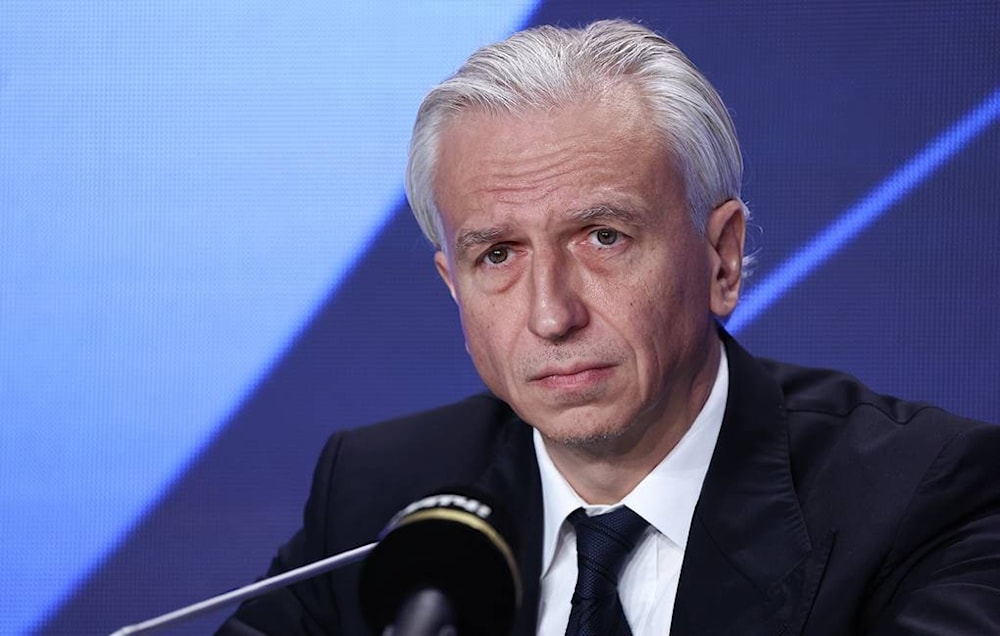
Gazprom Neft CEO Alexander Dyukov at a press conference for the Russian Football Union (RFU) on November 29, 2024 (image sourced from TASS)
Gazprom Neft CEO Alexander Dyukov warned on Thursday that continued disruption to the Strait of Hormuz could lead to a major imbalance in global oil supply within a matter of months, raising concerns over broader economic fallout.
Speaking on the sidelines of a congress organized by the Russian Union of Industrialists and Entrepreneurs, Dyukov said the ongoing war on Iran is already influencing energy markets, with the potential for more severe consequences if the situation persists.
"The Middle East conflict is already having a significant impact on the global oil market... If the conflict and the blockade of the Strait of Hormuz continue, then in 2-3 months the global oil market will face a very serious shortage and, consequently, with even more significant consequences for the global economy," Dyukov said.
The Strait of Hormuz, a critical maritime corridor linking the Persian Gulf to global markets, handles a substantial share of the world’s oil and gas shipments, making any disruption to its flow particularly sensitive for global supply chains.
Dyukov indicated that while the current strain has yet to fully translate into a supply crisis, the effects could intensify once existing buffers, such as reserves and alternative shipping arrangements, are exhausted.
At the same time, he suggested that the scale of price increases may not mirror past crises, pointing to structural changes in the global energy system since the 1970s.
"The price of oil in the world is unlikely to rise as much due to the conflict in the Middle East as in it did in the 1970s, because now the market is better prepared," he added.
Energy shock
His remarks come as the war on Iran has entered its fourth week after the United States and "Israel" launched an unprovoked aggression on the country on February 28.
On Monday, International Energy Agency (IEA) Executive Director Fatih Birol warned that the war could trigger the most severe energy crisis in history, as disruptions continue to destabilize global oil markets.
On Tuesday, Bloomberg reported that the war is increasingly evolving into a global energy shock, with disruptions to key transit routes, particularly the Strait of Hormuz, intensifying pressure on supply chains, driving inflation, and weakening economic growth prospects, especially across Europe.
Read more: Brent crude up 3.3% to $105.50 a barrel as Trump's talks vows falter


