
Germany welcomes US-Iran talks, urges solution for Strait of Hormuz
 4 Min Read
Germany urges a practical solution to ensure safe passage through the Strait of Hormuz.
-
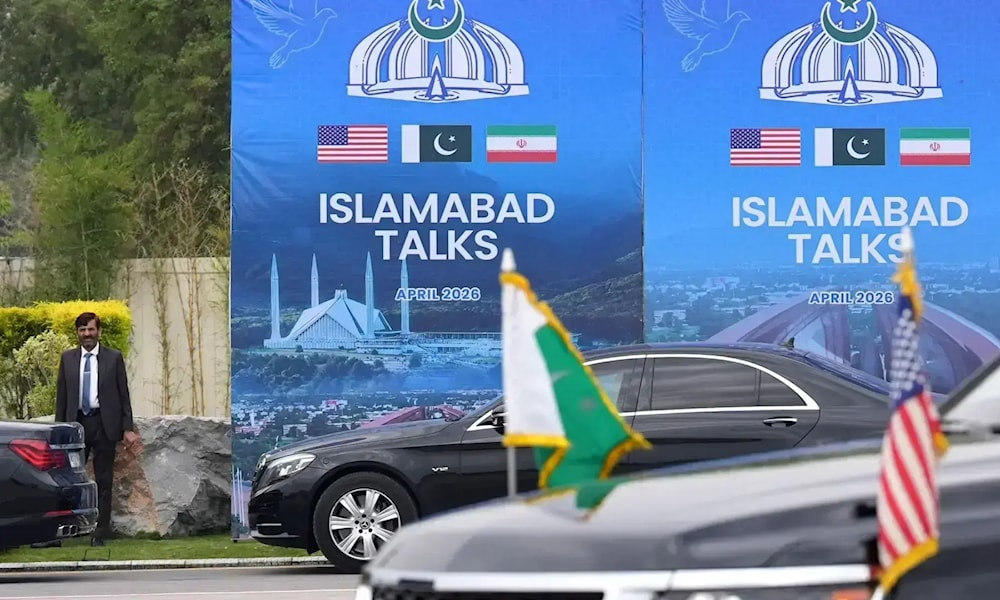
A Pakistani official is pictured during the arrival of the US Vice President JD Vance for US-Iran peace talks in Islamabad on April 11, 2026 (AFP)
The agreement between the United States and Iran to halt the war and continue talks is an important step that gives diplomacy an opportunity to navigate in what remains a fragile situation, the German Foreign Ministry stated on Tuesday.
In a post on X, the Ministry stated that the priority in the coming phase is to reach a practical solution to ensure safe, unobstructed passage through the Strait of Hormuz.
The agreement between the United States and Iran to halt mutual attacks and continue negotiations is an important step. It creates an opportunity for diplomacy in what remains a highly fragile situation. @AussenMinDE 4/6
— GermanForeignOffice (@GermanyDiplo) June 30, 2026
Earlier, Iranian Parliament Speaker Mohammad Bagher Ghalibaf announced that talks in Switzerland had resulted in mutual understandings and mechanisms with Washington regarding the guarantee of Lebanon's sovereignty and territorial integrity.
Meanwhile, Iranian President Masoud Pezeshkian said that the results of the talks with the United States depend on strict compliance with the commitments they produce, warning that "remarks outside the agreed text" do not help advance the negotiations.
Strait of Hormuz traffic remains at complete halt
The Strait of Hormuz remains in a severely disrupted state, with the latest HormuzTracker dashboard showing no active commercial vessel transits in real time. According to live AIS-based monitoring, the current snapshot records zero active ships transiting, zero outbound and inbound vessels today, and no recorded traffic in the last eight hours.
This confirms a continued complete halt in detected commercial navigation activity, with no crude oil tankers, LNG carriers, bulk carriers, or container ships moving through the strait during the latest update window. All vessel categories, including crude tankers and product carriers, remain at zero live movement and zero completed exits.
The data indicate that the chokepoint is still effectively non-operational for outbound shipping, continuing a broader pattern observed in recent days, where the system has consistently shown either severely reduced flows or complete stagnation. With no vessels broadcasting active movement in the monitored radius, commercial outbound shipping remains paused, no energy cargo movements are detected, and AIS signals show no verified crossings.
As of today's tracker update, the Strait of Hormuz is in a zero-traffic phase, with maritime movement effectively halted according to live AIS detection data.
Violations of ceasefire destabilize Strait of Hormuz
The latest escalation did not emerge suddenly but followed a series of earlier incidents. On June 20, Iran's Islamic Revolution Guard Corps (IRGC) Navy affirmed that the Strait of Hormuz is closed to all ships and naval vessels, in response to Israeli aggression.
That aggression included Israeli occupation forces carrying out fresh attacks across southern Lebanon and western Bekaa, killing at least 37 people and extending a pattern of violence that has persisted despite a so-called ceasefire in place since April 17, 2026. The IRGC Navy cited Israeli crimes in Lebanon and Washington's violation of its ceasefire commitments as the catalysts for the closure.
The US Central Command (CENTCOM) announced that it carried out additional strikes between June 27 and June 29 against Iranian military infrastructure in southern Iran, claiming the operation was in response to an "Iranian attack on an oil tanker." According to CENTCOM, the strikes allegedly targeted military surveillance infrastructure, communications systems, air defense sites, drone storage facilities, and naval mine-laying capabilities.
In response, the IRGC said it had targeted US military sites in the region and warned that any further American attacks would trigger broader retaliation. Iran has repeatedly stated that US military bases and economic assets in the Gulf region have been used to launch acts of aggression against Iran, including strikes that have resulted in civilian casualties. In this framing, any Iranian action targeting such facilities is retaliation against hostile military activity originating from or enabled by those bases.
The latest escalation comes despite the signing of a memorandum of understanding intended to end hostilities and launch a 60-day negotiation process toward a comprehensive agreement. Iranian officials have asserted that US aggressions are a clear violation of that understanding and warned that any future breaches would be met with a decisive response.


