
How can Lebanon imagine gaining anything from 'Israel': Lebanese MP
 4 Min Read
Jamil el-Sayyed argues that previous Arab-Israeli normalization agreements resulted in political weakness, economic dependency, and continued Israeli dominance rather than genuine sovereignty.
-
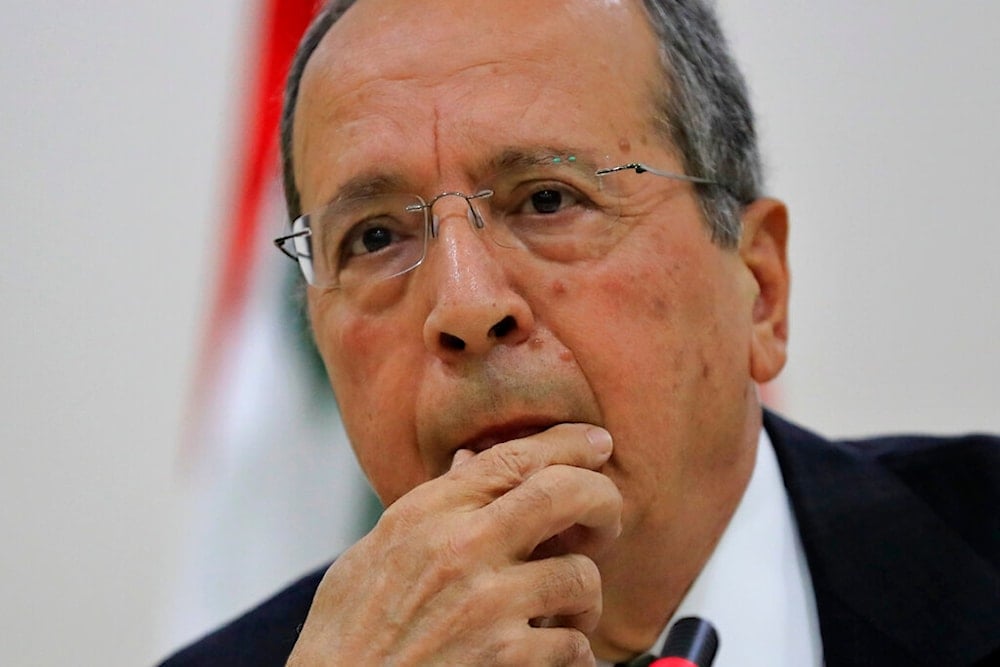
Jamil el-Sayyed, a former security chief and current Lebanese lawmaker, gestures during a press conference in Beirut, Lebanon, Friday, Oct. 29, 2021 (AP)
Former Lebanese General Security chief Jamil el-Sayyed launched a fierce attack on the ongoing direct negotiations between Lebanon and "Israel" in Washington, warning that Beirut is being pushed toward a US-backed normalization process while Israeli aggression and occupation violations continue across the region.
“Today, direct negotiations are taking place between Lebanon and Israel in Washington, and our State sees them as a step toward peace,” El Sayyed wrote on X on Thursday, before asking, “So what are the Israeli models of ‘peace’ adopted so far?!”
His remarks came as Washington hosts two days of intensive Lebanon-"Israel" talks on May 14 and 15 under a framework openly tied by the United States to the disarmament of Hezbollah, a condition widely viewed in Lebanon as aligning directly with Israeli strategic objectives.
The talks are taking place amid continued Israeli airstrikes, demolitions, and incursions in southern Lebanon despite the ceasefire, with Lebanese political and Resistance figures accusing "Israel" of using military pressure and destruction to force political concessions through diplomacy.
Normalization breeds weakness
In his post, el-Sayyed argued that every major Arab normalization or “peace” arrangement with "Israel" ultimately produced weakness, dependency, or territorial loss for the Arab side rather than sovereignty or stability.
He pointed to the Palestinian Authority under Mahmoud Abbas, arguing that security coordination with "Israel" left Palestinians with “nothing… except a few neighborhoods in the West Bank,” while Israeli settlement expansion, military raids, and the territorial fragmentation of the occupied West Bank continued unabated.
He also criticized Egypt and Jordan’s normalization treaties with "Israel", claiming both states became vulnerable to economic and political blackmail “through debts and loans handed out drop by drop,” while "Israel" continued violating regional sovereignty whenever it chose.
Referring to Syria, el-Sayyed argued that Israeli expansionism persisted “even without any excuse of Syrian resistance existing there,” in an apparent reference to repeated Israeli attacks and territorial expansion deeper inside Syrian territory during the broader regional war.
He further accused "Israel" of seeking agreements “with Arab regimes apart from their peoples,” arguing that such arrangements allow Western-backed powers to pressure governments and inflame internal divisions whenever necessary.
Lebanon 'fears for its own survival'
The former security chief reserved some of his harshest criticism for Lebanon’s political establishment, describing the country as “the most bankrupt state, the most corrupt system, the most submissive rulers… and the most dangerously fragmented society.”
“How can Lebanon… imagine that it is capable of direct negotiations through which it can gain anything from Israel?” he asked.
El-Sayyed concluded by warning that negotiations cannot succeed between “a powerful and arrogant Israeli side” and a Lebanese authority “that fears for its own survival.”
Today, direct negotiations are taking place between Lebanon and Israel in Washington, and our State sees them as a step toward peace.⁰So what are the Israeli models of “peace” adopted so far?!
— اللواء جميل السيّد (@jamil_el_sayyed) May 14, 2026
1- Is it the model of Israel’s peace with Mahmoud Abbas, who coordinated with it day…
The Washington talks have become one of the most contentious political developments in Lebanon since the latest war, with critics warning that negotiations conducted under ongoing Israeli military aggression risk transforming ceasefire discussions into a broader normalization process imposed through force and foreign pressure.
Israeli greed exposed
Earlier this week, Lebanese Culture Minister Ghassan Salame warned that the talks could collapse because of Israeli “greed” and expanding demands.
Speaking to Al Mayadeen, Salame said the talks could not yet be considered genuine negotiations, arguing that "Israel’s" primary objective was to secure its own “security needs” by deterring the Resistance and imposing full control rather than reaching a fair political settlement.
Salame also questioned whether "Israel" was genuinely interested in any lasting agreement, warning that repeated Israeli violations and attacks were undermining the entire process. He accused Israeli forces of carrying out systematic destruction across southern Lebanon through drone strikes, shelling, bulldozing operations, and demolitions that have devastated frontline villages and destroyed tens of thousands of housing units since March.
Referring to regional developments, Salame said previous efforts to establish understandings between Syria and Israel ultimately failed after Damascus discovered what he described as “the extent of Israeli greed,” warning that Lebanon’s negotiations could meet the same fate.
Read more: We shall never leave battlefield: Sheikh Qassem to Resistance fighters


