
IOF risk personnel collapse by 2027 as manpower crisis deepens
 4 Min Read
The Israeli military is facing a “boiling point” in manpower crisis, with senior officials warning of severe shortages and rising operational strain across multiple fronts.
-
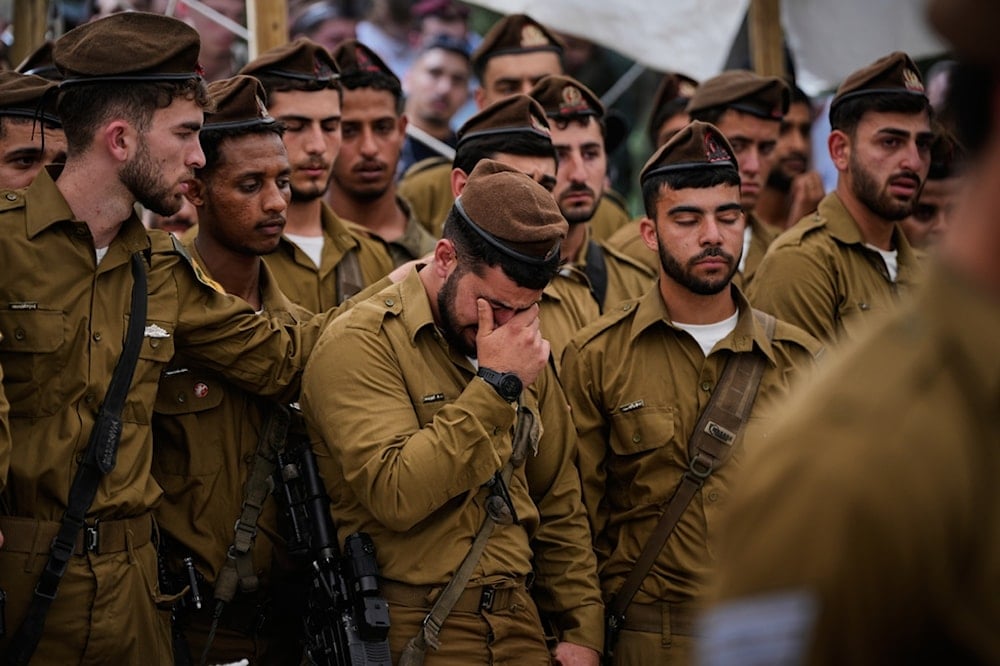
Israeli occupation forces attend the funeral of a captain who was killed in a Lebanese drone strike in southern Lebanon, in occupied al-Quds, Sunday, May 17, 2026. (AP Photo/Ohad Zwigenberg)
The Israeli occupation military is facing an intensifying manpower crisis that senior officers highlight is reaching a “boiling point,” as warnings grow over acute personnel shortages and expanding operational demands linked to ongoing military campaigns.
According to Israeli officials, the forces are experiencing unprecedented strain across both regular and reserve forces, with repeated alerts from senior command warning that without legislative changes to conscription policy and the extension of mandatory service, long-term operational capacity could be compromised.
A senior military source told media the armed forces are undergoing a critical phase of exhaustion due to continuous operations, while another security official warned of “far greater attrition than previously known,” raising concerns over potential structural breakdown within combat units.
Reserve force overuse
Estimates cited in Israeli media suggest a total manpower gap of around 12,000 soldiers, including approximately 7,500 combat troops.
The crisis has been exacerbated by heavy reliance on reserve forces, with annual reserve duty rising sharply from around 25 days in the past to between 80 and 100 days today in many cases. Some reports indicate even higher increases in operational deployment rates.
Military officials also pointed to a breakdown in the traditional balance between active service, reserves, and training, with regular soldiers increasingly deployed solely in operational roles and combat units facing prolonged strain without adequate rest or training cycles.
The army has reportedly pushed for three major legislative measures: extending mandatory service back to 36 months, introducing a new reserve service framework, and reforming conscription laws to include ultra-Orthodox recruits (Haredim). However, Israeli reports suggest political deadlock has frozen progress on all three initiatives.
Ultra-Orthodox conscription at the center of dispute
The issue of Haredi enlistment remains a central point of contention. While annual recruitment from this community has reportedly increased from around 1,700 in previous years to roughly 3,000 in 2025, only a small fraction serve in combat roles.
Israeli estimates cited in the reports suggest around 38,000 draft evaders, the majority from the Haredi community, alongside tens of thousands more who have not yet reported for enlistment.
Military officials maintain that there are no structural barriers preventing Haredi service within specialized units designed to accommodate religious requirements, arguing instead that the issue is primarily political.
Operational strain across multiple fronts
The manpower shortage is reportedly affecting readiness across several active fronts, including Gaza, Lebanon, Syria, the West Bank, and cyber operations.
Continuous deployment, officials say, has disrupted training cycles, reduced leave time for soldiers, and increased fatigue across units. Military data cited in reports points to declining personnel availability despite rising operational requirements, with thousands of additional positions remaining unfilled.
Strategic warning for 2027
Military commentators have warned that the crisis could escalate sharply by January 2027, when thousands of soldiers are expected to complete their service simultaneously if no extension is approved.
Between that point and the next recruitment cycle in March 2027, analysts say the occupation forces could face a significant operational gap while continuing to launch multiple active wars.
Some assessments suggest that if current trends continue, "Israel" could face a shortfall of up to 14,000 combat troops in the coming years, nearly double current estimates, underscoring what analysts explain as a structural and strategic manpower crisis driven by political deadlock and sustained military engagement.
Read more: Israeli army recalls reservists with PTSD amid manpower shortage


