
Prolonged conflicts raise questions over 'Israel’s' military strategy
 3 Min Read
Ongoing wars in Gaza, Lebanon, and Iran highlight challenges in "Israel’s" strategy, with extended campaigns, civilian tolls, and increasing US involvement.
-
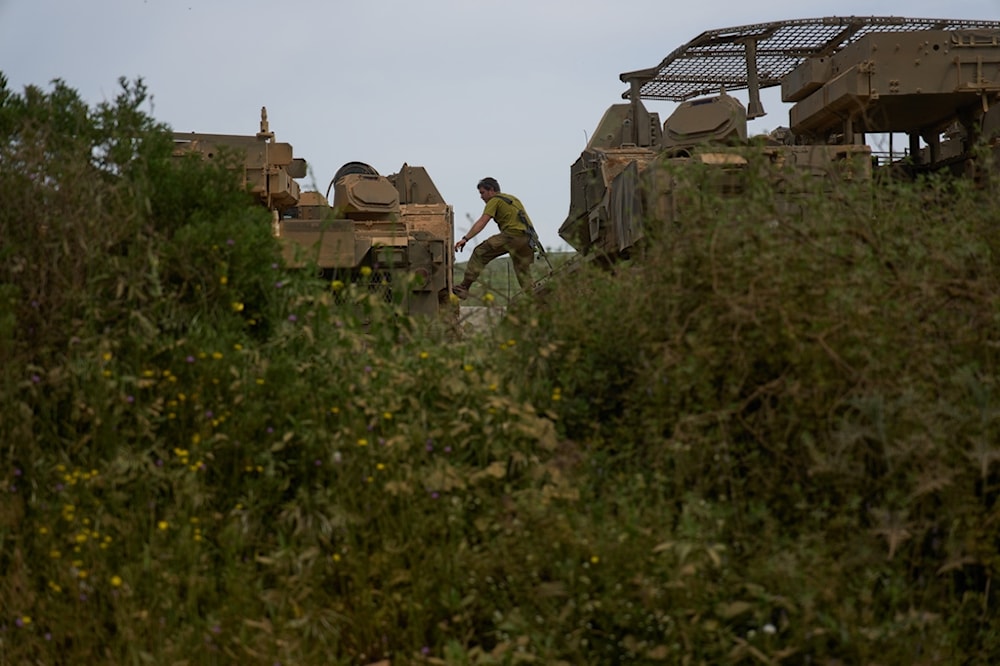
An Israeli occupation soldier on military vehicles in northern "Israel", on the border with Lebanon, following the ceasefire between Beirut and Tel Aviv, Friday, April 17, 2026. (AP Photo/Ariel Schalit)
"Israel’s" ongoing military engagements across multiple fronts continue to draw scrutiny, as operations in Gaza, Lebanon, and tensions surrounding its war on Iran extend without a clear endpoint, The Economist reports.
The news journal states that since October 2023, Israeli forces have carried out sustained campaigns that differ from previous approaches centered on short and decisive confrontations. The continuation of these operations has contributed to a complex security environment marked by repeated escalation and limited political resolution.
The United States has played a significant role in shaping the trajectory of these conflicts. US President Donald Trump has intervened on multiple occasions to push for ceasefire arrangements, including in Lebanon and in the context of broader regional tensions.
These interventions have at times come despite differing positions with Israeli leadership, highlighting Washington’s influence over the pace and scope of military escalation.
Observers note that repeated reliance on external mediation reflects shifting dynamics in decision-making related to conflict management.
"Israel" has been known to push aside these attempts to stop its wars; most recently, the Israeli occupation separated itself from a regional ceasefire brokered between Iran and the US in favor of continuing its aggression on Lebanon.
Read more: War on Lebanon 'bitter, collapsing on itself': Israeli media
Operations in Gaza and Lebanon yield limited outcomes
Israeli attacks in Gaza and Lebanon have included extensive airstrikes and ground offensives targeting anything in sight.
The Israeli occupation regime claims that its attacks on Palestine and Lebanon are only targeting Resistance infrastructure and personnel; however, the civilian death toll and damage to infrastructure in both fronts states otherwise.
"Israel's" attacks on both Gaza and areas across Lebanon have done little towards their claimed military goals. In both arenas, ceasefire arrangements have been reached intermittently but have not held consistently due to Israeli violations.
Shift away from traditional military doctrine
Analysts point to a shift in "Israel’s" long-standing military doctrine, which it historically claimed to emphasize deterrence, early warning, and rapid, decisive operations.
Current military engagements forced the occupation to move toward prolonged campaigns and expanded operational zones, including continued deployments in areas described as “security zones.”
This reflects changing strategic calculations, which have raised questions about sustainability and long-term effectiveness.
Read more: Israeli media detail 'Israel’s' failed Iran war objectives
Political and military challenges internally
Internally, the continuation of "Israel's" wars on the region has coincided with ongoing political debates and limited accountability regarding earlier security developments.
The leadership of Benjamin Netanyahu has faced criticism from some political and security figures over the absence of a clearly defined end state for military operations, which critics believe is a means for him to dodge his corruption trial.
Reports have also indicated concerns within IOF circles about the lack of an overarching strategy guiding extended engagements across multiple fronts.


