
Iran emerged victorious from US-Israeli war: The Telegraph
 6 Min Read
The Telegraph says Iran emerged as the strategic winner of the US-Israeli war, as Washington failed to achieve its objectives and Tehran expanded its leverage over the Strait of Hormuz and the region.
-
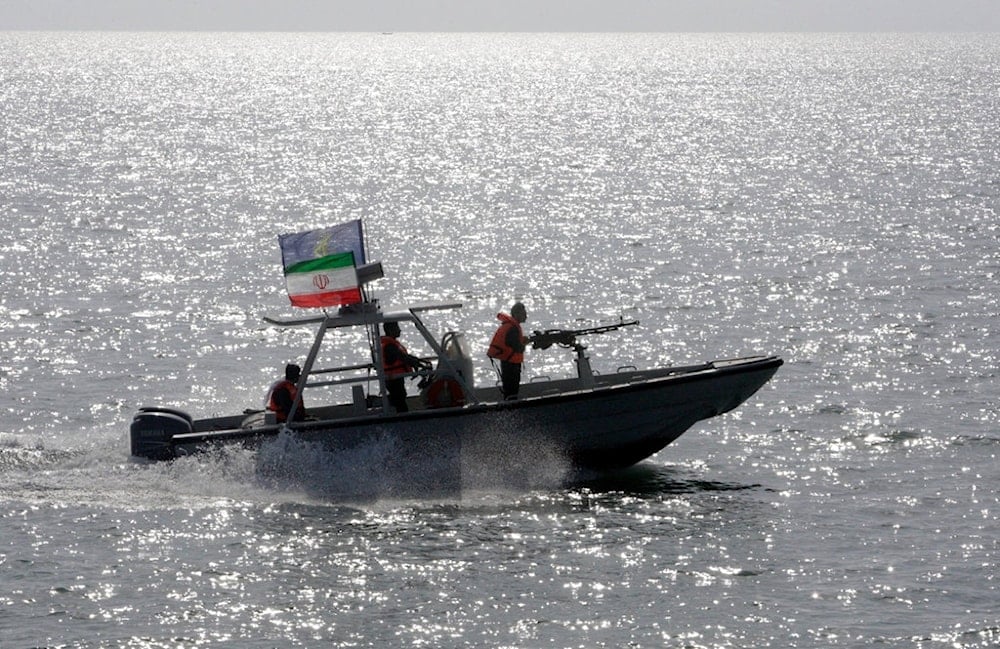
File photo of speedboats belonging to the Islamic Revolution Guards Corps (IRGC) Navy, undated. (ISNA)
Iran has emerged strategically stronger from the imposed US-Israeli war on it, despite suffering extensive human and material losses, according to an analysis published by The Telegraph, which argued that Washington failed to impose its objectives on Tehran and may now be forced to accept an expanded Iranian role in the Strait of Hormuz.
Writing for the British newspaper, Chief Foreign Analyst Roland Oliphant pointed to reports of an approaching agreement between Iran and Oman over the administration of the strategic waterway as the clearest indication that the balance, triggered by the war, has favored Tehran.
The reported agreement comes after months of confrontation over the Strait of Hormuz, which Iran effectively shut following the US-Israeli attack on the Islamic Republic in February. Washington subsequently imposed a naval blockade on Iranian ports, leaving both sides locked in a prolonged maritime confrontation.
Hormuz carries roughly one-fifth of global oil and gas supplies, making the dispute one of the most consequential unresolved issues stemming from the war.
According to the analysis, settling the Strait dispute could also pave the way toward implementing other provisions contained in a June memorandum of understanding aimed at bringing the conflict to an end.
But Oliphant argued that the emerging settlement bears little resemblance to the outcome Washington and “Israel” originally sought. “Such a peace is not, however, the one the US had in mind,” he wrote.
“It means that Donald Trump and Benjamin Netanyahu’s war to topple or defang the Islamic Republic is ending in a demonstrable expansion of Iranian regional influence. They lost. Iran won.”
Iran gains greater role in Hormuz
Reports cited by The Telegraph indicate that the proposed Iran-Oman arrangement would give Tehran authority over maritime traffic entering the Persian Gulf, while Oman would oversee outbound shipping.
Iran would reportedly also have a degree of supervision over outbound traffic, while the two countries would collect fees to finance security, environmental protection and staffing associated with managing the waterway.
Iranian Deputy Foreign Minister Kazem Gharibabadi has described the arrangement as reinforcing Iran’s “effective sovereignty” over the Strait.
The dispute traces back to language in the June MOU calling on Iran and Oman to “conduct dialogue… to define the future administration and maritime services in the Strait of Hormuz”.
Washington and Tehran interpreted that provision differently.
Iran maintained that it provided a basis for Tehran to administer navigation and impose fees, while the United States demanded a restoration of the pre-war system of unrestricted passage. For Oliphant, the apparent movement toward Iran’s interpretation reflects the military and political reality created by the conflict. “Peace agreements, after all, only reflect the verdict of the battlefield,” he wrote.
US escalation fails to alter outcome
The Telegraph analysis also argued that Washington attempted unsuccessfully to change that battlefield verdict when large-scale fighting resumed around three weeks ago.
US strikes targeted infrastructure connected to the Islamic Revolutionary Guard Corps’ presence along Iran’s Gulf coastline and around the Strait, but failed to force Tehran to abandon its demands.
Trump later threatened another massive bombing campaign if Iran refused to reopen Hormuz. That threat was ultimately not carried out following intervention from Gulf countries, including Saudi Arabia, according to the report.
The diplomatic push came after Tehran reportedly warned neighboring countries that their territories could become targets if they facilitated another US assault against Iran.
Oliphant argued that this demonstrated an increase in Iran’s deterrent power, saying Tehran had emerged from the conflict with greater ability to influence decisions by regional governments through the credible threat of retaliation.
“So Iran not only has control of the Strait in a way it did not before the war; its military leverage – the ability to use the threat of force to influence the behaviour of its neighbours – is stronger than before,” he wrote.
Washington still threatens renewed strikes
A final agreement has not yet been formally announced, and both Washington’s position and the precise terms remain uncertain.
Iran has maintained that implementation of any Hormuz arrangement depends on the United States lifting its blockade of Iranian ports. Trump also warned on Tuesday that Iran would be “hit very hard” unless the Strait reopened “very soon”.
US officials have suggested that negotiations could allow maritime traffic to resume, while Tehran continues to insist that it is not conducting direct negotiations with Washington. Several other major issues remain unresolved under the June MOU, including Iran’s nuclear program, US sanctions and the release of frozen Iranian assets.
Nevertheless, Oliphant argued that Tehran's apparent success in the first major dispute surrounding the agreement could establish the balance of power for negotiations over the remaining provisions. “Yet the first test has gone Iran’s way, and there is every reason to believe the other points will too,” he wrote.
A potential ‘Suez moment’ for US power
The analysis went further, questioning whether the failed campaign could eventually be remembered as a turning point in the erosion of American global power.
Oliphant compared the potential consequences to Britain’s failed 1956 intervention in Suez, which became a symbol of the decline of British imperial influence.
“There’s a possible universe where this conflict could prove a turning point in the decline of US global power,” he wrote, describing it as potentially one of the strategic failures “that come to mark the end of an empire.”
The analysis also raised questions about the enormous quantity of US missile stocks consumed during the campaign and the consequences that depletion could have for Washington's ability to wage another major conflict.
At the same time, Oliphant acknowledged the enormous price Iran paid.
Thousands were killed, while significant parts of the country's military and economic infrastructure were damaged. The United States, by comparison, suffered considerably fewer losses and remains the world's leading military power.
Those costs mean Iran's success could ultimately prove Pyrrhic, the analysis said. But Oliphant maintained that the strategic outcome remains unmistakable.
“It is, however, a victory. There is no getting around the fact Iran won this war. America lost.”
Read more: Iran, Oman near final agreement on Strait of Hormuz arrangements


