
Iran reiterates food security safe despite US maritime blockade
 4 Min Read
The deputy chair of the agriculture committee in Iran's parliament says US maritime pressure would backfire, warning that adversaries would face greater economic damage from any disruption in the strait.
-
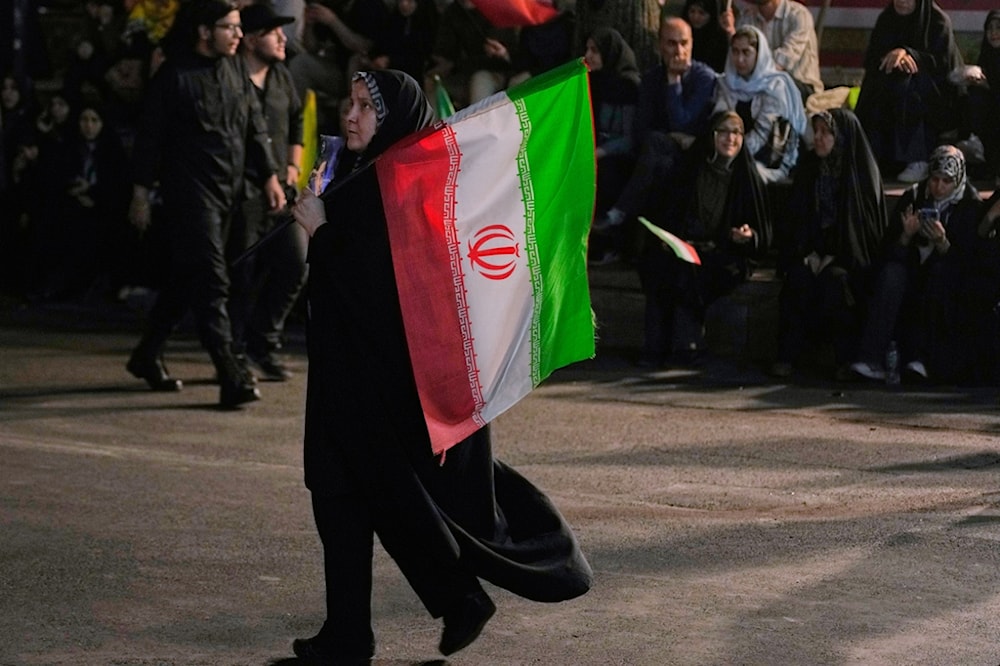
A woman carries an Iranian flag during a pro-government gathering at Enghelab-e-Eslami, or Islamic Revolution, square in Tehran, Iran, Monday, May 4, 2026. (AP Photo/Vahid Salemi)
An Iranian lawmaker said on Tuesday that a US maritime blockade would not affect Iran’s food security, arguing instead that the consequences would be greater for those attempting to impose such measures.
Alireza Abbasi, deputy head of the agriculture committee in Iran’s parliament, said the “US maritime blockade does not impact Iran’s food security,” adding that Iran’s adversaries would be more vulnerable in the event of heightened tensions in the region.
He warned that any disruption to the Strait of Hormuz would halt exports of oil, energy, and chemical fertilizers, saying the impact would ultimately fall on the countries enforcing the blockade.
Abbasi’s remarks came amid escalating statements over maritime security in the region, where Iranian officials have repeatedly warned of the economic consequences of any attempts to restrict key shipping routes.
Earlier, analysts warned that prolonged instability around the Strait of Hormuz could trigger new spikes in food inflation, with potential knock-on effects on global markets and social stability in several countries.
Iran says US blockade impact limited as 85% food is locally produced
Similarly, the Iranian agriculture minister said earlier in April that the US naval blockade has had minimal impact on Iran’s ability to secure food and essential goods, citing strong domestic production and alternative import routes.
Agriculture Minister Gholamreza Nouri Ghezeljeh said Iran continues to meet its needs despite restrictions on its maritime access. “Despite the US naval blockade, we have no problem in supplying basic goods and food because, due to the size of the country, it is possible to import from different borders,” he said.
Ghezeljeh added that around 85 percent of Iran’s agricultural products and essential goods are produced domestically, ensuring national food security, as reported by the Islamic Republic News Agency.
The United States imposed the naval blockade on April 13, targeting Iranian ports and coastlines days after a ceasefire was announced that paused hostilities between the two sides.
Tehran has sharply criticized the move, describing it as a violation of the ceasefire agreement and warning of its broader implications.
IMF warns of severe global fallout if war extends to 2027
Meanwhile, the International Monetary Fund has warned that the global economy faces a significantly worsening outlook if the war on Iran continues into 2027, with rising oil prices and inflation already signaling mounting economic strain.
IMF Managing Director Kristalina Georgieva said the fund’s earlier expectations of a short-lived war are no longer realistic, noting that its baseline scenario has effectively been overtaken by evolving events.
Georgieva stated that conditions now align with the IMF’s “adverse scenario,” characterized by elevated oil prices, increasing inflation, and slowing global growth.
Consequences on the global stage
Under this outlook, global growth could fall to around 2.5%, while inflation could rise above 5%, reflecting the deepening impact of the war on energy markets and supply chains.
She warned that if the war persists and oil prices reach approximately $125 per barrel, the consequences would be far more severe, including the risk of inflation expectations becoming destabilized.
Industry leaders have cautioned that prolonged disruption could lead to physical shortages of oil, particularly affecting Asian economies first, as supply constraints force demand adjustments.
Georgieva highlighted the broader economic impact, noting that fertilizer prices have surged by 30% to 40%, which could drive global food prices up by 3% to 6%
Read more: Fallout from war on Iran could cut growth, push inflation up, EU says


