
Iran slams US-GCC statement as 'irresponsible, provocative'
 3 Min Read
Iran's Foreign Ministry slams a US-GCC statement as provocative, rejecting US security claims and renewing calls for a nuclear-free zone in the Gulf.
-
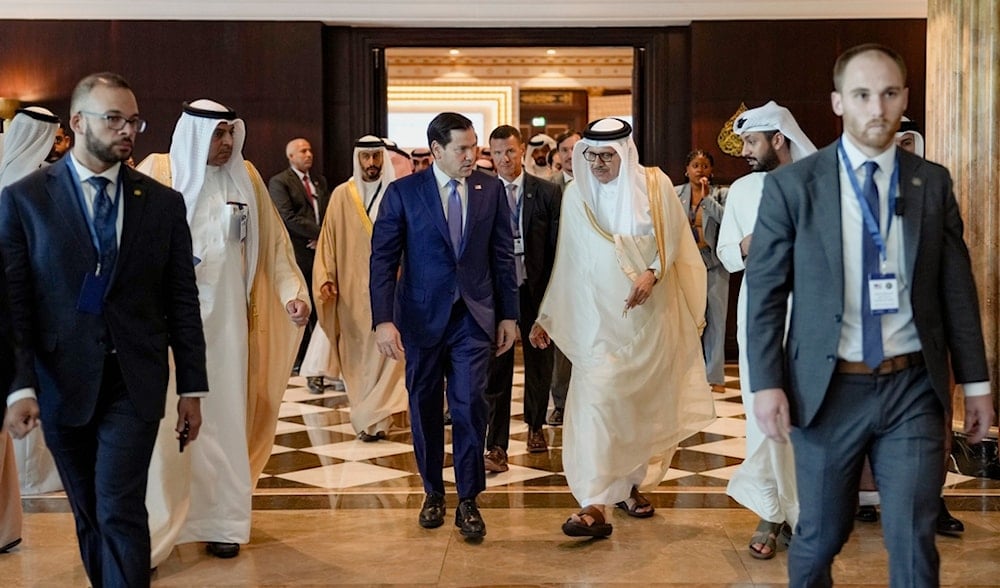
US Secretary of State Marco Rubio departs with Bahrain's Foreign Minister and GCC Ministerial Council Chairman Abdullatif bin Rashid Al Zayani in Manama, Bahrain, on June 25, 2026. (Eric Lee/Pool Photo via AP)
Iran's Foreign Ministry condemned on Friday a joint statement from the United States and the Gulf Cooperation Council as "interventionist, irresponsible, and provocative", accusing Washington and the Israeli regime of recycling the same false narrative about Tehran's nuclear program.
The ministry said Washington's repeated assurances of commitment to Gulf security are hollow, pointing to the US military presence in the region as proof of the opposite. It said US bases in regional countries demonstrate disregard for the security of those states and their relations with one another, calling the US presence a burden on regional populations and a source of instability.
The ministry singled out countries whose territory was used in strikes against Iran, saying they should reconsider their position.
Iran renewed its call for GCC states to support a nuclear-weapons-free zone across West Asia and urged them to prevent any third party from using their territory or facilities for an attack on Iran. The ministry stressed this is consistent with the principle of good-neighborly relations, which it said Gulf states should uphold instead of aligning with policies hostile to the region.
US-GCC statement
The criticism follows a joint statement issued on Thursday by the US and the six GCC states after a ministerial meeting in Manama, chaired by US Secretary of State Marco Rubio and Bahraini Foreign Minister Abdullatif bin Rashid Al Zayani.
The statement welcomed the June 17 memorandum of understanding between Washington and Tehran, credited Pakistani and Qatari mediation, and called for sustaining diplomatic momentum toward "a more permanent end to hostilities".
It also said lasting peace requires addressing Iran's ballistic missile and drone programs, along with Tehran's support for resistance movements across the region.
On the issue of the Strait of Hormuz, the statement reaffirmed the unconditional and unrestricted freedom of navigation, rejecting any fees, tolls, or attempts to exert control over the waterway, and stressed that preserving this principle is vital to both regional and global security.
It also welcomed an Oman-IMO plan to evacuate more than 11,000 seafarers stranded in the region.
The statement was issued at the close of Rubio's Gulf tour, which also included stops in the UAE and Kuwait, and addressed a wider range of regional files, including Lebanon, Gaza, Syria, and Iraq.


