
Iranian strikes caused $400 mln damage to US base in Bahrain: WSJ
 4 Min Read
WSJ reveals Iran's strikes left the US Bahrain naval base in ruins, and Washington is now rethinking its entire regional military setup.
-
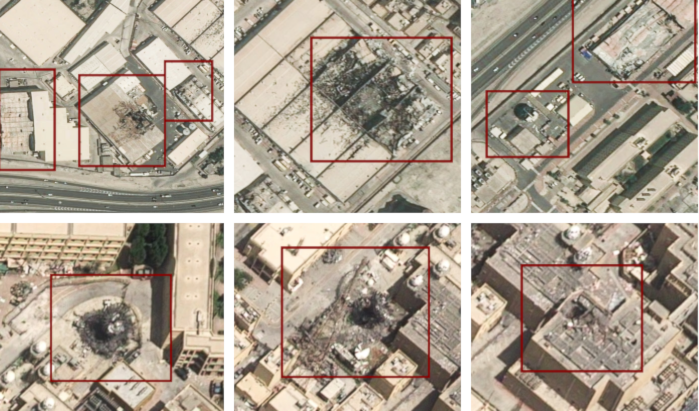
Satellite imagery shows the damage inflicted on the US Naval base in Bahrain, including warehouses, a water tank, two satellite communications terminals, and the Fifth Fleet headquarters. (Screengrab from Wall Street Journal)
A Wall Street Journal (WSJ) investigation has found that the US Naval Support Activity (NSA) base in Bahrain sustained extensive damage from repeated Iranian strikes between late February and June, a finding the Pentagon has yet to publicly acknowledge.
The newspaper's review of satellite imagery, social media footage, and interviews with current and former US service members found that the base's command headquarters, at least a dozen other structures, and two satellite communications terminals were among the facilities hit during the US war on Iran.
According to WSJ's findings, NSA Bahrain, made up of a waterfront ship-operations zone, a main administrative section, and a leased warehouse annex, was struck across all three areas.
The headquarters of the US Navy's Fifth Fleet, responsible for overseeing operations across West Asia and North Africa, was rendered unusable. Other damaged sites included a naval security training facility, an emergency management warehouse holding ambulances, a water tank, a dining hall, and a barracks capable of housing around 450 personnel.
Satellite imagery shows Iranian missile and drone strikes caused major damage to the US navy's Fifth Fleet headquarters in Bahrain, including communications facilities, warehouses, and support buildings.
— Current Report (@Currentreport1) June 26, 2026
Repair costs at the Bahrain base alone are estimated at around $400… pic.twitter.com/8zTVtuK75G
The newspaper reported that a Navy-leased annex run by Bahraini firm Banz Group, which had housed elements of Task Force 59, the Navy's drone and AI surveillance unit established in 2021, took some of the heaviest hits, along with several neighboring warehouses.
Two satellite communications terminals, each valued at around $20 million, were destroyed early in Iran's retaliatory strikes, alongside a communications management facility, the investigation found.
Iran's strikes were not confined to Bahrain. The Journal noted that at least 20 US military and diplomatic sites across the region were targeted during the same period.
*Report: Iranian Strikes Damaged Key U.S. Naval Base in Bahrain During War - Wall Street Journal*
— Global Osint (@GlobalOsintNew) June 26, 2026
* A new report says Iranian missile and drone attacks caused significant damage to the U.S. Navy's headquarters in Bahrain and other military facilities.
* The attacks are… pic.twitter.com/59uS1hQ4pm
A cost the Pentagon avoids disclosing
Based on a US Department of War cost model and procurement records, WSJ estimated construction costs at NSA Bahrain alone at roughly $400 million, with the Fifth Fleet headquarters accounting for about half that figure.
These estimates cover construction only, excluding costs such as debris removal that would add to any rebuilding effort.
The Center for Strategic and International Studies, cited in the report, put the war's total cost near $40 billion, including $2.2 to $5.1 billion in base damage. That estimate stands well above the Pentagon's own $29 billion figure, which, according to testimony from Pentagon comptroller Jay Hurst, did not factor in damage to US installations at all.
The investigation also found that Washington pressed commercial satellite imagery providers in April to restrict access to images showing the destruction, a move officials said was meant to protect US forces but which has also obscured the true scale of the damage from public view.
War Secretary Pete Hegseth, pressed by lawmakers for a cost estimate, reportedly deflected by invoking the price of Iran acquiring a nuclear weapon rather than answering directly.
Washington reconsiders its footprint
Citing officials familiar with internal deliberations, WSJ reported that the US military is now weighing a substantial restructuring of its presence in the region.
Options under consideration include revamping the Bahrain base, scaling back forces in Kuwait and Saudi Arabia, and relocating some functions further west, beyond the reach of Iranian missiles and drones.
Command and control nodes could be moved underground, and capabilities spread more widely across the region, though officials stressed no final decisions had been made.
"Israel" was named as one possible new basing option, having already hosted dozens of US aircraft, including fighter jets and refueling planes, throughout the war.
A vulnerability decades in the making
The investigation situates this reassessment within a longer-running debate, as a similar proposal to shift US installations further west was floated during Trump's first term but never implemented.
NSA Bahrain, established more than fifty years ago, was simply not built to withstand the precision missile and drone capabilities Iran has since developed.
Despite the scale of the destruction, retired naval commanders cited by WSJ expect Washington to maintain some form of presence in Bahrain rather than withdraw outright, given its status as a longstanding US ally in the region.


