
'Israel' to shut British consulate, bars UK lawmakers
 3 Min Read
"Israel" closed Britain's occupied East al-Quds consulate and barred 12 lawmakers after the UK, France, and Canada, among others, moved to sanction illegal Israeli settlements.
-
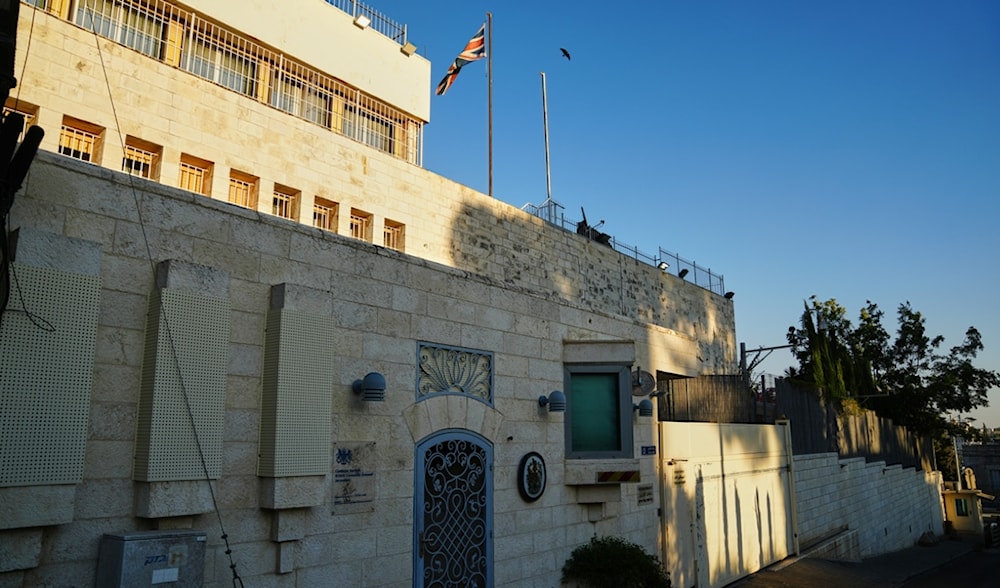
The British Consulate in east al-Quds after Israeli Foreign Minister Gideon Sa'ar announced that Israel would close the facility in response to U.K sanctions on Israeli settlements in the West Bank, Tuesday, Sept. 8, 2026. (AP Photo/Mahmoud Illean)
"Israel" announced a series of retaliatory measures against the United Kingdom on Tuesday after London moved to block imports from illegal settlements in the occupied West Bank.
The Israeli regime has closed Britain's consulate in occupied East al-Quds, the office that had long served as London's point of contact with the Palestinian Authority in the West Bank.
Israeli Foreign Minister Gideon Saar also announced that Britain is being removed from the US-led body coordinating aid and reconstruction efforts in Gaza, the International Gaza Support Centre in Kiryat Gat.
"Israel" has additionally barred 12 British parliamentarians and public figures from entering the entity.
The list includes Jeremy Corbyn, Diane Abbott, John McDonnell, Zarah Sultana, Naz Shah, Carla Denyer, Sian Berry, Ellie Chowns, Richard Burgon, and Adrian Ramsay, alongside Hannah Spencer and Fahad Ansari, director of Riverway to the Sea.
My statement on Israel's decision to ban me and 10 other British MPs from entry.
— Jeremy Corbyn (@jeremycorbyn) September 8, 2026
"I have visited all parts of Palestine on several occasions, where I have witnessed the horrors of occupation, as well as the resilience and humanity of the Palestinian people.
They are the ones…
UK declares sanctions on West Bank settlements
Britain confirmed Tuesday it will introduce an import ban on goods from illegal settlements in the occupied West Bank, as Foreign Secretary Ed Miliband accused the Israeli government of turning a "blind eye" to ethnic cleansing carried out by settlers.
Miliband told parliament the ban, to be implemented within six to nine months, would be coordinated with other countries.
Alongside the import ban, Miliband said Britain would "take action against specific companies and individuals who provide services such as construction, infrastructure, financing, or real estate for settlement expansion."
He also announced a further round of sanctions on "extremist settlers who have supported or incited acts of violence against Palestinian communities."
On arms exports, Miliband said Britain would "refuse all license applications for arms and other exports that materially contribute to the occupation," building on the government's earlier suspension of more than 30 export licenses for arms used by the Israeli military during the war on Gaza.
France and Canada announced matching restrictions the same day, and their foreign ministries were joined by counterparts from ten other countries, among them Denmark, Norway, Poland, Spain, and Sweden, in a joint statement reaffirming commitment to a "two-state resolution."
Washington distanced itself from the move. US Secretary of State Marco Rubio said the restrictions could destabilize the West Bank economy and confirmed the US would not be joining Britain, France, and Canada in blocking settlement imports.


