
Minnesota prosecutors resign over DOJ handling of Renee Good case
 5 Min Read
At least six federal prosecutors in Minnesota resign over the Department of Justice's handling of the Renee Good case and efforts to prosecute her widow.
-
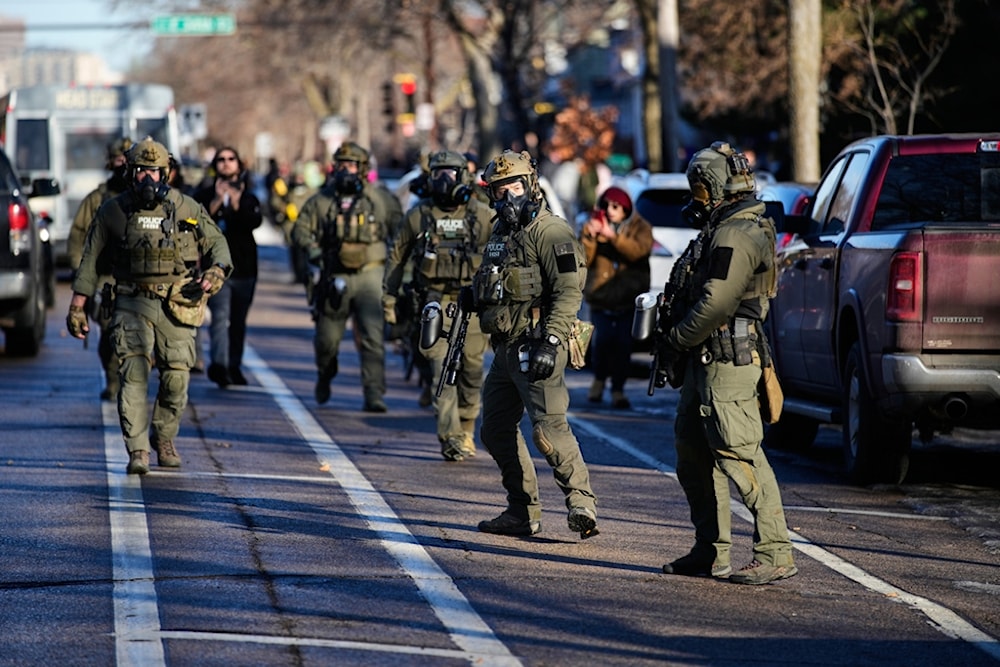
Federal immigration officers are seen near the scene where Renee Good was fatally shot by an ICE officer last week, Tuesday, January 13, 2026, in Minneapolis. (AP Photo/John Locher)
At least six federal prosecutors from the Minnesota U.S. Attorney’s Office have resigned over concerns regarding the United States Department of Justice's handling of the investigation into the killing of Renee Good.
The resignations, first reported by The New York Times and confirmed by Minnesota's KARE 11, also stem from DOJ efforts to pursue a criminal case against Good’s widow and the department’s reluctance to investigate the ICE agent who fatally shot Good.
Among those who stepped down is Joe Thompson, a high-profile figure known for leading the Feeding Our Future fraud case. Thompson served as second-in-command in the Minnesota US Attorney’s Office prior to his resignation on Tuesday. He was also recognized as the public face of federal efforts to hold fraud suspects accountable.
Last year, US President Donald Trump appointed Thompson as Minnesota’s Acting US Attorney, a position he held until Dan Rosen assumed the role. In a June press release, the Department of Justice noted that Thompson had “overseen an unprecedented effort by the U.S. Attorney’s Office to prosecute fraud against state and federal government programs, including as the lead prosecutor in the Feeding Our Future investigation, which has been recognized by the Department of Justice as the largest Covid-19 fraud in the United States.”
Read more: Protests continue in US after ICE shooting in Minneapolis
Former prosecutors raise concerns over credibility
Doug Kelley, a former federal prosecutor who served in the Minnesota U.S. Attorney’s Office from 1978 to 1985, described the scope of the resignations as unprecedented.
“There’s never been this many people in this many leadership positions to all resign at one time,” Kelley said. “Squeezing out the BCA and now having this occur, it just chips away at the credibility of that investigation,” he added, referencing the Minnesota Bureau of Criminal Apprehension (BCA) being denied access to case files related to Good’s shooting. As a result, the Federal Bureau of Investigation (FBI) remains the sole investigating agency.
Kelley also noted that while other prosecutors will need to step in, the loss of experienced figures like Thompson will slow ongoing cases.
“When you have new attorneys that have to learn the case and start doing it from scratch, that puts you behind,” he explained. “Many of them are going to have to start over again, so this is not helpful for prosecuting those subsequent cases.”
The Minnesota US Attorney’s Office, now led by US Attorney Dan Rosen, appointed last year by Trump, did not respond to requests for comment.
Read more: Second ICE shooting in 48 hours: Two wounded in Portland
Lawsuits handed to Trump over handling of Good case
City and state officials in Illinois and Minnesota filed federal lawsuits against the Trump administration on January 12, stating that the mass deployment of ICE agents in the two states violates the US Constitution and undermines states' rights.
The Illinois case seeks to block ICE personnel from carrying out civil immigration enforcement within the state without authorization. Minnesota's on the other hand, demands an end of the "unprecedented surge" of federal agents in the state.
Minnesota's case states that ICE raids have escalated past legal authority, arguing that “thousands of armed and masked D.H.S. agents have stormed the Twin Cities to conduct militarized raids and carry out dangerous, illegal, and unconstitutional stops and arrests.”
Federal agents call the moves in Minnesota necessary in order to carry out the Trump administration's immigration agenda in areas where local governments showed resistance.
Context and fallout surrounding Renee Good’s death
Good was shot and killed by an ICE agent during a federal operation in Minnesota. According to initial reports, Good’s widow was present at the scene and has since become the focus of a potential criminal case by the Department of Justice. The DOJ's stance, along with its refusal to open an investigation into the ICE agent involved in the shooting, has drawn scrutiny from civil rights advocates and some within the federal legal community.
The Minnesota Bureau of Criminal Apprehension was initially involved in the case but was later blocked from accessing investigative files, leaving the FBI as the sole agency overseeing the inquiry. This move further fueled concerns about transparency and accountability in the handling of Good’s death and prompted several federal prosecutors to question the direction and integrity of the investigation.
The controversy surrounding Good’s death comes at a time when the Minnesota U.S. Attorney’s Office has been navigating high-profile cases, including the Feeding Our Future fraud investigation. With the resignations of key figures like Joe Thompson, observers warn that the office's ability to pursue complex cases involving federal fraud and government misconduct could face significant setbacks.


