
Oman proposes fees for Strait of Hormuz transit in post-war plan: NYT
 4 Min Read
Oman has reportedly proposed charging service fees for vessels passing through the Strait of Hormuz in post-war talks with the US.
-
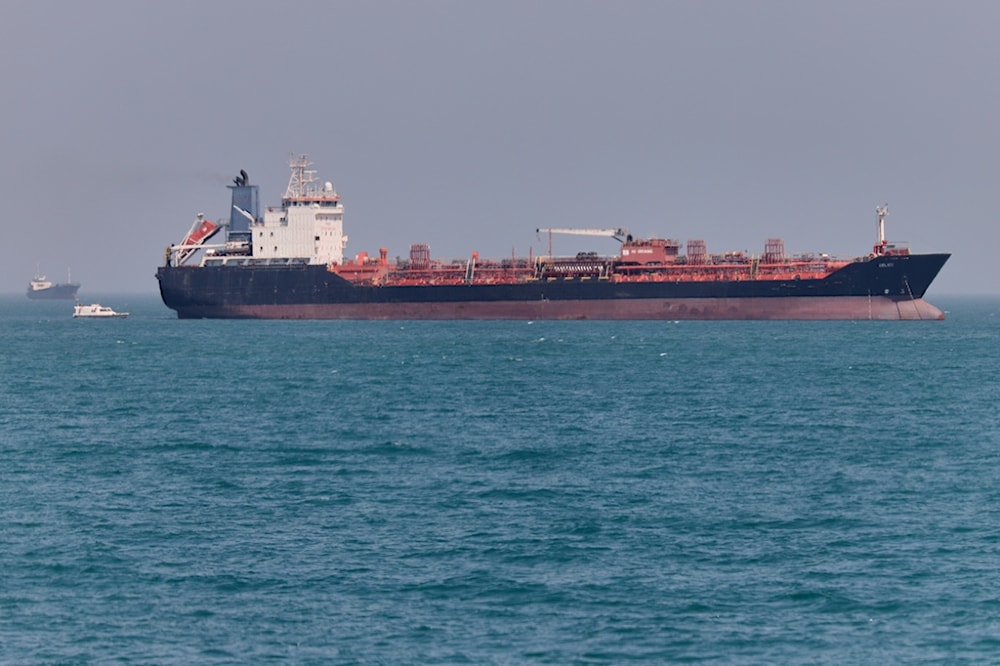
An oil tanker sits at anchor in the Strait of Hormuz off Bandar Abbas, Iran, Saturday, May 2, 2026 (AP)
Oman has proposed a post-war plan to the United States that would introduce service fees for vessels passing through the Strait of Hormuz, despite Washington’s stated position that the key shipping route should remain toll-free, according to a report by The New York Times.
The NYT report, citing an Iranian official and diplomats familiar with the matter, said the proposal envisions shipping companies paying fees to use the strategic waterway.
US negotiators have reportedly expressed concern over the idea and are expected to hold further discussions on the issue. It remains unclear whether the proposed charges would be voluntary or mandatory.
Following the first meeting of the joint Iran-Oman committee on the Strait of Hormuz in Muscat, Omani Foreign Minister Badr Albusaidi said Muscat is considering fees for maritime services that enhance navigational safety, rather than imposing transit tolls on vessels passing through the strait.
According to Albusaidi, the proposed services could include navigational assistance, emergency response, and pollution control, similar to systems used in the Straits of Malacca and Singapore. He stressed that any future measures would be developed in consultation with countries and shipping companies that rely on the route.
US signals mixed stance on Hormuz transit
The proposal comes after US President Donald Trump said on June 20 that passage through the Strait of Hormuz would remain free during a 60-day ceasefire period and beyond, while not ruling out the possibility of Washington later seeking fees for use of the route.
The Strait of Hormuz, which connects the "Persian Gulf" to the Gulf of Oman, is a critical chokepoint for global oil and gas shipments, making its governance a sensitive issue in regional and international negotiations.
The discussions come in the context of a broader US-Iran understanding reached in mid-June, which reportedly included provisions to end hostilities and address maritime and shipping arrangements in the region.
According to earlier reports, the agreement outlined timelines for easing naval restrictions and restoring commercial navigation through the Strait of Hormuz, alongside steps linked to regional de-escalation.
Iran coordinating with Oman on Strait framework
Albusaidi said primary responsibility for demining rests with Iran, a position Tehran has repeatedly emphasized, while noting that Oman remains open to proposals aimed at safeguarding maritime security.
Earlier in June, Iranian Foreign Minister Abbas Araghchi said Tehran was working with Oman to establish a new legal framework governing navigation through the strait, arguing that the post-war environment would require updated arrangements.
Iran has maintained that any future charges would apply to maritime services that facilitate safe navigation rather than to the right of passage itself. Under the memorandum of understanding reached with the United States, Tehran also committed not to impose any charges on shipping for a 60-day period beginning on June 18.
Iran rejects foreign role in Strait of Hormuz demining
Iran has rejected any foreign participation in demining operations in the Strait of Hormuz, insisting that responsibility for securing the strategic waterway rests solely with Tehran under existing agreements.
Deputy Foreign Minister Kazem Gharibabadi said Iran would not permit any external country to participate in mine-clearance operations, stressing that Tehran alone would oversee the process in accordance with a memorandum of understanding.
He also described the situation in the Strait of Hormuz as "sensitive and complex" and urged foreign governments against taking actions that could further escalate tensions in the region.
France and Oman propose maritime cooperation
Iran's position followed French President Emmanuel Macron's announcement that France and Oman had agreed to work with partners to help secure navigation in the Strait of Hormuz, including cooperation on demining efforts.
Macron said the initiative is aimed at reducing regional tensions and safeguarding freedom of navigation through one of the world's most strategically important maritime corridors, while also supporting broader de-escalation efforts in West Asia.


