
Russia warns of Western shift on nuclear weapons role
 4 Min Read
Russia voices concern over Western policies on nuclear weapons ahead of the NPT Review Conference, citing NATO plans and expanded deterrence strategies.
-
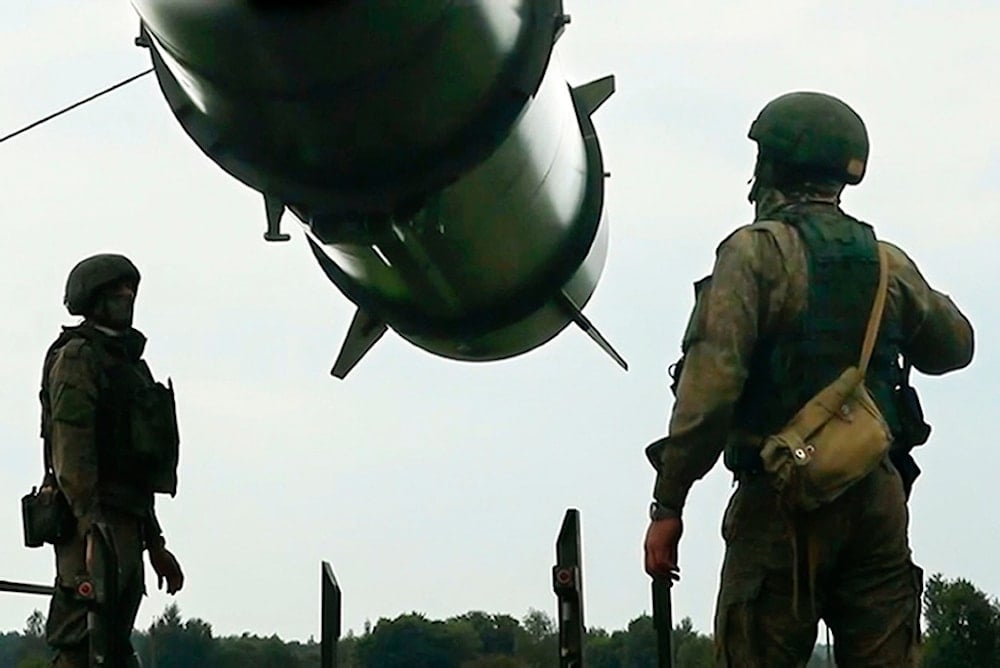
Russian soldiers load an Iskander-M short-range ballistic missile launcher at a firing position as part of a Russian military drill intended to train the troops in using tactical nuclear weapons, June 12, 2024 (AP)
Russia has expressed concern over what it describes as a shifting Western approach to the role of nuclear weapons, according to remarks by senior diplomat Andrey Belousov.
Speaking in an interview with RIA Novosti, Belousov said Moscow is increasingly alarmed by developments within what he called the “collective West,” particularly ahead of the upcoming review of the Treaty on the Non-Proliferation of Nuclear Weapons.
The Eleventh Review Conference of the NPT is scheduled to take place in New York City from April 27 to May 22.
“Currently, a number of issues in the context of the NPT are causing us serious concern. First and foremost, this concerns a trend that could soon take on an avalanche-like nature: the widespread declaration by a number of states — primarily from the 'collective West' camp — of a new view on the role and place of nuclear weapons,” Belousov said.
West resorting to nuclear proliferation?
According to the Russian diplomat, Western countries are increasingly discussing the potential deployment of nuclear weapons in non-nuclear states, as well as expanding joint nuclear arrangements within NATO.
Recent policy developments have added to Moscow’s concerns. Finland has proposed legislation allowing the transport and storage of nuclear weapons in specific defense scenarios.
Meanwhile, Emmanuel Macron announced in March that France would strengthen its nuclear deterrence posture and increase its arsenal, while also suggesting a broader European dimension to its strategy.
Denmark has already entered into a strategic nuclear deterrence agreement with France, with Poland reportedly in talks to join the initiative.
G7 concerned over Russia, China nuclear build-up
The Group of Seven countries have voiced concern over what they describe as a growing nuclear weapons build-up by Russia and China, reaffirming their support for the Treaty on the Non-Proliferation of Nuclear Weapons ahead of a key review conference.
In a statement published by the French Foreign Ministry, the G7 Non-Proliferation Directors Group said it is “concerned with China’s and Russia’s significant nuclear weapons build-up and modernisation,” highlighting rising risks to global stability.
The group, which includes diplomats from Britain, Canada, France, Germany, Italy, Japan, and the United States, made the remarks ahead of a month-long conference in New York set to begin Monday to review the treaty.
The meeting comes amid heightened geopolitical tensions and ongoing wars with nuclear implications, including the wars in Iran and Ukraine, adding pressure on efforts to maintain international arms control frameworks.
G7 officials said they are committed to working with all treaty members to secure a successful outcome in 2026 and to strengthen the NPT across its core pillars: disarmament, non-proliferation, and the peaceful use of nuclear energy.
Rubio, EU's Kallas go head-to-head over Russia policy at G7 meeting
But even as the G7 presents a united front in warning about Russia and China’s nuclear ambitions, that cohesion masks growing internal disagreements over how to confront Moscow in practice. The tensions became visible weeks earlier, when US Secretary of State Marco Rubio and EU foreign policy chief Kaja Kallas clashed over Washington’s approach to the war in Ukraine.
In late March, US Secretary of State Marco Rubio clashed openly with European Union foreign policy chief Kaja Kallas during a G7 foreign ministers' meeting in France on Friday, in a confrontation that underscored the deepening rift between Washington and its European allies over the war in Ukraine.
The heated exchange, which unfolded in front of assembled foreign ministers at a 12th-century abbey outside Paris, was triggered when Kallas, a longtime Russia hawk and former Estonian prime minister, pressed Rubio on Washington's failure to translate its stated impatience with Moscow into meaningful pressure.
Kallas recalled that Rubio had pledged at the same forum a year earlier that if Russia obstructed US-led efforts to end the war, Washington would run out of patience and escalate its pressure on the Kremlin.
A year on, she noted, Russia had not moved. "When is your patience going to run out?" she asked Rubio, according to three sources who attended the meeting cited by Axios.


