
Sectarian violence intensify in Syria's coastal regions
 4 Min Read
Sectarian violence, heavy-handed responses by interim security forces, and mass protests across Syria's Alawite-majority coastal regions have laid bare deepening instability and mistrust amid the country's fragile post-Assad transition.
-
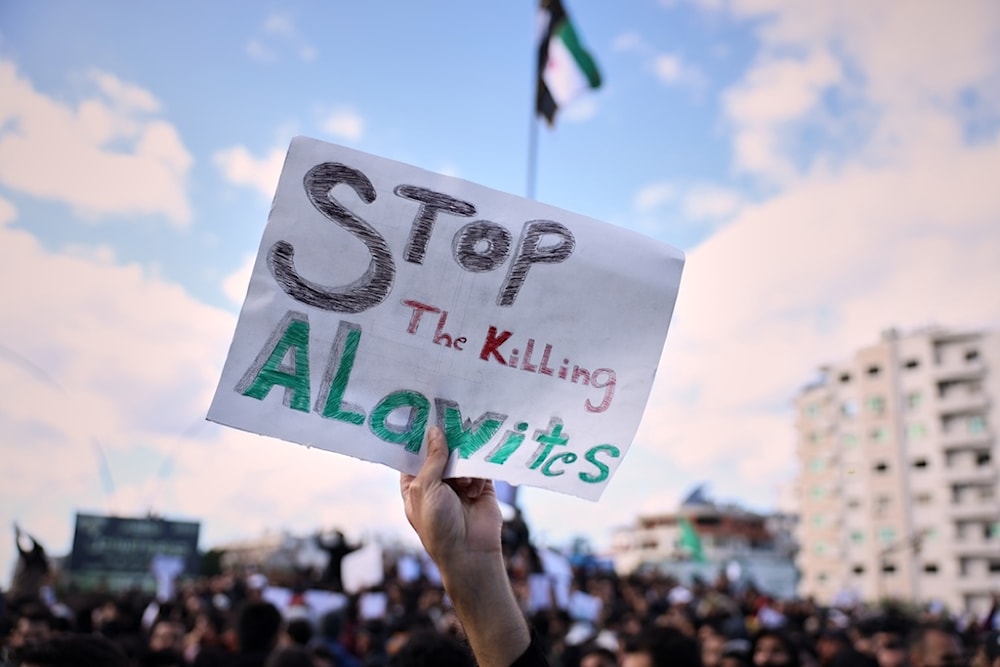
Protesters from the Alawite religious minority demonstrate two days after a bomb in an Alawite mosque in Homs killed eight people and wounded 18 during Friday prayers, in Latakia, Syria's coastal region, Sunday, Dec. 28, 2025. (AP Photo/Omar Albam)
Security tensions escalated sharply in Syria’s coastal city of Latakia as incidents of sectarian violence coincided with the largest demonstrations so far this year in predominantly Alawite areas, reflecting deepening instability under the country’s interim governance arrangements and a fragile post-war security landscape.
On Sunday evening, chaos unfolded at the Agriculture Roundabout in Latakia, where groups chanting sectarian slogans vandalized property belonging to Alawite citizens amid sporadic gunfire. While no casualties were immediately reported, residents described scenes of panic and widespread fear, with shops shuttered and streets rapidly emptied as tensions spread across nearby neighborhoods.
#Syria: major tensions occurring tonight in #Latakia-city with mobs and acts of vandalism targeting some areas with Alawite-majority. pic.twitter.com/uYO4quShRC
— Qalaat Al Mudiq (@QalaatAlMudiq) December 29, 2025
Local sources cited by the Syrian Observatory for Human Rights reported that some participants were carrying bladed weapons. Interim security forces allegedly attempted to contain the situation, despite a heavy deployment of armed factions affiliated with the transitional Ministry of Defense and the expansion of General Security checkpoints across the city.
Other local sources indicated that the security forces were present but inactive during the sectarian attacks on Alawite neighbourhoods.
Civilians reported heightened anxiety, warning that the visible militarization of public space had failed to prevent violence and instead heightened fears of further escalation.
The violence followed deadly incidents a day earlier in Latakia and Jableh, where dozens of demonstrators were injured after being attacked with live ammunition and bladed weapons.
According to local accounts, the assaults were carried out by interim security forces and supporters of the transitional authority, reinforcing community perceptions of bias and impunity within the current security apparatus.
Escalating Coastal Protests
The unrest comes against the backdrop of a broader surge in protests across Alawite-majority regions. Thousands of demonstrators gathered in dozens of towns and cities across the governorates of Latakia, Tartous, and Homs, demanding federalism, decentralization, and an end to persistent violations, reprisals, and collective punishment. Protesters also called for accountability for past and ongoing abuses, as well as guarantees for minority protection amid the dismantling of former state institutions.
The demonstrations were partly triggered by a recent bombing at a mosque in an Alawite neighborhood of Homs, an attack claimed by an extremist armed group allegedly operating outside formal state structures. The incident intensified long-standing fears among Alawite communities, who accuse the interim authorities of failing to provide basic security in areas perceived to be politically and sectarianly vulnerable, particularly as extremist cells, local militias, and loosely affiliated armed groups operate amid a widening security vacuum.
In Latakia, a mass protest at al-Azhari Roundabout was met with what witnesses described as direct assaults by interim security forces and pro-transitional groups, leaving multiple people injured, some of them seriously. Residents said the use of force deepened anger among demonstrators and further eroded trust in the interim authorities’ claims of stabilization and reform.
Fragile Transitional Order
The violence aligns with recent warnings from the United Nations that Syria’s transition remains marred by structural instability, fragmented security forces, and continued abuses targeting specific communities, including Alawites, Druze, Christians, and Bedouins. UN officials have cautioned that former armed groups have been absorbed into new security bodies without adequate human-rights vetting, enabling abuses to persist under overlapping chains of command and weak oversight.
While the transitional authorities insist they are working to stabilize the country following the collapse of the former government, critics argue that the interim security apparatus remains politicized and ineffective, unable, or unwilling, to curb sectarian attacks or protect civilians. Analysts note that although the transitional leadership is largely Sunni-led and distinct from armed extremist organizations, its reliance on loosely integrated armed factions has fueled allegations of selective enforcement, collective blame, and impunity.
With distrust deepening and protests spreading, Syria’s coastal region remains on edge, reflecting the fragile and contested nature of the country’s post-war transition and the growing risk that unresolved grievances, security failures, and sectarian polarization could drive further instability in the absence of credible political guarantees and genuine accountability.
Read more: Syrian forces arrest Alawite cleric, curfew grips Tartous


