
Spanish PM Sanchez condemns EU ‘selfish’ response after Ceuta deaths
 3 Min Read
Spanish Prime Minister Pedro Sánchez accuses EU states of a divisive response after deadly Ceuta crossings, as migration tensions expose deep fractures within the bloc.
-
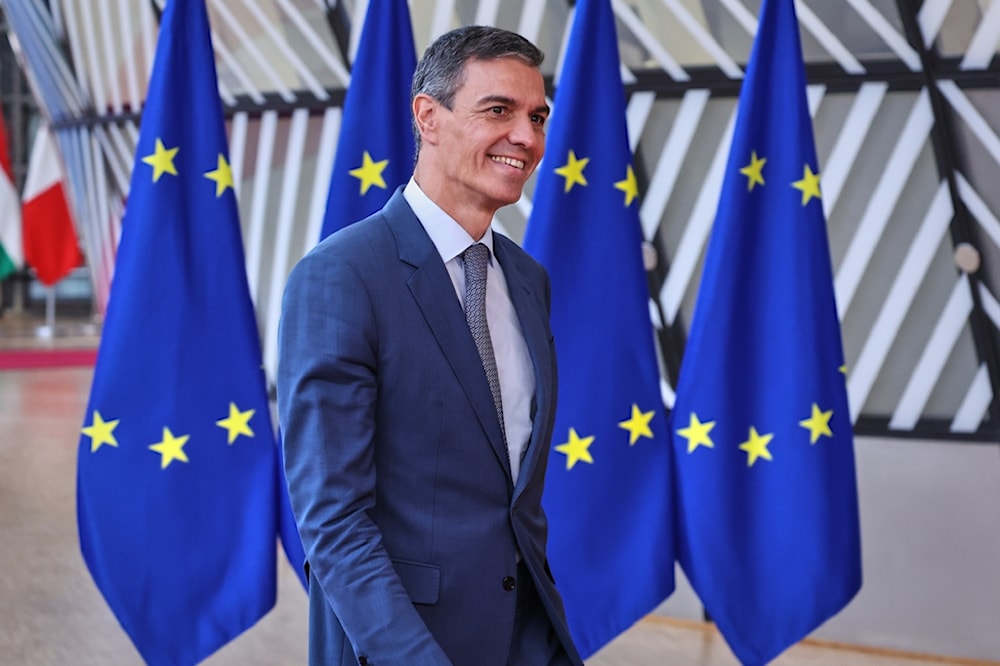
Spain's Prime Minister Pedro Sanchez arrives for the EU summit in Brussels on June 18, 2026. (AP Photo/Marius Burgelman)
Spanish Prime Minister Pedro Sánchez has condemned the "selfish" and divisive European response after the death toll from a mass attempt to cross into the Spanish enclave of Ceuta from Morocco rose to 72.
Spanish authorities said tens of thousands of people attempted to enter Ceuta by land and sea this week, overwhelming border forces. The majority of those who reached the border later returned to Morocco.
A massive surge from #Morocco into Spain’s #Ceuta has become far more than a migration story, leaving deaths at the border and sparking a diplomatic clash between Italy and #Spain.
— Al Mayadeen English (@MayadeenEnglish) August 1, 2026
Swipe through to learn how the mass border crossing unfolded. pic.twitter.com/ndChTkqdxu
Sánchez accused several European Union members of responding to the crisis through political pressure rather than collective action, after Italy temporarily reinstated border controls on arrivals from Spain and called for Madrid to face consequences within the Schengen agreement.
In a letter cited by European media, Sánchez said the reaction from some EU governments was driven by "prejudice, fake news, ignorance or political interest," warning that the bloc could not afford further divisions over migration.
Ireland, which currently holds the EU’s rotating presidency, announced an emergency meeting of EU ministers to discuss the situation.
Read more: Germany calls for EU border action after Ceuta migrant influx
Ceuta crossings expose deep divisions over EU migration policy
The mass crossings have intensified disagreements within the European Union over migration management, with governments divided between calls for stricter border controls and demands for greater coordination.
Italy announced temporary checks on certain arrivals from Spain, while France also reinforced controls along its border with Spain.
Spanish authorities said they would accelerate the return of those who entered irregularly, while insisting that deportation procedures must comply with legal requirements following a recent Supreme Court ruling.
The ruling, which limited immediate expulsions of migrants arriving by sea without due process, was cited by Spanish officials as one factor behind the surge, with authorities accusing traffickers of spreading misleading information about migration rules.
Economic hardship and misinformation fuel migration surge
Many of those who attempted the crossing reportedly acted after seeing videos on social media showing previous migrants reaching Ceuta.
Moroccan teenager Ayoub El Abyad told Reuters that he and others decided to attempt the journey after watching Instagram videos of crossings, viewing migration as a chance to improve their lives.
Economic difficulties also contributed to the movement, with youth unemployment and limited opportunities among younger Moroccans cited as key factors.
The crossings also reignited debate over the status of Ceuta and Melilla, two Spanish-controlled enclaves in North Africa that Morocco considers occupied territories.
Migration dispute fuels political confrontation across Europe
The crisis has increased pressure on Sánchez’s government, which has faced criticism from right-wing opposition groups over its migration policies.
Far-right parties across Europe have used the events to demand tougher restrictions, while governments continue debating the future of the Schengen area and the balance between border security and migration rights.
Ceuta has experienced previous migration surges, including in 2021 when thousands crossed into the enclave over several days. However, Spanish officials described the latest influx as unprecedented in scale.
Read more: Trump exploits Spain migration crisis to stoke fear ahead of midterms


