
Germany calls for EU border action after Ceuta migrant influx
 3 Min Read
Germany urges the EU to strengthen external border controls after a reported migrant influx into Spain's Ceuta enclave raises renewed concerns over migration.
-
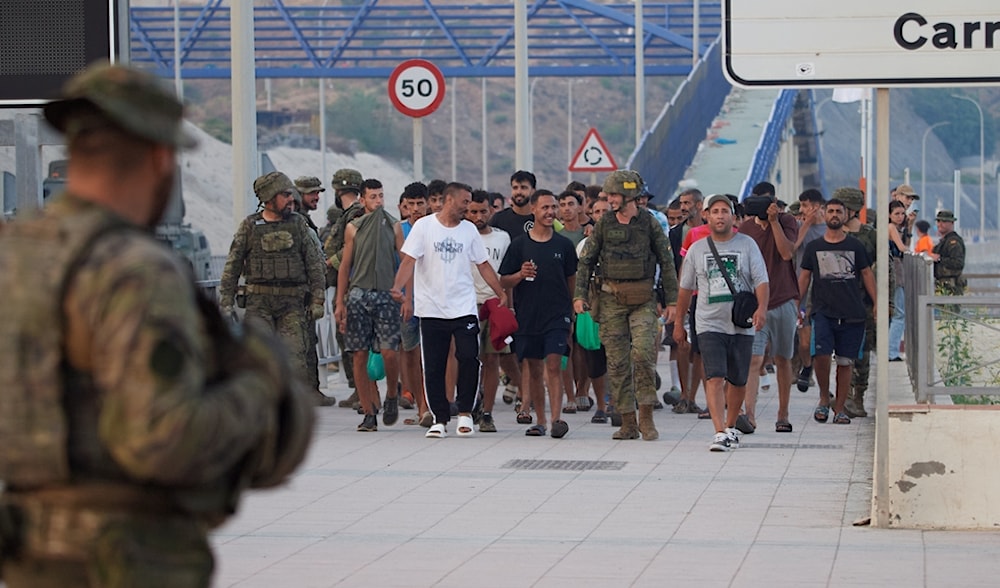
Escorted by the Spanish army, migrants who crossed into Spain return to Morocco from the Spanish enclave of Ceuta on Saturday, Aug. 1, 2026. (AP)
German Foreign Minister Johann Wadephul has called on the European Commission to prioritize the protection of the European Union's external borders following a reported surge in migrant arrivals to Spain's North African enclave of Ceuta, German newspaper Bild reported on Sunday.
According to Wadephul, European countries require cooperation with external partners, including Morocco, to help control illegal migration.
The European Union had announced that it will convene an emergency meeting of interior ministers on Tuesday following the arrival of more than 50,000 migrants in the Spanish enclave of Ceuta, as divisions deepen among member states over the bloc's response to the crisis.
The decision, as reported by The Guardian, was reached during a meeting on Saturday between officials representing EU member states and experts from the Frontex border agency, amid growing concerns over migration management and political unity across the bloc.
Spanish authorities said at least 67 people died during attempts to cross into Ceuta, with some drowning and others being crushed while trying to pass a breakwater barrier.
EU seeks united response as member states clash
The emergency summit was unanimously approved as European leaders attempt to restore a coordinated approach to migration after sharp disagreements emerged over Spain's handling of the situation.
While migrant crossings into Ceuta reportedly stopped overnight, Spanish authorities began installing a 500-meter floating barrier along the maritime border with Morocco in an effort to prevent further crossings.
El Gobierno garantizará la seguridad de los vecinos y vecinas de Ceuta, intensificando la presencia de las Fuerzas y Cuerpos de Seguridad en las calles de la ciudad.
— Pedro Sánchez (@sanchezcastejon) July 31, 2026
Además, vamos a desplegar una barrera física de contención en el mar para facilitar la repatriación en frontera,… pic.twitter.com/Mj2LrcoBV9
British Prime Minister Andy Burnham said he had contacted Spanish Prime Minister Pedro Sánchez to offer assistance.
However, Saturday's meeting exposed significant political divisions within the EU, with Italy and Denmark, backed in part by Poland and Sweden, criticizing Spain's response to the crisis.
Spain rejects criticism, warns against disinformation
In a strongly worded letter addressed to European Commission President Ursula von der Leyen, European Council President António Costa, and Irish Prime Minister Micheál Martin, whose country currently holds the rotating EU presidency, Sánchez condemned "disinformation surrounding the events."
He said "virtually all" migrants had already been returned to Morocco after Spanish military intervention on Friday, which he said prevented "any unauthorised onward movement towards continental Europe."
Madrid has expressed frustration that previous migration incidents involving Belarus and Poland, as well as Russia and Finland, were widely characterized by the EU as "hybrid attacks" and received broad European solidarity, while Spain has faced criticism instead.
Read more: Finland, Denmark join call to suspend Spain from Schengen


