
Italy suspends Schengen with Spain despite full return of migrants
 3 Min Read
Italy temporarily suspends Schengen arrangements with Spain, citing security concerns after a surge in migrant arrivals to the Spanish enclave of Ceuta.
-
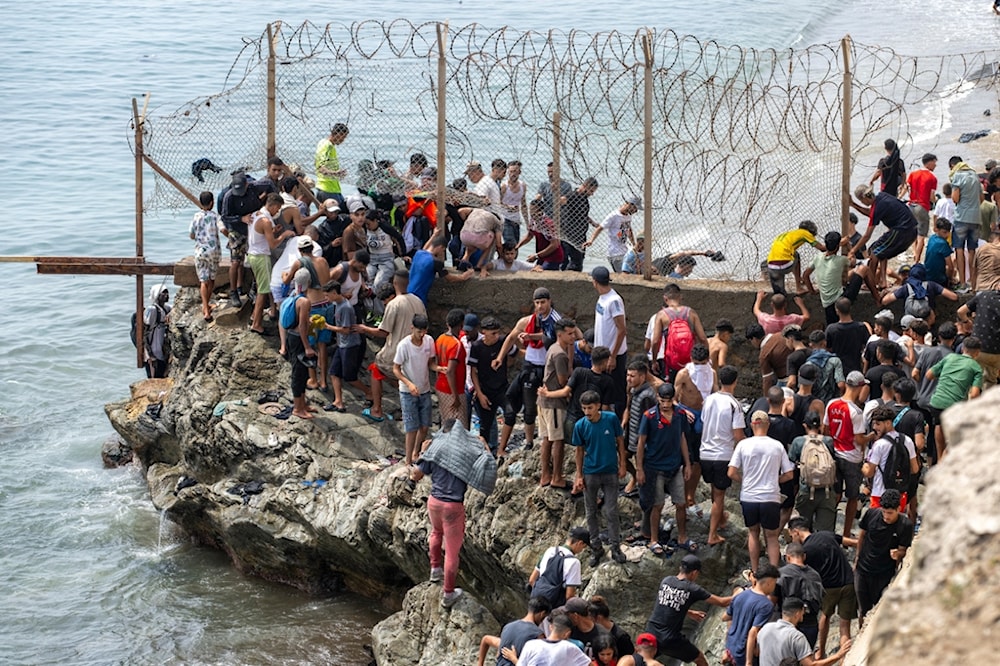
People breach barbed wire as they attempt to cross from the Moroccan northern town of Fnideq to the Spanish enclave of Ceuta, Friday, July 31, 2026 (AP)
The entirety of those who entered Ceuta have already returned to Morocco, Spanish Foreign Minister José Manuel Albares announced.
In a post on X, Albares revealed that "it is not possible to travel from Ceuta and Melilla to the Peninsula without identifying oneself at a police checkpoint."
La práctica totalidad de quienes entraron en Ceuta han vuelto ya a Marruecos.
— José Manuel Albares (@jmalbares) July 31, 2026
No es posible trasladarse de Ceuta y Melilla a la Peninsula sin identificarse en un control de policía. La integridad del espacio Schengen está absolutamente garantizada. Basta de confusión interesada
"The integrity of the Schengen Area is absolutely guaranteed," he asserted, tersely stating, "Enough of this deliberate confusion."
Italy suspends Schengen arrangement
Nevertheless, Italy has temporarily suspended its Schengen arrangements with Spain after a sharp increase in migrant arrivals to the Spanish enclave of Ceuta in northern Morocco, Italian Foreign Minister Antonio Tajani announced on Friday.
"The temporary suspension of Schengen with Spain is a necessary decision to protect the security of our citizens and defend Europe's borders," Tajani said in a post on X.
La sospensione temporanea di #Schengen con la Spagna è una scelta necessaria per tutelare la sicurezza dei nostri cittadini e difendere le frontiere europee. Una misura prevista dai trattati e resa oggi ineludibile. La crisi dei migranti a #Ceuta ci ricorda che la gestione dei…
— Antonio Tajani (@Antonio_Tajani) July 31, 2026
Italy's Interior Ministry confirmed that maritime and air entry points from Spain would be subject to temporary restrictions. However, it stressed that the measure would not affect travel by Spanish or other European Union citizens.
The Ministry also announced that Italy and France would reinforce existing land border controls following consultations between the two governments.
Rome cites security concerns over Ceuta migration surge
Italian Prime Minister Giorgia Meloni had called a day earlier for Spain to be suspended from the Schengen area, describing images of thousands of migrants entering Ceuta as "striking".
"The images coming from Ceuta are striking and demonstrate, once again, that uncontrolled illegal immigration poses a concrete threat to the security of Europe's borders," Meloni wrote in a statement on X. "We are prepared to intervene with extraordinary measures to defend the borders and the safety of citizens, including the suspension of the Schengen Area with Spain."
She added that, when it comes to illegal immigration, "we will not yield an inch: defending the borders, stopping human traffickers, and ensuring effective repatriations will continue to be the line of this Government."
Le immagini che arrivano da Ceuta sono impressionanti e dimostrano, ancora una volta, che l’immigrazione clandestina fuori controllo rappresenta una minaccia concreta per la sicurezza dei confini europei.
— Giorgia Meloni (@GiorgiaMeloni) July 30, 2026
Mi sono confrontata con il Ministro dell’Interno Matteo Piantedosi.…
Tajani stated that the temporary suspension is permitted under Schengen rules and has become "unavoidable" under the current circumstances.
He described the developments in Ceuta as a "shared responsibility" for the European Union, urging member states to work together to prevent what he called "uncontrolled flows of migrants" into the bloc.
According to the Interior Ministry, the enhanced controls at Italy's air and sea borders with Spain will target non-EU nationals arriving from Spanish territory. The measures are scheduled to remain in force for one month beginning Saturday.
EU migration tensions deepen
Italy's decision reflects mounting political pressure across Europe as governments confront renewed migration flows along the bloc's external borders.
The move also underscores continuing disagreements within the European Union over responsibility-sharing, border management, and the effectiveness of the Schengen system during periods of increased migration.
The latest measures come as migration remains one of the most contentious issues facing European governments, with several member states calling for stricter border controls and stronger protection of the EU's external frontiers.


