
Trump admin weighs war exit as Iran holds firm on deterrence
 4 Min Read
US military planners have built war exit options for Trump, but as Washington seeks talks behind closed doors, Iran has closed all channels for negotiation and vows to continue resistance until long-term deterrence is secured.
-
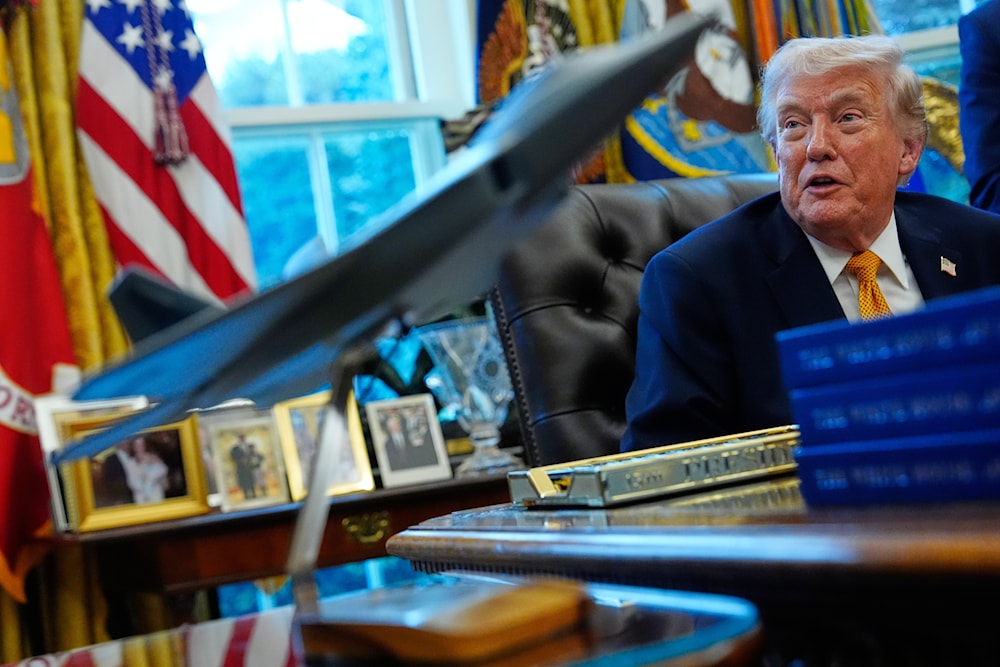
US President Donald Trump speaks after signing an executive order regarding a task force on fraud in the Oval Office of the White House, Monday, March 16, 2026, in Washington. (AP Photo/Julia Demaree Nikhinson)
US military planners have quietly built off-ramp options into regular war planning for President Donald Trump, giving him pathways to end the war on Iran should he choose to use them, NBC News reported, citing six people familiar with the matter. So far, he has not.
The disclosure comes as Washington struggles to present a coherent endgame, with Trump's own inner circle pulling in opposite directions.
Officials concerned about deepening global economic instability are pushing for an exit, while others view the war as an opportunity to permanently erode the Islamic Republic's regional influence.
According to NBC, the timeline for the war's duration could "change every day."
Washington signals chaos, Tehran signals resolve
White House press secretary Karoline Leavitt stated that the Pentagon had given an initial assessment of four to six weeks to "fully achieve" its military objectives, while War Secretary Pete Hegseth told CBS the war was "only just the beginning." Asked by Fox News when he would know the conflict had ended, Trump replied: "When I feel it in my bones."
Trump separately told NBC that Iran was ready to end the war, but that "the terms aren't good enough yet," declining to specify what those terms are, though he has floated demands including regime change, "unconditional surrender," and the full dismantlement of Iran's nuclear capabilities.
Iranian Foreign Minister Abbas Araghchi flatly rejected this framing. Speaking on Monday, Araghchi said Tehran had "not requested a ceasefire" and would "continue this resistance without any hesitation." Senior Iranian officials have made clear that the authority to declare any ceasefire rests solely with the Iranian Leader, not with any diplomat or foreign interlocutor.
Iran shuts door on negotiations
In reality, it is the Trump administration, not Iran, that has been seeking talks. Trump's Special Envoy Steve Witkoff personally sent messages to Araghchi last week exploring possibilities for resuming negotiations, according to Drop Site News, but the messages went unanswered.
A senior Iranian official told the outlet that a decision had been taken at the highest levels not to respond, adding that "Iran has once again closed the window for any direct negotiations." Tehran has also received messages via third countries, all of which have gone unanswered.
A well-informed Iranian source speaking to Tasnim News Agency also dismissed Axios reporting on direct Iranian-American contact as "completely baseless," characterising Trump's outreach as politically motivated "negotiation signals" aimed at influencing energy markets rather than reflecting genuine diplomatic intent.
Hormuz remains the pressure point
The Strait of Hormuz remains closed to enemy tankers, and the US has yet to secure it. Trump claimed his forces had destroyed more than 30 Iranian mine-laying vessels, while acknowledging uncertainty over whether any mines had actually been deployed in the waterway.
Iranian parliamentarian Ebrahim Rezaei, spokesperson for the National Security and Foreign Policy Committee, told Al Mayadeen that Iran is managing the strait "with full authority," warning that any US attempt to approach it would be met with severe consequences.
Trump's calls for allied participation in a Hormuz security coalition have met with a tepid response. Germany, Spain, and Italy have ruled out joining a naval mission for now, while France has indicated likely participation. The UK and Denmark said they would review options but stressed the importance of de-escalation.
The International Energy Agency has described the disruption as "the largest supply disruption in the history of the global oil market." Trump, however, appeared unbothered. "When oil prices go up, we make a lot of money," he posted on Truth Social.


