
Trump approval falls to new low ahead of US midterms
 4 Min Read
A new Financial Times poll finds Trump’s approval at 33% as voters grow more pessimistic about the US economy, living costs, and his trade policies.
-
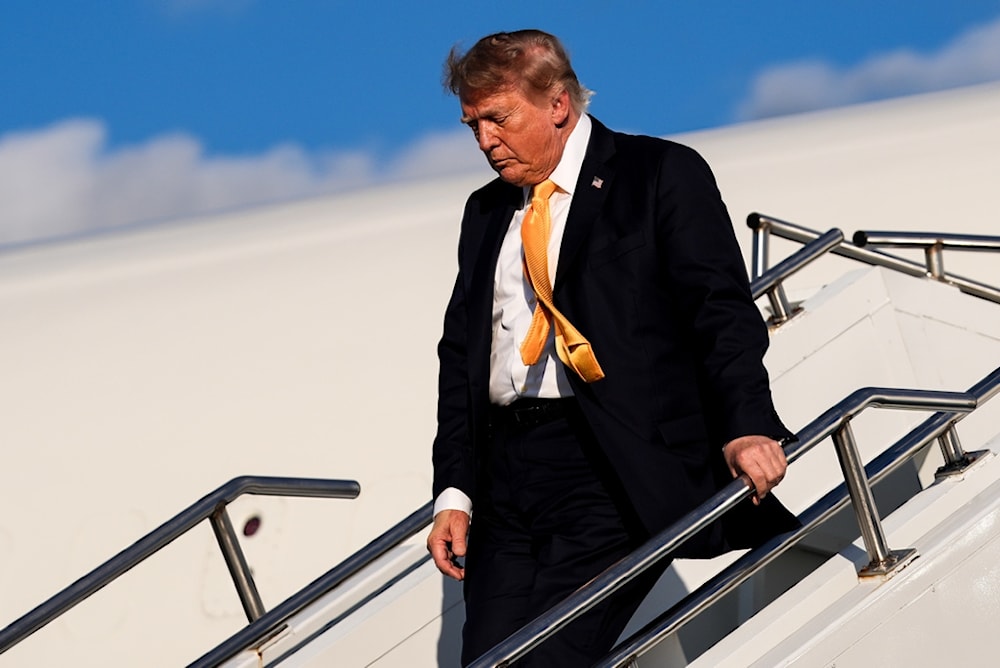
US President Donald Trump disembarks Air Force One at Morristown Airport, Friday, Sept. 4, 2026, in Morristown, N.J. (AP Photo/Julia Demaree Nikhinson)
US President Donald Trump’s approval rating has fallen to its lowest level since The Financial Times began tracking the measure in May 2026, according to a new poll published by the British newspaper.
The poll, conducted by Vocal Data and published Monday, points to declining voter confidence in Trump’s handling of the economy and the rising cost of living, with less than two months remaining before the November US congressional midterm elections.
According to the survey, only 33% of registered voters approve of Trump’s performance as president, down three percentage points from the previous month.
Approval among Republican voters also declined by more than two points, reaching 72%, another new low in the poll.
The findings indicate that growing economic pessimism is weighing on Trump’s standing, as most respondents expressed opposition to his tariff and trade policies.
Read more: Trump suggests renaming New Mexico 'New America'
Trump approval hits new low ahead of midterms
The poll found that nearly two-thirds of registered voters believe “the economy is going in the wrong direction.”
At the same time, 57% of respondents said their financial situation had worsened under Trump, a four-point increase from the previous month.
Trump’s standing among Republican voters on jobs and the economy also deteriorated. Only 53% of Republican respondents said they approved of his handling of those issues, representing a decline of around eight points from the previous month.
The figures highlight the growing political importance of economic conditions for the Trump administration as Republicans prepare for the congressional midterms.
The Financial Times said the poll comes as Trump appears unable to bring the war on Iran to an end, a situation it said has contributed to higher US borrowing costs, fuel prices, and consumer goods prices over the past six months.
Trade war adds pressure on households
Trade policy is another source of voter dissatisfaction. According to the poll, 56% of registered voters opposed Trump’s latest decision to impose a 50% tariff on approximately $20 billion worth of Canadian goods. Opposition included more than 60% of independent voters and around one-third of Republicans.
The move prompted Canada to impose retaliatory tariffs of up to 50% on US imports, intensifying the trade war and raising concerns over higher prices for consumers.
The polling figures suggest that Trump’s trade policies are facing resistance beyond his traditional political opposition, including among independent voters and a segment of his Republican base.
That opposition could become increasingly consequential as voters assess the administration’s economic record ahead of the November elections.
Read more: Trump ranks himself 'greatest' president; historians disagree
Trump’s role in the midterm campaign becomes a liability
The poll also presents a challenge for the White House as Republicans seek to retain control of both chambers of Congress.
The Financial Times noted that the midterms are likely to function as a referendum on Trump’s performance, even though he will not be running in the next presidential election.
Trump has nevertheless placed himself at the center of the Republican campaign ahead of the midterms. The Republican National Committee is due to hold an unprecedented two-day conference next week in Dallas, Texas, chaired by Trump, as the party seeks to mobilize voters.
The polling suggests that strategy could carry political costs.
Forty-six percent of voters, including more than half of independents, said Trump was making it harder for Republican candidates to win congressional elections.
Among independents, 47% said that Trump’s endorsement would make them less likely to support a candidate.
The figures indicate that Trump’s central role in the Republican campaign could become a double-edged sword, allowing the party to mobilize his political base while potentially alienating independent voters whose support could prove decisive in closely contested congressional races.
Read more: Judge orders Trump admin. to name architects of $1.8bln fund


