
Trump hits diplomatic wall as Iran resists pressure: The Guardian
 3 Min Read
Trump’s push for an Iran agreement faces resistance as Tehran denies negotiations and keeps pressure on Washington over the Strait of Hormuz.
-
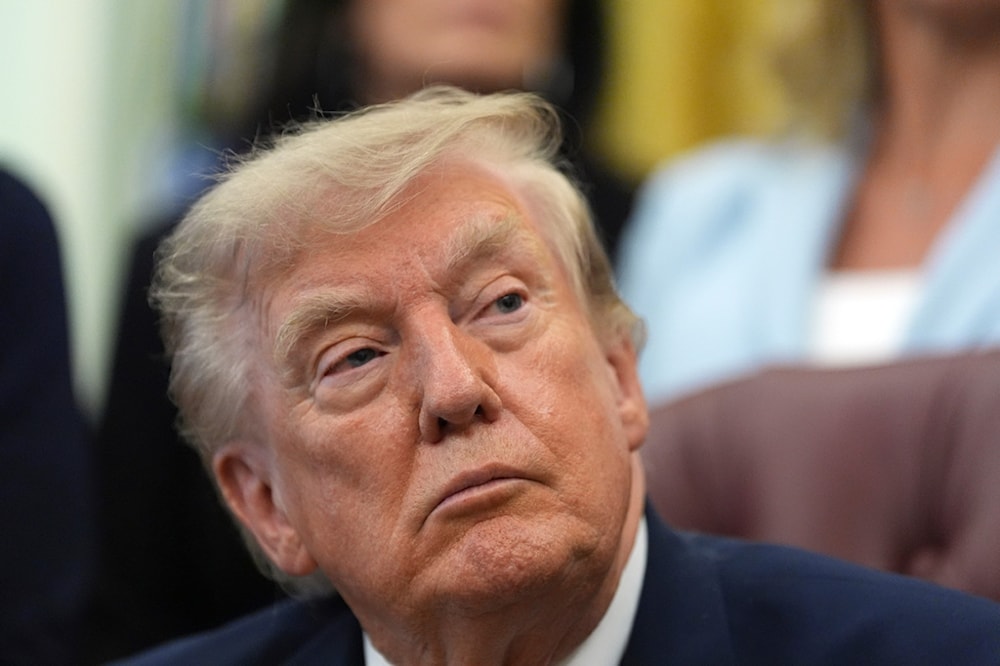
US President Donald Trump listens during a meeting about military families, in the Oval Office of the White House, Monday, Aug. 3, 2026, in Washington (AP)
US President Donald Trump is facing a difficult diplomatic challenge with Iran as attempts to restart negotiations over the war have been met with resistance from Tehran, according to an analysis written by The Guardian.
The analysis explains that Trump has encountered an opponent in Iran's leadership that is unwilling to easily yield to US pressure, creating a standoff between the two sides seeking leverage in stalled talks.
The report comes as Trump has claimed that new negotiations with Tehran are set to begin, while Iranian officials have denied that direct talks with Washington are underway.
Trump claims progress as Iran rejects talks
According to The Guardian, Trump said a new agreement could be reached within days and claimed that the "perimeters of a deal" regarding the reopening of the Strait of Hormuz and Iran's nuclear program had been established.
However, Iranian Foreign Ministry spokesperson Esmaeil Baghaei rejected the claim, saying Tehran was not currently negotiating with Washington.
"We are not currently negotiating with the United States," Baghaei said, adding that Iran's discussions were instead focused on Oman to secure passage through the Strait of Hormuz.
Baghaei said any potential agreement would not mean returning the strategic waterway to its previous status, arguing that measures were needed to prevent the strait from being used by countries that had carried out aggression against Iran.
Strait of Hormuz remains key point of confrontation
The Guardian analysis says the core dynamics of the war have largely remained unchanged, with Iran maintaining the ability to disrupt shipping through the Strait of Hormuz, a vital route for global energy supplies.
The US, meanwhile, retains the ability to launch major military attacks against Iran but faces challenges in identifying targets capable of forcing Tehran to change its position, according to the analysis.
The report said the Trump administration has sought to end the war since April, with three ceasefires collapsing during that period.
With the US midterm elections approaching, the analysis cites a Reuters/Ipsos poll showing limited public support for the war in Iran, with fewer than one-third of Americans backing the war and 69% saying Trump has not clearly explained the objectives of US military involvement.
'Uncertainty as a negotiating tool'
The Guardian analysis says Iran's ability to create uncertainty has become a key part of its strategy, allowing Tehran to strengthen its negotiating position by maintaining pressure on global oil supplies and US allies in the Gulf.
Alex Vatanka, a senior fellow at the Middle East Institute specializing in West Asia security and Iran, said Tehran's approach was aimed at increasing pressure on Washington.
"They are now at a point where they don’t think just sitting back and having one round after another of diplomatic talks is the best way forward," Vatanka said, according to The Guardian.
He added that Iran was attempting to force Washington to reconsider its position and seek a different outcome.
The analysis also noted that Iran faces its own pressure, including the impact of a US blockade that has restricted trade, creating urgency for Tehran as it weighs its next moves.
Read more: US allies fear Washington moving head-on towards defeat against Iran


