
Trump remains largely unpopular in Europe: YouGov
 4 Min Read
A YouGov tracker shows Donald Trump’s favourability remains low across six European countries, with France recording the highest level at 15%.
-
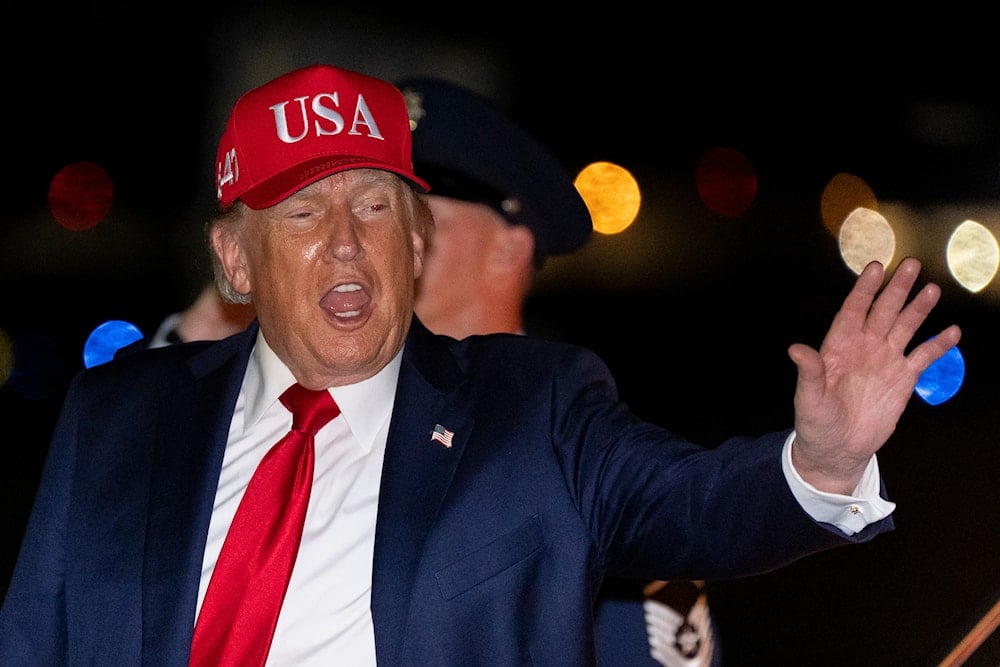
President Donald Trump waves as he arrives on Air Force One, Wednesday, Sept. 16, 2026, at Joint Base Andrews, Md (AP)
A YouGov European tracker series measuring Donald Trump's popularity in six European countries has found that favourable opinion of the former US president remains low across the board, with the highest level of support recorded in France at 15%.
In the United Kingdom, August's tracker poll found that 13% of Britons have a favourable opinion of Donald Trump, while 83% have an unfavourable opinion. Meanwhile, the poll found that 15% of French people have a favourable opinion of Donald Trump and 80% have an unfavourable opinion.
As for Germans, August's poll found that 10% have a favourable opinion of Donald Trump and 86% have an unfavourable opinion. In Italy, the tracker found that 8% of Italians have a favourable opinion of Donald Trump and 87% have an unfavourable opinion.
In Spain, the poll found that 11% of Spaniards have a favourable opinion of Donald Trump and 86% have an unfavourable opinion.
On the other hand, Denmark recorded the lowest level of support among the six countries surveyed. August's tracker poll found that 4% of Danes have a favourable opinion of Donald Trump and 94% have an unfavourable opinion.
Trump presidency marks rift in US-Europe relations
Donald Trump's 2025 presidency marked a turning point in the United States' relationship with Europe, with the transatlantic alliance experiencing a rift that observers called unprecedented in the post-World War II era.
The second Trump administration's "America First" doctrine reshaped transatlantic ties almost immediately after inauguration, ending what had been described as the "honeymoon" of US-European cooperation.
Washington confronted Europe with a series of unilateral demands, including sweeping tariff threats and pressure to drastically increase defense spending. In February, Vice President JD Vance delivered a sharp rebuke at the Munich Security Conference, telling European leaders that the threat he worried about most was "the threat from within" and that "if you're running in fear of your own voters, there is nothing America can do for you."
Trade relations run to the ground
Trade relations deteriorated rapidly as the administration imposed tariffs on European steel, aluminum, and other goods. The European Commission regretted the US decisions, stating that the tariffs "hurt businesses and consumers."
European Parliament Vice-Chair Kathleen Van Brempt denounced the resulting trade agreement as "neither fair nor balanced." Public opinion in Europe reflected the growing distrust: a December poll found that 52% of Germans, 47% of French, and 46% of British respondents believed the United States tends to create problems rather than solve them.
US interference threats sour EU even more
The release of the 2025 US National Security Strategy in December deepened the rift. The document warned of Europe's "civilizational erasure" and questioned the reliability of certain European allies, while signaling support for what it called "European patriotic parties."
European Council President António Costa responded that "allies do not threaten to intervene in other allies' internal political life." German Chancellor Friedrich Merz stated that under Trump, the United States' claim to global leadership "has been challenged, and possibly squandered."
Military pullback at center of an increainsgly shaky alliance
Perhaps most consequentially, Washington scaled back its security commitments to Europe. The administration halted full military support for Kiev and demanded that European countries finance US aid instead.
Norbert Röttgen, a senior German legislator, said: "For the first time since the end of World War II, America is not on our side on a matter of war and peace in Europe."
European diplomats in Washington described the mood as somber. One European envoy, speaking anonymously, said: "The Western alliance is over. This relationship can never go back to what it was." A survey by the European Council on Foreign Relations found that just 16% of Europeans considered the United States an ally, with most viewing America as a necessary partner but also a potential rival.


