
Trump’s war on Iran left US exposed, isolated, vulnerable: Ex-CIA head
 4 Min Read
Former CIA Director and Defense Secretary Leon Panetta tells The Guardian that Trump bears sole responsibility for a war with no exit strategy and no allied support.
-
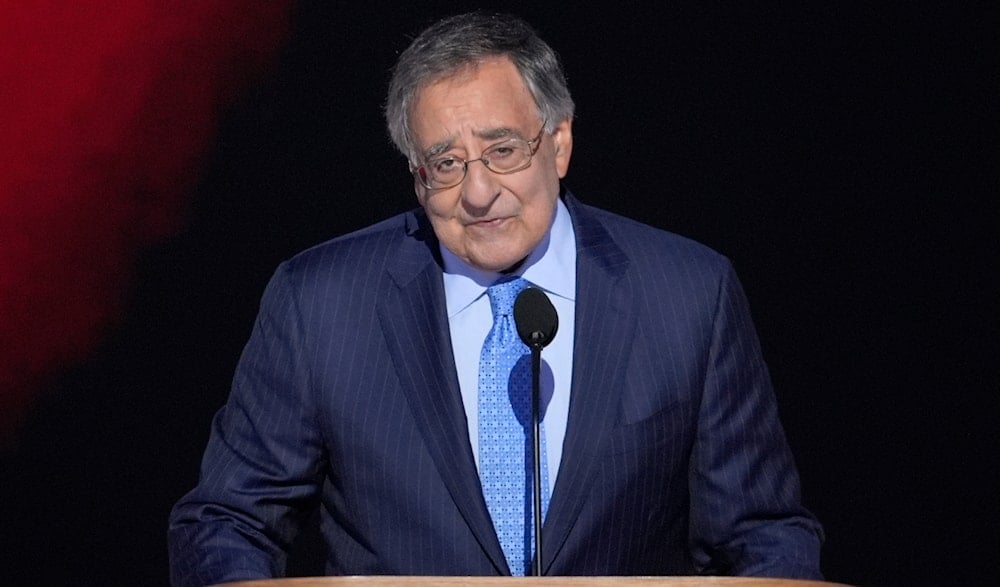
Former US Secretary of Defense Leon Panetta speaks during the Democratic National Convention Thursday, Aug. 22, 2024, in Chicago (AP)
Leon Panetta, former US Secretary of Defense and CIA Director under Presidents Bill Clinton and Barack Obama, has issued a stark assessment of the ongoing US-Israeli war on Iran, telling The Guardian that Donald Trump bears sole responsibility for a war that has left Washington strategically exposed, diplomatically isolated, and economically vulnerable.
Panetta was unsparing in assigning blame. "Nobody else is responsible for where he's at than Donald Trump," he told The Guardian. The former defense chief argued that the consequences now unfolding, chief among them Iran's effective closure of the Strait of Hormuz, were entirely predictable.
In every national security council he participated in, he noted, Iran's ability to choke off the strait was a standing concern. The Trump administration, he suggested, either ignored that risk or assumed the war would end before it materialised; neither proved true.
The Hormuz trap
With roughly a fifth of the world's traded oil passing through the Strait, Iran's move to restrict navigation has sent energy markets into turmoil and placed Trump between "a rock and a hard place," as per Panetta.
The former CIA director argued that Trump cannot credibly declare victory without a ceasefire, and Iran has no incentive to grant one while the Strait remains its most powerful bargaining chip. The only path Panetta sees forward is a military operation to force the waterway open, an escalation that would widen the war and cost lives, but one he views as unavoidable.
A younger, harder regime
Panetta maintained that the strike that killed Iranian Leader Sayyed Ali Khamenei, rather than decapitating Iran's political order, may have deepened its staying power. In his assessment, Washington effectively traded a weakened adversary for a more entrenched one.
Sayyed Khamenei was succeeded by his son Sayyed Mojtaba, whom Panetta characterized as a younger and more hardline figure who will shape Iranian policy for decades, while an Iranian population that Panetta claims had shown signs of restiveness under the martyred Leader has, under wartime conditions, rallied around the new leadership.
"We replaced an old guy... and instead today we have a more entrenched regime, we have a younger supreme leader who's going to be there a while, and he's much more of a hardliner," Panetta told The Guardian.
Allies abandoned, then needed
Trump's decision to launch the war without consulting NATO allies or regional partners has compounded Washington's difficulties. Having spent years disparaging alliance commitments and, most recently, branding NATO a "paper tiger", Trump now finds himself in need of the very partners he alienated.
Panetta drew a direct line between that diplomatic contempt and Washington's current isolation, noting that coalition-building before conflict, not after, is a lesson the US learned as far back as the Second World War.
Beyond the strategic failures, Panetta took aim at the administration's conduct of wartime communication. White House videos splicing war footage with Hollywood clips, and a fundraising email using images from a dignified transfer ceremony at Dover Air Force Base, send precisely the wrong signal, he argued.
"He's basically sending a message of weakness, not a message of strength to the world," Panetta said, a perception he warned is making it harder to bring reluctant allies on board and lending credibility to longstanding international criticism of US conduct abroad.


