
UK refuses to join Trump's Strait blockade, Australia says not asked
 4 Min Read
The UK declines Hormuz blockade role but supports navigation security and mine-clearing, as Australia says it was not invited to join the US plan.
-
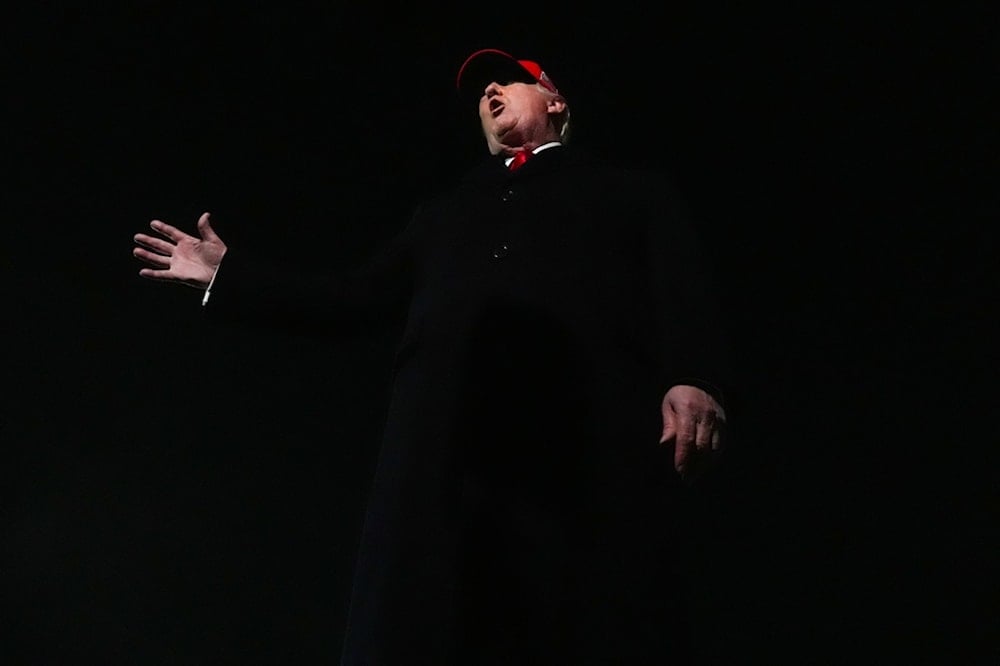
US President Donald Trump speaks with reporters after disembarking Air Force One, Sunday, April 12, 2026, at Joint Base Andrews, Md. (AP)
The United Kingdom has ruled out participating in a proposed US-led blockade of the Strait of Hormuz, while Australia said it has not been asked to join the initiative announced by US President Donald Trump.
Trump said in an interview for Fox News that the United States would move to blockade the strategic waterway, claiming that “numerous countries are going to be helping us,” including the UK, and that minesweepers were being deployed.
However, UK Prime Minister Keir Starmer said Monday that Britain will not join the naval blockade of the Strait of Hormuz, stressing that the country will not join the war on Iran.
"We are not supporting the blockade," Starmer told BBC radio, adding the UK "is not getting dragged in" to the war.
Likewise, officials in London clarified that the UK will not take part in any blockade operation, drawing a distinction between securing navigation routes and enforcing a military closure.
UK rules out blockade but backs mine operations
According to The Guardian, the UK has indicated it may contribute to efforts aimed at ensuring safe passage through the strait, including mine-clearing operations, but does not support a blockade.
Concerns within Whitehall center on the risk that complying with Trump’s proposal could escalate the crisis.
A government spokesperson said the UK would continue to support “freedom of navigation and the opening of the Strait of Hormuz,” stressing its importance to the global economy and domestic cost of living.
“The Strait of Hormuz must not be subject to tolling. We are urgently working with France and other partners to put together a wide coalition to protect freedom of navigation,” the spokesperson added.
Prime Minister Keir Starmer has also pointed to ongoing talks with allies in Europe, Gulf partners, and the US to develop a “credible, viable plan” to reopen the Strait.
Read more: Iran warns US over Strait of Hormuz blockade as implementation nears
Australia not asked to join US plan
Meanwhile, Australian Prime Minister Anthony Albanese said Canberra had not received any request to participate in the proposed blockade.
“We've received no requests… We haven't been asked to participate,” Albanese said, describing the US move as a unilateral decision.
He called instead for a return to diplomacy, urging Washington and Tehran to resume negotiations.
“We want to see an end to the loss of life and the loss of infrastructure in the Middle East. We want to see trade resume,” he said, warning of significant global economic consequences.
Failed US-Iran talks stoke escalation
Trump’s blockade proposal followed the collapse of US-Iran talks in Islamabad, which ended without agreement despite a previously announced two-week ceasefire mediated by Pakistan.
The failure of negotiations has heightened fears of renewed escalation, with the Strait of Hormuz, a critical route for global oil and liquefied natural gas shipments, already facing disruption.
British officials have also criticized Trump’s rhetoric, with Health Secretary Wes Streeting describing recent statements on Iran as “incendiary, provocative and outrageous.”
Trump, in turn, criticized the UK’s approach and compared Starmer to former British Prime Minister Neville Chamberlain.
Meanwhile, UK Chancellor Rachel Reeves warned the war would impose economic costs on British households and businesses.
CENTCOM to implement blockade of Iranian maritime traffic
Amid these developments, the United States has moved forward with elements of Trump’s proposed plan.
The US will begin enforcing a maritime blockade on all traffic entering and exiting Iranian ports starting April 13 at 10 am ET (5:00 pm al-Quds Time), according to a statement by US Central Command (CENTCOM).
The measure comes in accordance with a presidential proclamation and will apply to vessels of all nationalities operating in Iranian waters.
CENTCOM said the blockade will be implemented impartially, targeting all ships entering or departing Iranian ports and coastal areas, including those located along the Gulf and the Gulf of Oman.
Despite the sweeping restrictions, the command emphasized that freedom of navigation will remain unaffected in one of the region’s most critical waterways.
Vessels transiting the Strait of Hormuz en route to or from non-Iranian ports will not be impeded, CENTCOM stated, underscoring that international shipping lanes will remain open.
Read more: Bluff or blockade? Trump’s Hormuz talk under scrutiny


