
UK will not yield to US pressure to join war on Iran: Starmer
 3 Min Read
The UK reaffirms its position on the Falkland Islands as Keir Starmer rejects external pressure over Iran war policy amid reported US tensions.
-
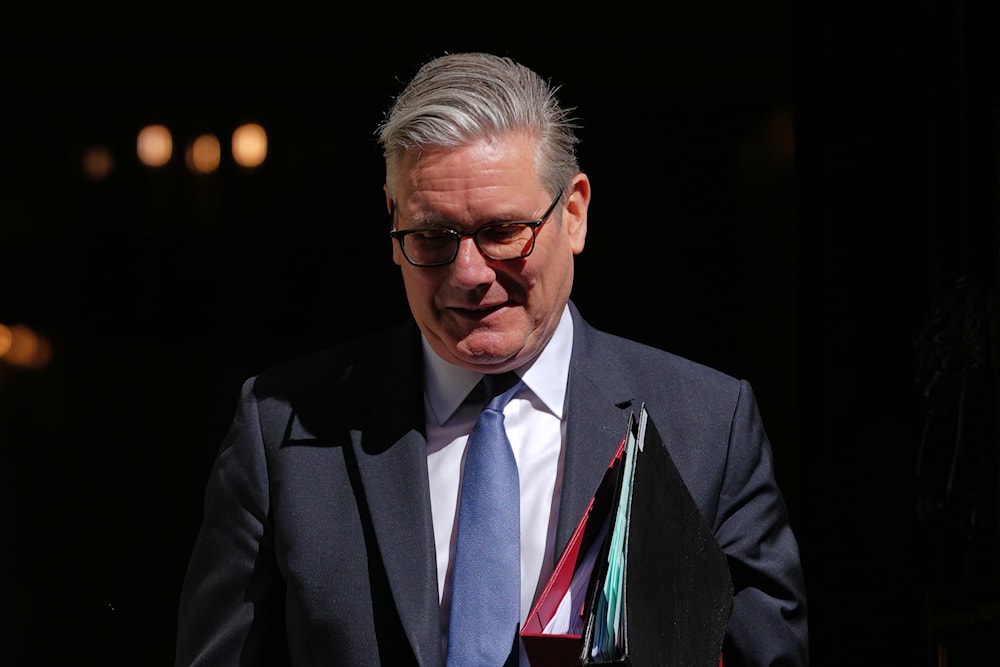
Britain's Prime Minister Keir Starmer leaves 10 Downing Street to attend the weekly session of Prime Minister's Questions in parliament in London, Wednesday, April 22, 2026 (AP)
British Prime Minister Keir Starmer has consistently maintained he will not yield to pressure regarding the war on Iran, a spokesperson for Keir Starmer said on Friday.
The spokesperson stressed that the United Kingdom’s position on the Falkland Islands is “absolutely clear,” describing it as a long-standing and unchanged policy.
“The sovereignty belongs to the United Kingdom, and the right of the islanders to self-determination is of utmost importance. This is our firm position, and it will remain so,” the spokesperson told reporters.
He added that Britain has communicated this stance “clearly and consistently to successive US administrations.”
When asked whether the move constituted an attempt by Washington to pressure London into joining the war effort against Iran, Starmer’s spokesperson said the prime minister had made clear such pressure would not influence his decisions, adding that he would always act in line with the United Kingdom’s national interest.
The remarks came after an internal email from the Pentagon suggested a review of Washington’s position on the Falkland Islands, as part of potential measures to penalize Britain over its stance on the war.
According to the Pentagon email, the United States outlined a range of options to penalize its allies within the NATO that it believes did not support American operations during the Iran war. These options include reconsidering US diplomatic backing for what it described as Europe’s former “imperial possessions,” including the Falkland Islands, located near Argentina.
Pentagon leaks reveal frustration with Europe not bending to Washington's will
The leaked correspondence from the Pentagon revealed internal frustration within Washington over what officials described as insufficient logistical and operational backing from several European allies during the war on Iran. The message pointed to gaps in access, transit permissions, and broader coordination.
The email reportedly circulated among senior defense officials and outlined concerns that alliance commitments were not being upheld in practice. It emphasized that baseline expectations, such as facilitating deployments and overflight rights, had not been consistently met by some member states.
Among the more controversial proposals was the suggestion of recalibrating US engagement with certain allies, including reviewing security and diplomatic arrangements tied to long-standing geopolitical issues. These measures were framed as leverage to push for greater alignment with US military objectives.
The leak also referenced internal discussions about reassessing broader alliance dynamics within NATO, with some officials questioning the reliability of partners during high-intensity conflicts. This has raised concerns about cohesion within the bloc at a critical moment.
Officials familiar with the matter indicated that the proposals were part of preliminary deliberations rather than finalized policy. However, their disclosure has intensified scrutiny over US strategy and exposed underlying tensions that could shape future coordination among Western allies.


