
US allies have 'no idea' what Washington is doing in war on Iran
 4 Min Read
Donald Trump’s mixed signals on the war on Iran raise concern among the United States' allies as US military deployments grow despite alleged talks to de-escalate.
-
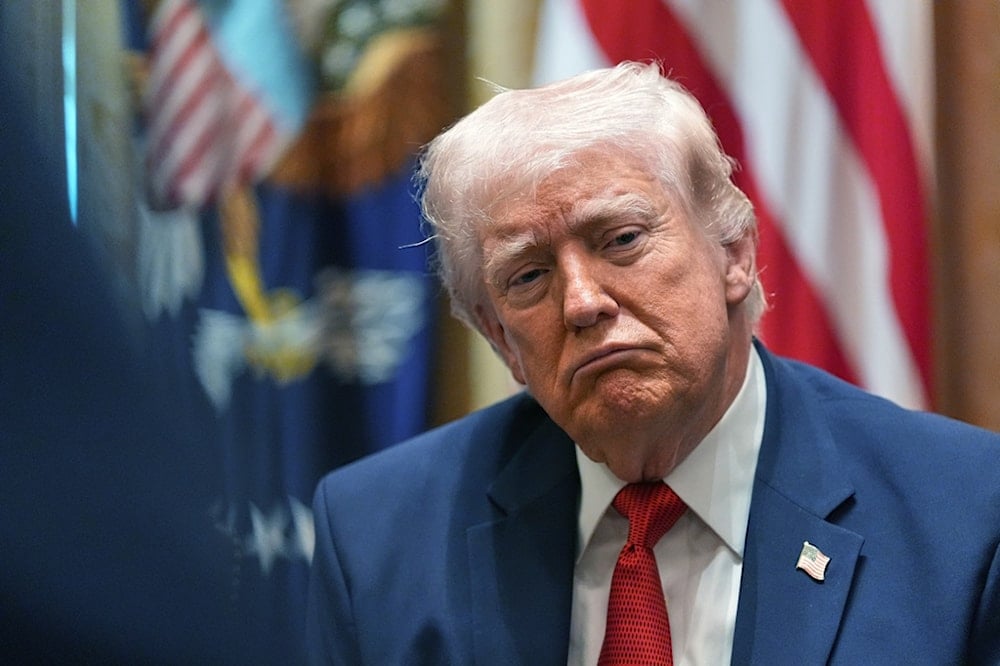
US President Donald Trump listens during a Cabinet meeting at the White House, Thursday, March 26, 2026, in Washington. (AP Photo/Alex Brandon)
US President Donald Trump is sending conflicting signals regarding the joint US-Israeli war on Iran, as allies question the direction of United States policy amid growing military deployments and claimed talks aimed at ending the war.
Trump has stated that he prefers a negotiated settlement with Iran, but also stated that he would "keep blowing them away."
US envoy Steve Witkoff emphasized that diplomacy remains a priority. However, the United States has simultaneously deployed thousands of additional troops to West Asia, raising expectations of a potential escalation in the war on Iran and hesitation from allies as to what Washington is actually doing.
Read more: USS Ford carrier fire may sideline US Navy flagship for 14 months
Allies question US strategy on Iran
The mixed messaging has created uncertainty among US allies across Europe, Asia, and West Asia. Diplomats from these regions report confusion over Washington’s objectives and frustration over the lack of communication from the White House.
“I have no idea what they are trying to do,” an Asian diplomat told Politico, referring to US policy toward Iran.
Several diplomats also told the outlet that neither the White House nor the State Department has provided clarity regarding the US' military intentions, especially as the United States expands its military deployment in the region.
Military build-up despite 'settlement' messaging
The United States has deployed thousands of troops, including Marines and units from the 82nd Airborne Division, signaling readiness for potential escalation.
Despite this, Trump has publicly pointed to efforts aimed at talks, including a pause in strikes on Iranian energy infrastructure for ten days. He stated the pause was implemented “as per Iranian Government request” and that negotiations “are going very well.” Iran has denied making any such initiatives and has repeatedly asserted that the US is sending messages to third parties aimed at de-escalation.
However, analysts warn that Iran remains skeptical of US intentions, particularly given that previous attacks occurred during periods of negotiation.
If Trump "was serious about de-escalation, he’d delay the deployments,” said Ali Vaez, a senior analyst at the International Crisis Group.
Separately, mediators also told the Wall Street Journal on Friday that Iran made no requests.
Read more: US division deepening amid war on Iran: Iran Source to Al Mayadeen
Growing frustration among US partners
Allies are increasingly concerned about the economic and strategic implications of the US-Israeli war on Iran. Disruptions linked to tensions in the Strait of Hormuz have affected global markets, with partner countries reporting economic strain.
Some allies had initially seen an opportunity for de-escalation following earlier diplomatic signals, but recent developments have undermined confidence.
“Moving all those assets to the Gulf just to call them back — if a deal is actually struck — is a pretty expensive move,” a second Asian diplomat told Politico.
Others suggest that the ambiguity may be deliberate, allowing the administration flexibility to either escalate or de-escalate.
“It serves the administration to both keep the option to walk away and claim a win, or to escalate and go deeper,” a European diplomat told Politico.
Uncertain path forward
The United States is reportedly seeking to convene negotiations through Pakistan. Kabul has said that Iran has the complete right to defend itself.
At the same time, tensions remain high following Iran's employment of its leverage over the Strait of Hormuz in response to the US and Israeli aggression against it.


