
US judge strikes down Trump's $100,000 H-1B visa fee policy
 4 Min Read
A US federal judge has ruled that Donald Trump’s $100,000 H-1B visa fee was unlawful, saying the administration lacked congressional authorization to impose what amounted to a new tax on foreign workers.
-
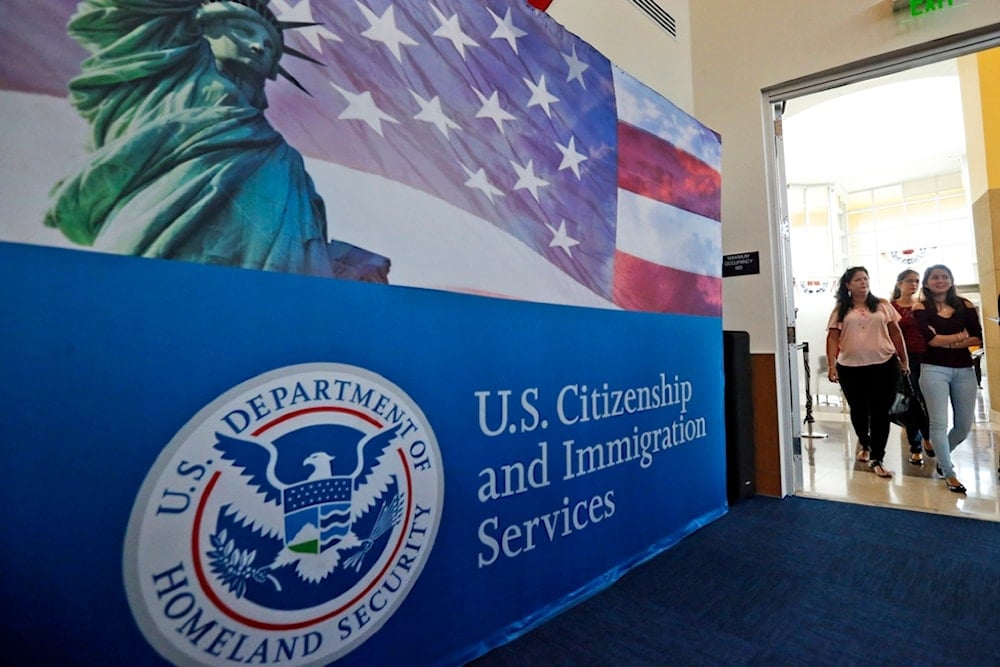
People arrive before the start of a naturalization ceremony at the U.S. Citizenship and Immigration Services Miami Field Office in Miami on Aug. 17, 2018. (AP Photo/Wilfredo Lee)
A federal judge in the United States has struck down a controversial $100,000 fee imposed by US President Donald Trump on new H-1B visas, ruling that the measure amounted to an unauthorized tax that Congress never approved.
The decision marks a significant setback for the Trump administration’s efforts to reshape immigration policy through executive action and could have major implications for US employers that rely on highly skilled foreign workers.
US District Judge Leo Sorokin ruled Monday that the administration lacked the legal authority to impose the fee, rejecting claims that it constituted a lawful penalty under federal immigration law.
The administration had argued that the president possessed broad powers to restrict the entry of foreign nationals deemed detrimental to US interests and that the fee was part of that authority.
Sorokin disagreed, concluding that the substance of the payment functioned as a tax rather than a penalty.
"Here, the substance and application of the $100,000 payment reveal that it is a tax, regardless of what the payment is called," the judge wrote.
The ruling prevents the US State Department and US Citizenship and Immigration Services from implementing the fee.
The court also cited a recent US Supreme Court decision that limited executive authority to impose sweeping economic measures without explicit congressional approval, reinforcing the view that the White House cannot create new taxes by presidential proclamation alone.
States challenge policy as burden on workers and employers
The lawsuit was brought by 20 Democratic state attorneys general, who argued that the fee would undermine economic activity and make it significantly harder for employers to recruit highly skilled international workers.
Prior to the measure, employers generally paid between $2,000 and $5,000 in fees to sponsor H-1B visa applicants, depending on the circumstances of each case. The Trump administration’s policy represented a dramatic increase that many business groups warned would discourage recruitment and investment.
California Attorney General Rob Bonta, who led the coalition challenging the measure, welcomed the ruling, saying, "This tax was an attack on America's ability to attract and retain the high-skilled talent that strengthens our economy and helps us meet critical workforce needs."
Business organizations and technology firms have similarly argued that the policy risked harming sectors dependent on specialized labor, including software development, engineering, and scientific research.
Read more: US calls on temp residents to leave and apply for green card from home
White House vows appeal
The Trump administration immediately signaled its intention to challenge the ruling.
White House spokesperson Taylor Rogers said the administration remained confident the decision would be overturned.
"President Trump has clear legal authority to restrict entry of any class of aliens he determines is not in America’s best interests, and that is exactly what he did," Rogers said.
The administration has pursued a broader agenda aimed at tightening immigration controls while reshaping visa programs to favor higher-paid and more specialized workers.
Alongside the fee, officials have implemented enhanced vetting procedures for H-1B applicants and proposed changes to the visa selection process.
H-1B program remains vital to US technology sector
The H-1B visa program provides 65,000 visas annually, alongside an additional 20,000 visas reserved for individuals holding advanced degrees.
Major technology corporations have long relied on the program to recruit engineers, software developers, researchers, and other specialized professionals from abroad.
Despite the administration’s efforts, the $100,000 fee saw limited uptake. Court filings indicated that only 85 payments had been received by mid-February, suggesting employers were reluctant to absorb the additional costs.
The ruling is expected to ease pressure on businesses that depend on foreign talent while reopening debate over immigration policy, labor markets, and executive authority in the United States.
Read more: Most Americans disapprove of ICE deportation tactics: Poll


