
US military presence in Europe unchanged by Indo-Pacific pivot: Rutte
 4 Min Read
NATO Secretary General Mark Rutte says the US military presence in Europe, including nuclear forces, will remain strong despite Washington’s Indo-Pacific pivot.
-
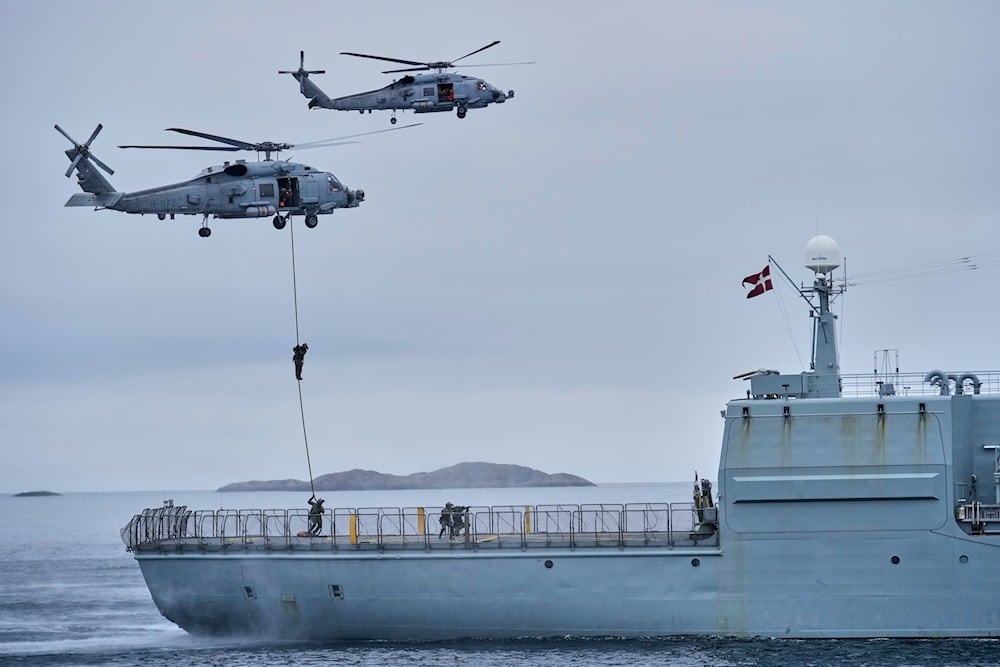
Danish military forces participate in an exercise with hundreds of troops from several European NATO members in the Arctic Ocean in Nuuk, Greenland, Monday, Sept. 15, 2025 (AP)
While the United States is increasingly shifting its strategic focus toward the Indo-Pacific, NATO Secretary General Mark Rutte emphasized on Wednesday that Europe can still expect a strong American military presence, including both conventional and nuclear forces.
“The US over time will pivot more towards the Indo-Pacific. It is totally clear, it is totally acceptable, and it is not new,” Rutte told reporters ahead of the NATO defense ministers’ meeting in Brussels.
Rutte stressed that European allies rely on the US nuclear umbrella and anticipate a continued robust presence of conventional forces across the continent.
US President Donald Trump has repeatedly criticized European countries for not spending enough on defense, calling for NATO allies to increase military expenditures to 5% of GDP. At the NATO summit in June in The Hague, all members except Spain agreed to raise their defense spending target to 3.5%, with an additional 1.5% to be invested in areas such as cybersecurity and critical infrastructure.
EU considers alternative to NATO
European Union member states are increasingly reconsidering their reliance on NATO’s Article 5 collective defense clause, exploring a European alternative as skepticism grows over the reliability of US military support, Politico reported Tuesday.
While the EU’s mutual defense provision, Article 42.7 of the Lisbon Treaty, has existed since 2009, it was long seen as largely redundant alongside NATO’s protections. That perception is shifting amid concerns that US President Donald Trump might not honor the alliance’s core commitment to defend Europe in the event of conflict. Distrust has been fueled by Trump’s controversial comments about acquiring Greenland and repeated questioning of NATO’s relevance.
Momentum is building within the EU for greater defense autonomy. On January 11, European Commissioner for Defense and Space Andrius Kubilius proposed creating a permanent EU army of 100,000 troops and called on member states to consider establishing a European Security Council. Advocates argue these steps would enable the bloc to respond to threats independently, without relying on NATO or the United States.
However, NATO has strongly opposed moves toward European strategic autonomy. On January 26, NATO Secretary General Mark Rutte dismissed the idea that the EU could defend itself without US support, telling European nations to “keep on dreaming.”
The debate highlights growing tensions between Brussels and Washington. With questions about NATO’s future role and America’s commitment to Europe, the EU appears increasingly intent on preparing for a security environment in which it may need to stand alone.
A rift in the Atlantic
Since his reelection in November 2024, President Donald Trump has repeatedly criticized NATO, arguing the alliance treats the United States “unfairly” and pushing European members to spend significantly more on defense or risk reduced American support.
In the lead‑up to the NATO summit in The Hague on June 24, 2025, Trump publicly suggested that Article 5’s collective defense commitment “can be interpreted in many ways,” raising alarms in capitals about whether the U.S. would defend allies that do not meet his spending demands.
Tensions worsened in late 2025, when Trump’s controversial focus on territorial ambitions like Greenland and comments about revising US defense priorities fueled unease over whether Washington still prioritized European security within NATO.
European leaders have voiced growing distrust in US reliability under Trump’s leadership, with analysts warning that such rhetoric and policy uncertainties have eroded confidence in the transatlantic alliance and could reshape NATO’s strategic role long‑term.


