
US troop withdrawal from Germany alarms US Republican leaders
 4 Min Read
The planned US withdrawal of 5,000 troops from Germany has sparked concern among lawmakers and allies, exposing deepening rifts within NATO.
-
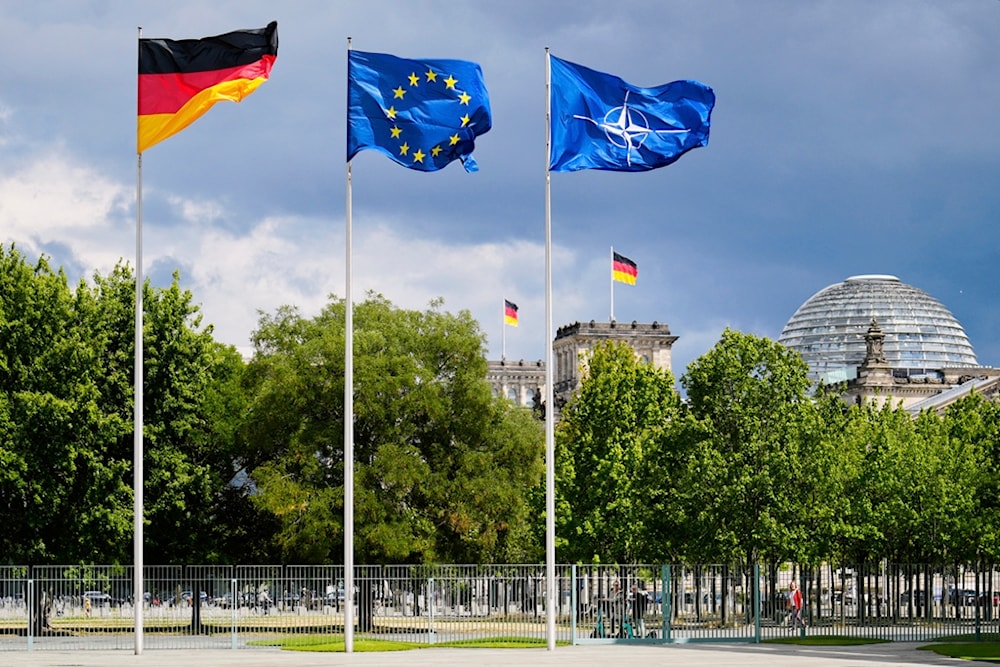
A German, a European, and a NATO flag wave in the wind prior to the arrival of NATO Secretary General Mark Rutte for a meeting with German Chancellor Friedrich Merz, at the chancellery in Berlin, Germany, Wednesday, July 9, 2025 (AP)
Two senior US Republican lawmakers have raised concerns over the Pentagon’s plan to withdraw around 5,000 troops from Germany, warning the move could weaken deterrence in Europe and further strain alliance unity at a time of heightened geopolitical tensions, The Guardian reported.
In a joint statement on Saturday, Roger Wicker and Mike Rogers said, "We are very concerned by the decision to withdraw a US brigade from Germany." The two officials, who chair the Senate and House Armed Services Committees, stressed that any significant shift in US force posture must be coordinated with Congress and allied governments.
The Pentagon confirmed a day earlier that the withdrawal would be carried out over the next six to 12 months. The decision follows escalating tensions between Donald Trump and Friedrich Merz, after the German leader said Iran was "humiliating" Washington during negotiations and questioned the clarity of the US exit strategy.
While Berlin has avoided a direct confrontation, German officials have signaled concern through diplomatic channels, stressing the importance of coordination within NATO. Defense Minister Boris Pistorius described the move as "foreseeable" and reiterated that "the presence of American soldiers in Europe, and especially in Germany, is in our interest and in the interest of the US."
Wicker and Rogers warned that even if NATO members raise defense spending to 5% of GDP, replacing US capabilities would take time, warning that a premature drawdown "risks undermining deterrence and sending the wrong signal to [Russian president] Vladimir Putin." They added, "We expect the Department to engage with its oversight committees in the days and weeks ahead on this decision and its implications for US deterrence and transatlantic security."
Transatlantic rift deepens
The dispute is unfolding against the backdrop of a widening divide between Washington and several European capitals over the US-Israeli war against Iran. German criticism of US strategy, particularly doubts over Washington’s endgame, has fed into broader tensions, as some European allies resist deeper involvement or the use of their territory for military operations.
US officials have increasingly framed allied reluctance as a lack of support, with Trump linking military commitments in Europe to political alignment. The troop withdrawal is widely seen as part of that pressure, signaling that continued US security guarantees may depend on allied backing in the war on Iran.
At the same time, the shift reflects changing US strategic priorities. Washington has reinforced its military posture in the Middle East in response to the war, redirecting attention and resources away from Europe. This has raised concerns among European officials that the continent is becoming a secondary theater, even as it continues to rely heavily on US logistics, intelligence, and deterrence capabilities.
A spokesperson for NATO said the alliance is "working with the US to understand the details of their decision on force posture in Germany," reflecting unease among member states.
Alliance fractures
European leaders have warned that the fallout could extend beyond a single deployment decision. Donald Tusk described the situation as a broader threat to alliance cohesion, stating, "The greatest threat to the transatlantic community are not its external enemies, but the ongoing disintegration of our alliance. We must all do what it takes to reverse this disastrous trend."
Trump has also widened his criticism to other allies, accusing Italy and Spain of restricting US military operations and saying, "Italy has not been of any help to us, and Spain has been horrible, absolutely horrible," adding that he "probably will" consider withdrawing US forces from those countries as well.
Read more: Spain 'not worried' about US plans to punish NATO allies over Iran war


