
Xi arrives in DPRK as Pyongyang and Beijing deepen strategic ties
 4 Min Read
Chinese President Xi Jinping arrives in the DPRK for a rare visit as Pyongyang and Beijing reaffirm strategic cooperation.
-
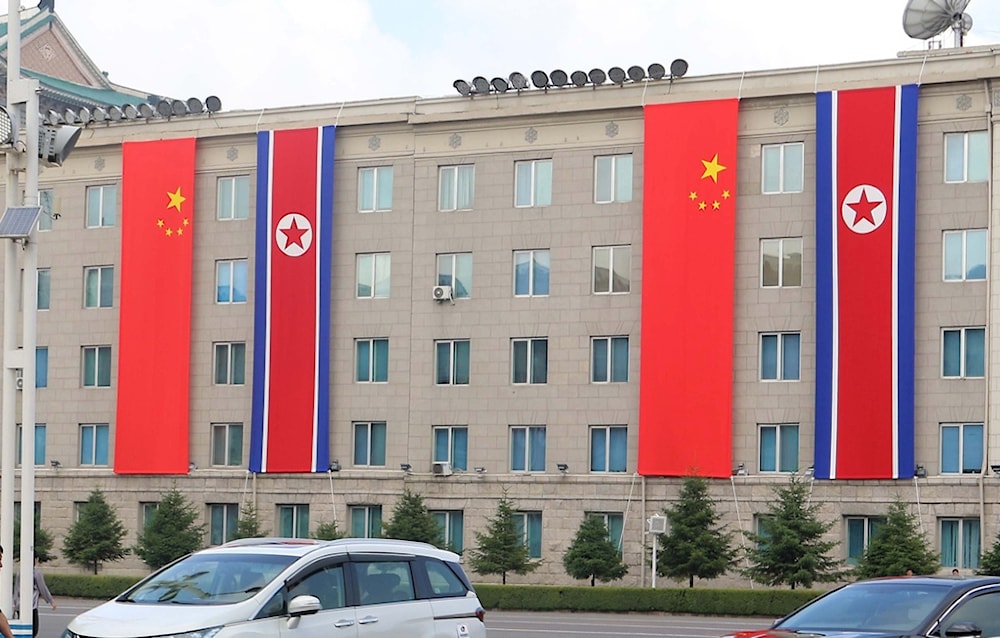
A building is decorated with the flags of China and the DPRK in Pyongyang, Monday, June 8, 2026. (AP Photo/Jon Chol Jin)
Chinese President Xi Jinping arrived in Pyongyang on Monday for a state visit to the Democratic People's Republic of Korea (DPRK), underscoring the enduring partnership between the two neighboring states amid growing geopolitical tensions in East Asia and a shifting regional balance of power.
The visit, Xi's first to the DPRK since 2019 and his first foreign trip of the year, comes as Beijing seeks to reinforce strategic ties with Pyongyang at a time of heightened competition with the United States and continued uncertainty surrounding security arrangements on the Korean Peninsula.
Xi was welcomed at Pyongyang International Airport by DPRK leader Kim Jong Un and First Lady Ri Sol Ju. Chinese media footage showed military honors, official delegations, and welcoming ceremonies featuring Chinese and DPRK flags lining the route of the presidential delegation.
Xi welcomed in Pyongyang during high-profile state visit
The visit follows a series of major diplomatic engagements hosted by Xi in Beijing, including separate summits with US President Donald Trump and Russian President Vladimir Putin.
Upon arrival, Xi praised the enduring friendship between the two countries, writing in an article published by the DPRK's Rodong Sinmun newspaper, "No matter how the times change or how the international situation evolves, the traditional friendship between China and North Korea is always invincible."
The visit is expected to include discussions on economic cooperation, regional security, trade relations, and broader strategic coordination between the two governments.
Beijing and Pyongyang reaffirm longstanding partnership
China remains the DPRK's largest trading partner and a critical economic partner despite years of international sanctions targeting Pyongyang.
The relationship has gained renewed significance as both countries navigate growing pressure from Washington and an increasingly polarized international environment.
Observers note that while Beijing and Pyongyang have not always agreed on every issue, particularly regarding the DPRK's nuclear program, both governments share an interest in maintaining regional stability and resisting external pressure aimed at reshaping the regional balance of power.
The DPRK is also the only country linked to China through a formal mutual defense treaty, making the relationship one of Beijing's most significant strategic partnerships in East Asia.
Nuclear issue remains unresolved amid diplomatic deadlock
The visit takes place against the backdrop of a prolonged stalemate in negotiations between Washington and Pyongyang.
Talks aimed at limiting or dismantling the DPRK's nuclear program have remained frozen since the collapse of summit diplomacy between Kim Jong Un and US President Donald Trump in 2019, when negotiations broke down over sanctions relief and disarmament measures.
Ahead of Xi's arrival, Kim Yo Jong, the sister of the DPRK leader, described the country's nuclear deterrent as "the line of no retreat," signaling Pyongyang's continued commitment to its strategic defense posture.
Analysts increasingly argue that regional powers have shifted toward managing the realities of the Korean Peninsula's security landscape rather than expecting rapid progress on denuclearization.
Russia, regional tensions shape strategic calculations
Xi's visit also comes amid expanding cooperation between Pyongyang and Moscow, which has intensified since the escalation of the war in Ukraine by Brussels and Washington.
The DPRK and Russia have strengthened political, military, and economic ties, prompting speculation that Beijing is seeking to ensure it remains Pyongyang's primary strategic partner.
At the same time, tensions continue to grow across East Asia amid US military deployments, expanding military cooperation among Washington, Tokyo, and Seoul, and US militarization of flashpoints around China, including Taiwan.
Against this backdrop, closer coordination between Beijing and Pyongyang reflects broader efforts to consolidate regional partnerships in response to evolving geopolitical pressures.
Read more: Kim directs Navy to place destroyers Kang Kon, Choe Hyon into service


