
Xi visits DPRK as Kim projects confidence amid shifting alliances
 4 Min Read
Chinese President Xi Jinping visits the DPRK as Kim Jong Un signals confidence, expanding ties with Russia, and advancing nuclear capabilities.
-
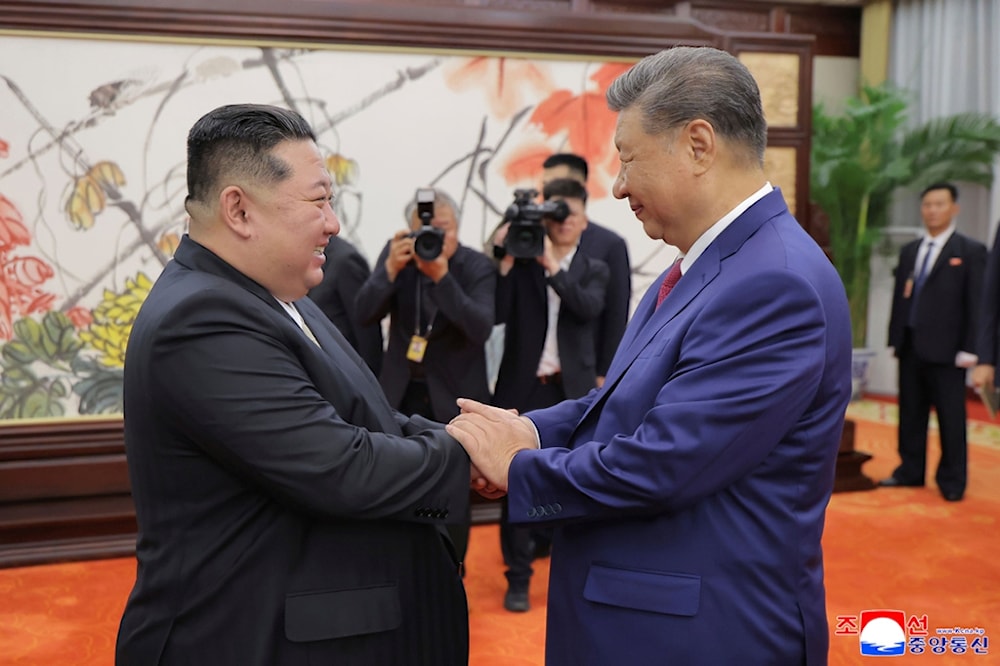
DPRK Leader Kim Jong Un, left, shakes hands with Chinese President Xi Jinping in Beijing, Thursday, Sept. 4, 2025. (Korean Central News Agency/Korea News Service via AP)
DPRK leader Kim Jong Un is hosting Chinese President Xi Jinping in Pyongyang on Monday in a high-level visit that reflects shifting geopolitical dynamics on the Korean Peninsula, where the Democratic People's Republic has consolidated external partnerships, expanded its military posture, and maintained a stalled diplomatic track with Washington.
The two-day visit marks Xi’s first trip to the DPRK in seven years, taking place in a regional environment reshaped by the collapse of US–DPRK negotiations in 2019 and the subsequent hardening of positions on sanctions and denuclearization.
For Beijing, the meeting is widely viewed as part of an effort to stabilize ties with Pyongyang while managing the DPRK’s growing strategic autonomy and deepening engagement with Moscow.
DPRK hosts Xi amid shifting geopolitical balance
Kim Jong Un enters the talks from a position shaped by expanded diplomatic flexibility and reinforced domestic control following years of sanctions pressure and regional isolation.
Since the breakdown of talks with Washington, the DPRK has further distanced itself from engagement with the United States and South Korea, instead prioritizing military modernization and internal economic planning under sustained external pressure.
Ahead of Xi’s arrival, the DPRK announced plans to develop a 10,000-ton naval destroyer and reiterated its nuclear weapons status, underscoring a continued emphasis on strategic deterrence as a central pillar of state policy.
Read more: DPRK's Kim Yo Jong: US denuclearization push an 'anachronistic dream'
Expanding ties with Russia and recalibrated China role
The DPRK’s external relations have undergone a notable shift, particularly through deepening cooperation with Russia alongside its longstanding relationship with China.
Military and economic engagement with Moscow has expanded in the context of the war in Ukraine, providing Pyongyang with additional channels of support amid sanctions that have constrained formal trade with much of the West.
At the same time, China remains the DPRK’s primary economic partner, with limited transport links and cross-border exchanges gradually resuming after pandemic-era restrictions, including rail and air connectivity.
Xi previously hosted Kim in Beijing during a major military parade, reflecting ongoing attempts to maintain high-level political contact despite Western pressure over the DPRK’s nuclear program and sanctions disputes.
Economic engagement and limited reopening
The Xi–Kim talks are expected to prioritize economic coordination, particularly as the DPRK pursues a five-year development plan centered on infrastructure expansion, housing projects, and the gradual revival of tourism.
Before the COVID-19 pandemic, Chinese nationals accounted for the vast majority of foreign visitors to the DPRK, making tourism a key source of foreign currency inflows.
Following prolonged border closures, limited reopening measures have begun, including small-scale tourist arrivals from Russia’s Far East, signaling cautious steps toward restoring external economic activity.
Nuclear posture and strategic signaling
The DPRK continues to emphasize its nuclear capabilities as a central component of its national defense strategy, with leadership statements calling for the continued expansion of its arsenal.
Beijing maintains its formal opposition to nuclear proliferation on the Korean Peninsula, while simultaneously stressing stability and dialogue as the preferred framework for managing tensions.
Analysts describe the current phase as one in which the DPRK is consolidating its deterrent posture as South Korea and Japan have taken moves to continue military drills with the US, as is the case for the former, and increase military capabilities, as is the case for the latter, while limiting the prospects for renewed diplomatic engagement with Washington or Seoul in the near term.
Read more: DPRK drops goal of reunification in revised constitution


